Setting up crypto donations isn't complicated, and the payoff is bigger than most nonprofits expect. You need three things: somewhere to receive the funds, a rule for what happens to them once they arrive, and records clean enough for tax season. Get those right, and you're tapping a donor base that gives far more per gift than your average online supporter. This walks through the setup, the US tax rules that make crypto giving so appealing to donors, and the specific angles for streamers and creators.
Why accept crypto donations in 2026?
The short of it: the donors are already out there, and they write much bigger checks. According to The Giving Block's 2026 report, the average crypto gift ran $11,019 across more than 22,000 donations in 2025, a figure that dwarfs typical online cash giving. The same report logged over $100 million in crypto donations for the year, up 66% from 2024.
Who's giving explains the size. Crypto donors skew younger, wealthier, and more globally spread than the people filling out your card-donation form. Many are sitting on assets that have appreciated, and they'd rather give them away than sell them. That's not a fringe crowd anymore. It's a major gift channel that most fundraising teams haven't switched on yet.
Then there's the tax math, which does a lot of the convincing on its own. The IRS treats crypto as property, so a donor handing appreciated Bitcoin directly to a charity skips the capital gains tax they'd owe on a sale and still writes off the full market value. Fidelity Charitable puts the combined capital-gains and Medicare surtax savings at up to 23.8%. Selling first and donating the cash leaves money on the table. Giving the coin directly doesn't.
What's the actual benefit: who gives and how much

Two things make crypto worth the setup, and they reinforce each other.
The donor pool is different. Bitcoin accounted for nearly half of all crypto donation volume in 2025. Still, stablecoins are climbing fast, with more than $32 million given in assets like USDC and Ripple's stablecoin, per NonProfit
PRO's coverage of the data.
Geographically, it is concentrated: 88% of volume came from the US, and within that, New York and California alone drove nearly two-thirds. If you're prospecting major donors, that tells you where to look.
The tax efficiency stacks on top. A donor holding Bitcoin that's doubled can give it directly, dodge the capital gains tax, and deduct the full value. You receive more, they keep more, and the gift that would've shrunk after taxes lands whole.
For a six-figure donor, that difference often determines how large the gift is.
One change worth flagging for 2026: per Fidelity Charitable, itemizers can deduct charitable contributions only if they exceed 0.5% of their adjusted gross income, and the tax benefit is capped at 35% even for top-bracket earners.
It doesn't kill the crypto advantage, but it's worth knowing when you pitch major donors. Tax rules shift and depend on personal circumstances, so point donors to a tax advisor rather than giving definitive advice yourself.
How to accept crypto donations: step by step
Most of the work here is paperwork, not code. Five steps from nothing to live.
Want to accept crypto payments on your website?
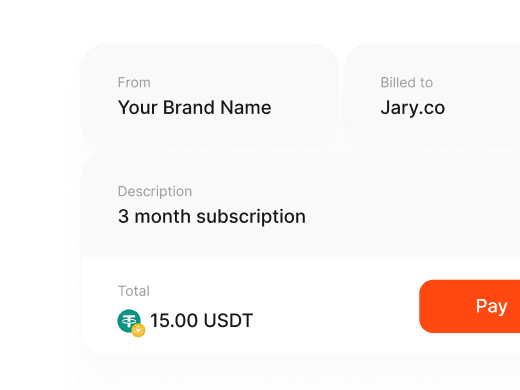
First, decide how you'll receive. Your options are a processor, your own wallet, or a donor-advised fund, and I'll get into the trade-offs below. For most organizations, a processor is the least hassle.
Second, register and verify. You hand over your organization's details and finish onboarding. Being a 501(c)(3) is what unlocks the tax-receipt machinery donors expect.
Third, choose your coins and what happens to them. Pick which assets you'll take (Bitcoin, Ethereum, USDT, USDC) and whether incoming gifts auto-convert to fiat or a stablecoin on arrival.
Fourth, drop the tool onto your page. A donation button, a payment link, or QR code can go on your giving page, in an email, or on a stream overlay.
Fifth, test and launch. Send a small donation yourself, confirm it lands and a receipt fires, then start promoting it.
Want a ready-made donation setup? 0xProcessing's donation tools support 85+ coins, with automatic conversion to stablecoins and 0% processing withdrawal fees.
Get startedWhat are the ways to receive donations?
Three setups, and the choice comes down to how much you want to control versus how much you want to run yourself.
Your own wallet (non-custodial)
Gifts land straight in a wallet you hold the keys to: no platform fees, full custody. The catch is that conversion, accounting, address generation, and compliance all become your job. Fine for a small, technical team, painful at scale.
A payment processor
The processor spins up addresses, watches the chain, converts to fiat or stablecoin, screens for AML, and hands you a record ready for receipts. You pay a small fee and skip running any of it. For most nonprofits and creators, this is the sensible default.
A donor-advised fund or intermediary
A service like The Giving Block takes the crypto for you, liquidates it, and passes along fiat. Handy if your organization can't directly touch crypto, but it adds a layer between you and the donor. Fidelity Charitable runs a similar model and has taken in close to $1 billion in crypto since it began accepting it in 2015.
Which one fits depends on scale. A streamer collecting tips wants a button and a processor. A national charity with a finance team might run a processor for everyday gifts and lean on a DAF for the larger, more complex ones.
How are crypto donations taxed and reported?
This is where the donor's motivation meets your paperwork. Everything below is US-specific, and other countries handle crypto differently, so check your own rules.
The headline benefit for the donor: give appreciated crypto you've held over a year straight to a qualified charity, and you avoid capital-gains tax while deducting the full fair-market value. Sell first, then donate the cash, and you trigger the tax, which shrinks what reaches the charity.
The paperwork scales with the gift. If the donation is $250 or more, the donor needs a written acknowledgment from you. Above $500, they file IRS Form 8283 for noncash contributions. Above $5,000, the IRS wants a qualified appraisal, and your charity signs Section B of the form, because crypto isn't treated as a publicly traded security for this purpose. The IRS rules on charitable
contributions lay out each threshold.
On your end, the jobs are simple but non-negotiable. Issue acknowledgments showing the asset, the number of units, and the date. Record the fair-market value at the moment of donation. And if you sell or dispose of a gift within three years, file Form 8282. A processor that generates these automatically saves your finance people a real headache.
What acceptance and liquidation policy do you need?
Sort this out before the first gift shows up, not after. A short gift-acceptance policy answers two questions: which assets you'll take, and what you do with them once they're in.
Most organizations liquidate on arrival, converting incoming crypto to fiat or a stablecoin the instant it lands. That kills volatility risk. A $10,000 Bitcoin gift stays worth $10,000, rather than riding the market until someone in finance gets to it. Auto-conversion does this for you and locks the value at the donation timestamp, which conveniently matches the number you put on the receipt.
A few organizations choose to hold some crypto as a treasury position, betting on appreciation. That's a legitimate call, but it should come from the board, not happen by default. For everyone else, convert on arrival and keep the books boring.
How can streamers and creators accept crypto donations?
Crypto tips suit the creator economy well because they cross borders instantly and skip the platform's cut.
For a streamer on Twitch or YouTube, you drop a donation link or QR code into the stream overlay and the panel. A viewer anywhere sends a tip directly, with no currency conversion and no chargeback, weeks later. That last part matters: card-based tips from international fans fail or reverse far more often than a confirmed on-chain transfer ever will.
For creators on Instagram or other social platforms, a payment link in the bio or a QR code in a post handles it. Followers tap, pick a coin, and send. Auto-conversion means you bank a stable amount instead of a number that drifts by morning.
The throughline is reach and finality. Your audience is global, crypto doesn't care about borders, and a confirmed tip can't be clawed back like a card payment. A payment button wraps the whole flow with minimal setup.
How do you promote crypto donations?
Turning the option on does nothing if nobody knows it's there. Four channels carry most of the weight.
On your website, add a clear "Donate crypto" option next to the card and PayPal options, with the button right on the main giving page. On social, post the QR code with a short line on why crypto giving is tax-smart. In the email, name the capital-gains advantage outright, since that's what moves a crypto-holding donor. And use QR codes everywhere offline, on event screens, printed materials, stream overlays, because they turn any phone into a one-tap donation.
The line that actually converts isn't "we accept crypto now." It's "give appreciated crypto, skip the capital-gains tax, and your whole gift goes further." Lead with what the donor gets.
What are the risks, and how do you handle them?
Three to plan for, each with a known fix.
Volatility comes first. A gift's value can swing before you convert it. Immediate liquidation or auto-conversion removes that exposure entirely.
Then there's donor anonymity and compliance. On-chain gifts can come from anonymous wallets, raising AML questions about larger donations. A processor with real-time KYT screening checks incoming funds against blacklist data, so you're not unknowingly banking tainted crypto.
Last is security. If you self-custody, key management is the whole ballgame. 2FA, multi-sig for large balances, and a processor running its own infrastructure all reduce risk.
None of these is a reason to skip crypto giving. There are reasons to run it through something built for compliance rather than a bare wallet.
Set up crypto donations with 0xProcessing
Getting going is mostly a setup decision. 0xProcessing covers 85+ coins across 18 blockchains, including 31 stablecoins, with auto-conversion through VRCS (Volatility Risk Control System) that locks a gift's value the moment it lands, 0% processor withdrawal fees, and donation buttons, links, and QR codes for your giving page or stream. It's been live since 2020, carries four external security audits (2022–2025), and runs real-time AML/KYT on every incoming gift. If you'd rather take donations in dollar-stable assets, our guide on accepting
stablecoin payments covers that case.
Ready to accept crypto donations? Take gifts across 85+ coins and 18 blockchains, with auto-conversion to stablecoins, 0% processor withdrawal fees, and ready-made donation tools.
Get startedConclusion
Crypto donations reach a younger, wealthier donor base that gives far more per gift, and the US tax treatment, no capital-gains tax plus a full market-value deduction, makes giving appreciated crypto genuinely smarter than selling and donating cash. The setup itself is short: choose how you'll receive, convert on arrival to reduce volatility, keep records that satisfy Form 8283, and promote the option your donors already use.For nonprofits and creators both, the real question isn't whether crypto giving pays off. It's how fast you switch it on.
FAQ
How do I accept USDT payments for my business?
Register with a USDT payment gateway, pass business verification (KYB), choose which networks to accept, integrate via API or a payment link, then test and go live. Most merchants are processing within a week.
Do I need KYC to accept USDT?
For a regulated custodial gateway, business verification (KYB) is standard: company documents and beneficial ownership. Requirements vary by provider and vertical, but a licensed processor handles AML/KYT screening so you stay compliant.
Which USDT network is cheapest to accept?
Solana (~$0.0003) and BNB Chain (~$0.02) are the cheapest, with Tron (TRC-20) the most widely used at roughly $0.20–1 with staked energy. Reserve Ethereum ERC-20 for counterparties that require it.
Can I convert USDT to fiat automatically?
Yes. Auto-conversion settles incoming USDT into a stablecoin or fiat at the time of payment. 0xProcessing's VRCS (Volatility Risk Control System) does this with no extra fee, with SWIFT/SEPA off-ramp in 3–5 working days.
What happens if a customer underpays?
The gateway flags it as a partial payment and notifies both sides. You can accept, reject, or hold it for review. A unique address per invoice is what makes this detection reliable.
Is accepting USDT legal?
In most major markets, yes. The US GENIUS Act, EU MiCA, UK FCA rules, and Singapore's MAS framework regulate stablecoin issuers, not the merchants accepting them.