Do you dream of buying a Lamborghini or a seaside villa with cryptocurrency? By 2026, this isn’t just possible – it’s becoming mainstream: Lamborghini dealers in the US accept Dogecoin on a par with Bitcoin, you can buy real estate in the USA and the UAE. In Dubai, about 10% of major real estate transactions are in cryptocurrency, and in 2025, the state asset tokenization program was launched, which opens up access for new investors. The main tip when planning such a purchase is to lock in the price using stablecoins (USDT/USDC) to avoid volatility during the transaction, and to choose a jurisdiction with optimal taxation (for example, the UAE or Singapore, which have 0% capital gains tax).
In this article, we will examine in detail which luxury assets can be purchased with cryptocurrency in 2026, how the transaction process works, what taxes you can expect in different countries, and how to protect yourself from risks.
What luxury assets can be bought with crypto in 2026
The market for luxury purchases using cryptocurrency is experiencing explosive growth, and there are several fundamental reasons for this.
- The evolution of crypto millionaires. The first generation of crypto investors, who amassed their fortunes between 2017 and 2021, is moving from the accumulation phase to the spending phase. They want to convert their digital assets into tangible assets – homes, cars, and works of art.
- A generational shift. More than half of Gen Z own crypto assets. For them, digital currencies are not a novelty, but a familiar financial instrument. When this generation enters the luxury goods market, they expect to be able to pay with cryptocurrency.
- Speed and no restrictions. A bank transfer of $1 million can take 3–5 days, require dozens of confirmations and face limits. A crypto transaction takes 10–30 minutes, operates 24/7 and has no limits on the amount. For international buyers, this is a critical advantage.
- Asset tokenisation. According to forecasts by the Boston Consulting Group and ADDX, the market for tokenised illiquid assets will reach $16.1 trillion by 2030. This means that more and more properties will be represented as digital tokens that can be bought and sold on the blockchain.
Luxury cars
Lamborghini remains a pioneer in accepting cryptocurrencies. Authorised dealers in New Jersey and California accept Bitcoin, Ethereum, Dogecoin and Shiba Inu via the payment processor BitPay. The price is fixed in US dollars at the time of the transaction, so the dealer bears no volatility risk and the buyer pays exactly the agreed amount.
Ferrari has also announced the launch of crypto payments in the US and Europe via partners. Although not all dealers accept crypto directly, you can buy virtually any luxury car – from Porsche to McLaren – through regulated intermediaries.
Why are stablecoins preferable to volatile coins? Imagine this: you’ve agreed to buy a Lamborghini for $300,000 in Bitcoin. While you’re transferring the BTC, the exchange rate drops by 5%. The seller receives fewer dollars, and the deal is at risk of falling through. Using USDT or USDC locks in the price in dollars instantly, protecting both parties.
Luxury property
The cryptocurrency property market has been around for several years, but in 2026 it reached a new level.
Historic deals that paved the way:
- 2021: Miami, a penthouse for $22.5 million in Bitcoin.
- 2024: Beverly Hills, a $5 million mansion in Ethereum.
Today, such transactions are no longer a rarity, but a growing trend.
The key markets for 2026 are presented in the table.
| Region | Key features |
|---|---|
| Dubai (UAE) | Around 30% of ultra-high-net-worth individuals (UHNWIs) hold crypto assets. 0% capital gains tax, transparent regulatory framework |
| Miami (USA) | Historic hub for crypto-real estate, numerous precedents |
| New York (USA) | High-end segment, but complex taxation |
| Singapore | 0% capital gains tax, strict AML procedures, growing market |
Want to accept crypto payments on your website?
Real estate tokenisation. In addition to buying entire properties outright, purchasing tokenised shares in real estate is gaining popularity. You can buy a token representing 10% of a shopping centre in Berlin or 5% of a hotel in Bali, and receive rental income in cryptocurrency. The market for such assets is forecast to grow to $16 trillion by 2030.
The buying process: how it works
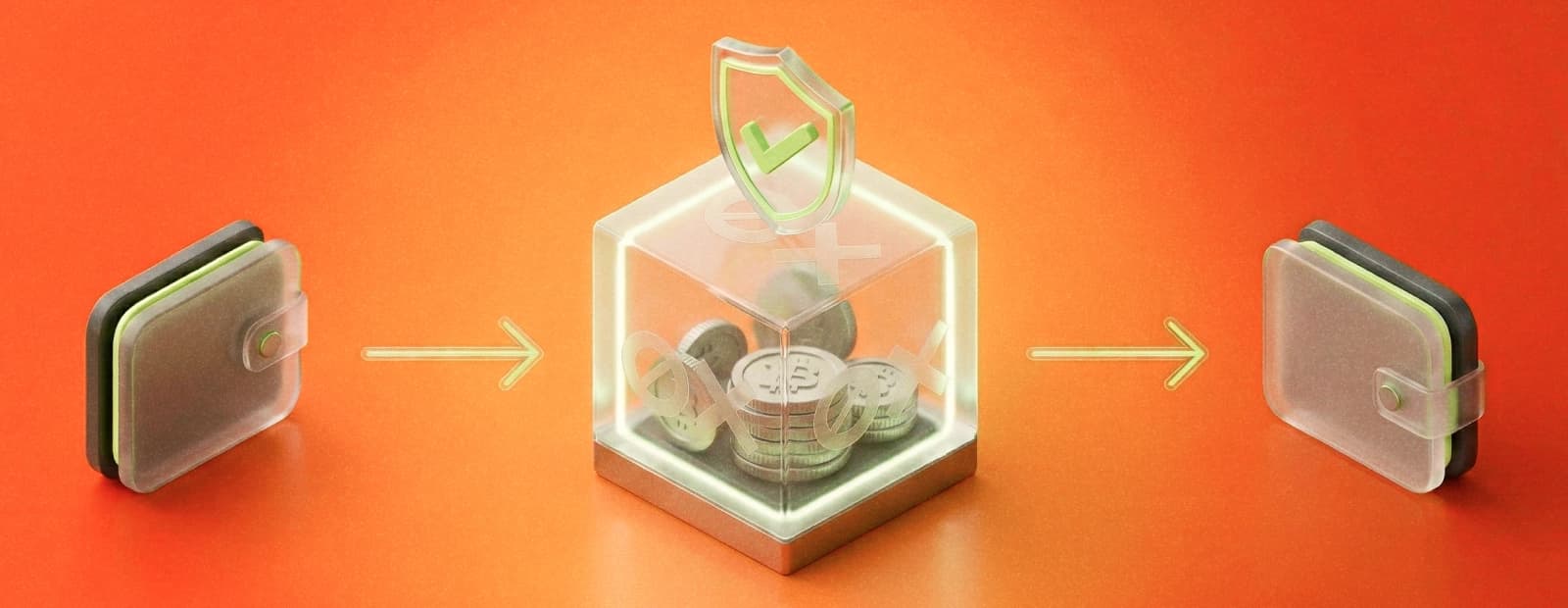
Step 1: Select a property and agree with the seller on accepting crypto. Not all sellers are prepared to accept cryptocurrency directly. Some work through partners, others require conversion. At this stage, it is important to ensure that the seller can actually complete the transaction and to understand the mechanism through which this will work.
Step 2: Fixing the price. A critically important step. The price is almost always fixed in stablecoins or in fiat currency (dollars, euros) pegged to the exchange rate at the time of the transaction. This protects both parties from the volatility of Bitcoin or Ethereum during the transfer.
Step 3: Legal formalities. A standard sales contract is drawn up, specifying the amount in fiat currency (e.g., $500,000). It is stated separately that payment is to be made in cryptocurrency at the agreed rate. Lawyers specialising in crypto transactions will help draft a contract that takes all the nuances into account.
Step 4: Completing the transaction. The most critical stage. Options:
- Direct transfer to the seller’s wallet (rare, requires a high level of trust)
- Transfer via a crypto payment gateway (BitPay, Coinbase, 0xProcessing) – the gateway instantly converts the cryptocurrency into fiat and sends it to the seller
- Use of an escrow service – funds are locked in a smart contract and the transaction is approved once the conditions are met.
Step 5: Tax implications. After the transaction, you must report to the tax authorities in your jurisdiction (if required). In the US and Europe, the sale of cryptocurrency (even for the purchase of a car) is a taxable event. In the UAE and Singapore, there are no taxes.
Tax aspects by region: table
| Country | Capital Gains Tax (CGT) | Option for direct payment | Key features |
|---|---|---|---|
| UAE (Dubai) | 0% (personal income/CGT) | Yes | Ideal for large transactions, regulated by VARA/ADGM |
| Singapore | 0% (for private investors) | No, only by conversion | A licensed intermediary is required |
| Germany | 0% for holdings of over 1 year | No, only with conversion | A haven for long-term holders |
| Italy | 26% | No | Standard tax on crypto transactions |
| United Kingdom | 10-20% | No | Depends on the amount of profit |
| United States | Short-term up to 37%, long-term up to 20% | Depends on the state | Complex regulations, mandatory reporting |
For residents of the US and most European countries, purchasing a car or property using Bitcoin that has risen in value (whose price has increased since the time of purchase) constitutes a taxable event. In the UAE and Singapore, no such tax applies.
Regional market characteristics
The specifics of purchasing luxury goods in Europe, the US and Asia differ. These factors must be taken into account when planning major expenditure.
- US – California, New York, Florida. The largest market for luxury cars and property. In California and Florida, there are many crypto-friendly dealers and agents. Miami is traditionally considered the crypto capital of the US. However, the tax situation is complex: federal tax plus state taxes. In California, this can reach up to 37% for short-term investors.
- Europe – Germany, Italy, UK. Germany is the best choice for long-term holders thanks to tax exemption after one year of ownership. Italy attracts buyers of luxury cars (Ferrari and Lamborghini are based there), but a 26% tax reduces its appeal. The UK has a stable market, but taxes of 10–20% and strict compliance requirements apply.
- Middle East – UAE. The undisputed leader for crypto purchases. 0% tax, transparent regulation (VARA in Dubai, ADGM in Abu Dhabi), developed infrastructure and around 30% of buyers holding crypto assets. Dubai is ideal for structuring large transactions.
- Asia – Singapore, Hong Kong, Thailand. Singapore offers 0% capital gains tax, strict compliance and a well-developed banking system. Hong Kong attracts institutional investors. Thailand is actively developing crypto-friendly condominiums for foreigners, making it an attractive option for the mid-market segment.
Real-life transaction examples
- Case 1: In 2017, programmer and entrepreneur Peter Saddington bought a used 2015 Lamborghini Huracán for 45 bitcoins. At that time, the cost of the car was about 200,000 US dollars. Saddington acquired bitcoins in 2011, when their price was approximately $2.52 per coin. Thus, the initial cost of his investment was about $115. By 2017, the bitcoin exchange rate had skyrocketed, and 45 coins were already valued at $200,000. The car was purchased from a private seller who accepted bitcoins directly. Saddington paid the seller in cryptocurrency, and the dealership paid the commission and taxes in cash.
- Case 2: A villa in Dubai for USDT. An investor from Europe purchased a villa on Palm Jumeirah for 12 million USDT. UAE jurisdiction – 0% tax; the transaction was conducted through a licensed broker with full AML compliance. The seller received fiat via a partner gateway; the buyer maintained confidentiality. The transaction was completed in 3 days (including legal due diligence).
- Case 3: Tokenised property in New York. A group of investors purchased tokenised shares in Manhattan commercial property. Payment was made in ETH, with ownership registered via security tokens entitling the holders to rental income. An example of the growing tokenisation market, which is forecast to reach $16 trillion by 2030.
Advantages of buying a luxury property with crypto
Why are wealthy buyers increasingly choosing cryptocurrency for major purchases? It all comes down to the benefits offered by crypto payments. Due to high demand for this payment method, businesses are adapting and offering new ways to make purchases.
For the buyer
- Realising profits without converting to fiat. In jurisdictions with 0% capital gains tax (UAE, Singapore), you can spend your appreciated crypto without any interaction with the tax authorities. You bought Bitcoin at $10,000, it rose to $100,000 – you simply pay for a villa with it and pay no tax.
- Transaction speed. Crypto knows no weekends or bank holidays. A transfer of $1 million takes 10–30 minutes, not 3–5 days like SWIFT. This is critical for time-sensitive offers and international transactions.
- Privacy. With a bank transfer, you disclose all your information to the bank. With a crypto transaction, AML checks focus on the origin of the funds, not on personal income. This isn’t anonymity, but it offers far greater privacy.
- Asset diversification. Instead of keeping everything in crypto, you acquire a physical asset that can appreciate in value regardless of the market.
For the seller (dealer/developer)
- Access to a new audience. You open your business to the rapidly growing segment of crypto-millionaires looking for ways to spend their digital assets.
- Demand is backed by research. According to a PayPal and NCA survey, 88% of merchants report requests from customers to pay with cryptocurrency. The lack of crypto options is becoming a competitive disadvantage.
- Lower processing fees. Crypto gateway fees are often lower than those for international bank transfers and credit cards.
Planning to sell cars or property for cryptocurrency? 0xProcessing offers a white-label solution for dealers and developers: accept payments in 85+ cryptocurrencies, automatically convert to stablecoins (VRCS) to protect against volatility, and withdraw to your account in crypto or fiat. Our infrastructure is already helping luxury brands worldwide attract crypto millionaires. Find out about 0xProcessing’s solutions for the luxury sector.
Risks and how to avoid them
- Volatility. Risk: whilst you are transferring Bitcoin, the exchange rate could drop by 10%, and the seller will receive less than the agreed amount. Solution: Fix the price in stablecoins for the duration of the transaction. Use payment gateways with instant conversion.
- Taxes. Risk: You may forget that a purchase made with crypto that has risen in value is a taxable event, and face a fine from the tax authorities. Solution: Consult a tax advisor in your jurisdiction before the transaction. In the US and Europe, ensure you file a tax return.
- Legal compliance. Risk: The seller may be dishonest, and the crypto may be of dubious origin. Solution: Check the seller’s AML/KYC procedures. Work only with licensed intermediaries. Demand full documentation for the asset.
- Security. Risk: you sent the crypto – but didn’t receive the car. Solution: use escrow services or trusted partners with a good reputation. Do not send large sums directly to unfamiliar counterparties.
Checklist for a safe purchase
Before sending cryptocurrency for a Lamborghini or a villa, go through this list:
- Choose a jurisdiction with optimal taxation. Germany and Portugal are suitable for long-term holders. For maximum optimisation – the UAE or Singapore.
- Fix the price in stablecoins. Use USDT or USDC to protect against volatility during the transaction. The seller will receive the agreed amount in dollars, and you won’t lose out if the exchange rate drops.
- Use licensed intermediaries. Work only with verified payment gateways that are regulated in your jurisdiction.
- Verify the origin of funds (AML). Be prepared to provide a transaction history and explain the source of the cryptocurrency. This is mandatory in regulated jurisdictions.
- Obtain the TXID (Transaction ID). Save the transaction hash – this is your proof of transfer in the event of a dispute.
- Consult a tax specialist. In most countries, purchasing property with cryptocurrency that has appreciated in value is a taxable event. It is better to find this out before the transaction than after.
How 0xProcessing helps with luxury asset transactions
For dealers and developers who want to accept cryptocurrency but don’t want to get bogged down in technical details, 0xProcessing offers a ready-made white-label solution.
What you get:
- Accept payments in 85+ cryptocurrencies via simple integration.
- Automatic conversion to stablecoins to protect against volatility.
- Withdrawals to fiat in your account on request or in cryptocurrency 24/7.
- Full compliance and AML checks.
- Branding tailored to your car dealership or estate agency.
For buyers, our infrastructure means they can pay with their favourite cryptocurrency, whilst the seller receives cash without any hassle.
Conclusion and findings
Buying luxury assets with cryptocurrency became mainstream in 2026. The market has evolved from isolated experimental transactions to a systematic phenomenon with clear rules.
Key factors for a successful transaction:
- The right jurisdiction. The UAE and Singapore offer 0% tax, whilst Germany and Portugal provide tax exemptions for long-term holders.
- Pegging the price to stablecoins. Protection against volatility is critical for large sums.
- Working with trusted intermediaries. Don’t try to save on commission – security is worth 1–5%.
- Tax planning. Ensure you understand the tax implications in your country.
The market is set to grow. The new generation of buyers (Gen Z) has grown up with cryptocurrency and expects to be able to pay with digital assets. For luxury goods retailers, the lack of crypto options is becoming a competitive disadvantage.
Would you like to accept cryptocurrency in your luxury business? Sign up with 0xProcessing and receive a personalised consultation on setting up payments for your car dealership or estate agency. For clients – special processing rates and bespoke integration.
Frequently asked questions about buying luxury goods with crypto
Is it really possible to buy a Ferrari with Bitcoin in 2026?
Yes. Ferrari officially accepts Bitcoin, Ethereum and stablecoins in the US and Europe through partners. Lamborghini dealers in California and New Jersey also accept cryptocurrency directly via the payment processor BitPay. Other luxury brands typically work through licensed intermediaries who instantly convert crypto into fiat.
Do you have to pay tax when buying a car with cryptocurrency?
In most countries (the US, the UK, Italy, France) – yes. If your Bitcoin or Ethereum has increased in value since purchase, the sale is considered a taxable event – you must pay capital gains tax. Exceptions: the UAE (Dubai) and Singapore, where there is no capital gains tax (0%). In Germany, no tax is levied if the asset has been held for more than one year.
Which country is best suited for buying luxury property with crypto?
The UAE (Dubai) is the clear leader: 0% tax, transparent regulation (VARA, ADGM) and around 30% of buyers holding crypto assets. Singapore also offers 0% CGT and a stable market. Germany is attractive for long-term holders (tax exemption after 1 year).
How do sellers cope with cryptocurrency volatility?
Most sellers use payment gateways (BitPay, Coinbase, 0xProcessing), which instantly convert cryptocurrency into stablecoins or fiat. The seller receives the agreed amount in dollars or euros without holding the volatile asset. The price is fixed at the time of the transaction.
How long does a transaction take when buying with crypto?
Cryptocurrency transfers take 10–30 minutes (depending on the network). The legal formalities may take a few days, but the payment itself is credited instantly – there are no bank delays of 3–5 days, as with SWIFT transfers.
Which cryptocurrencies are most commonly accepted for luxury purchases?
Bitcoin (BTC) and Ethereum (ETH) are the clear leaders. Stablecoins (USDT, USDC) are preferred for price locking. Some dealers also accept Dogecoin (DOGE), Shiba Inu (SHIB) and other popular altcoins.
