This blog post is a tactical guide to diagnosing and solving checkout conversion leaks in your crypto payment flow. In this article, we will consider this problem in detail, from understanding the causes of drop-offs up to the approaches to improving checkout conversion.
Introduction: The Silent Killer of Crypto Commerce
Imagine a checkout process so efficient that 75% of customers who start it successfully complete their purchase. This is a typical transaction success rate in traditional e-commerce, powered by streamlined card payments and digital wallets. Now, picture the reality for many businesses accepting crypto: 50% of customers initiating stablecoin transactions vanish before the transaction is complete. This isn't a minor leak; it's a significant loss of potential revenue.
The critical juncture where a hopeful customer becomes a lost sale frequently boils down to a single, technical decision made by the business: does the payment flow redirect the user away to an external wallet, or does it provide a seamless, native UI embedded directly within the checkout?
This choice is a primary driver of conversion success or failure. A clunky, disruptive payment journey destroys trust and makes users abandon the payment.
What is a crypto payment gateway?
A crypto payment gateway allows businesses to accept cryptocurrency payments on their website while abstracting blockchain complexity such as gas fees, wallet interactions, transaction confirmations, and compliance checks.
"Drop-Off" in Crypto Payments
In a crypto payment flow, "drop-off" is the point in time when a motivated customer abandons the transaction after initiating it. The "drop-off" is the mass of customers who pour out of the funnel here, just before crossing the finish line, mostly due to difficulties they face during the redirect-based payment flow.
Key Metrics to Track: Diagnosing the Problem
To manage and fix drop-offs, you must first measure them. Two metrics are essential here:
- Payment Initiation Rate: This is the percentage of users who reach your checkout and proactively click the "Pay with Crypto" or equivalent button. A healthy rate indicates strong customer intent and interest in using crypto.
- Transaction Completion Rate: This is the percentage of initiators who successfully complete the transaction, resulting in a confirmed payment to your wallet.
The difference between these two rates is your Drop-Off Rate.
Initiation Rate – Completion Rate = Drop-Off Rate
If 100 people click "Pay with Crypto" (Initiation) but only 65 successfully complete the payment (Completion), you have a 35% drop-off rate. This number quantifies the failure of payment experience by the platform users.
Why This Drop-Off Matters
The impact of a high drop-off rate has diverse, but all quite negative consequences for your business, from an obvious direct revenue loss up to the inflated customer acquisition cost caused by wasted marketing, content, and SEO efforts. Drop-off side effects also include lower user trust and brand perception, as well as the illusion that users allegedly don’t want to pay with crypto.
Understanding the drop-off is the stepping stone from which you can start your way to the adequate solution. It moves the problem from a vague "crypto doesn't convert well" to a specific, measurable flaw in the user journey that can be improved.
Crypto Payment Workflows
The dramatic drop-off rates we see in crypto payments are an evident outcome of predictable friction points in the user journey. This friction is largely dictated by the architecture of the payment flow itself. Today, two dominant paradigms define the crypto checkout experience, each with a radically different impact on completion rates.
The Redirect (External Wallet) Flow
Redirecting to the external wallet is the traditional and most common method for accepting direct crypto payments.
Want to accept crypto payments on your website?
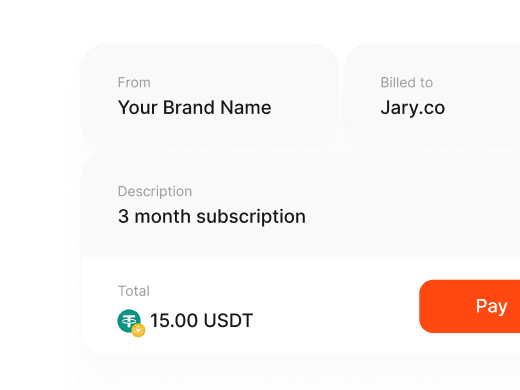
How it Works: On your checkout page, the user clicks "Pay with Crypto" or "Connect Wallet." They are instantly redirected away from your website. For example, a browser pop-up from an extension arises, a new tab opens to a WalletConnect session QR code, or a user is redirected to the full-page third-party payment gateway.
The user must now switch its digital context to their wallet interface – often a separate browser window or a different mobile app. Here, they review transaction details, adjust gas fees, and finally sign the transaction. After that they are redirected back to your website, hoping to see a confirmation message.
The pros of using external wallets:
- Universal: It leverages the user's existing wallet, making it compatible with virtually any self-custody wallet on the market.
- Lower initial integration burden: For developers, it’s easier to enable a wallet connection than to build a full embedded UI.
The cons of using external wallets:
- Context switching breaks focus: You force users out of your branded, conversion-optimized flow and drop them into a generic, often technical wallet interface. The cognitive load increases, and the purchase workflow is broken.
- Issues with a mobile make it harder: On mobile web, this flow turns into deal-breaking difficulty. The user must: a) tap "Pay" in the browser, b) have their wallet app automatically open or manually switch to it, c) approve the transaction in the wallet app, d) wait for the system or manually switch back to the browser tab, which may have reloaded or lost its state. At each step, users drop off.
- Popup blockers and permission issues: Browser settings or privacy extensions can block the critical wallet pop-up, causing a silent failure where the user is left staring at your checkout, confused about why nothing is happening.
- "Sign-in" anxiety: Many wallets present transaction signatures with security-conscious but user-unfriendly language (e.g., "Sign this message"). To a non-expert, this can feel threatening, different from a clear "Pay $50.00" button, leading to hesitation and abandonment.
The Native/Embedded UI Flow
This modern approach keeps the user firmly within your control and your website's environment.
How it Works: The user clicks "Pay with Crypto." A sleek payment component appears directly over your checkout page. Inside this embedded module, the entire process happens: wallet connection, transaction building, fee selection, and final signing. The transaction is executed in the background, and a success message is displayed in the same modal. The user never visually leaves your page.
The pros of using the embedded UI:
- Seamless, brand-consistent UX: The experience feels integrated, professional, and trustworthy. It mirrors the familiar flows of traditional payment gateways like Stripe.
- Dramatically reduced interruptions: By eliminating disruptive redirects, you minimize cognitive load and keep the user in a "shopping" mindset.
- Enhanced perceived security: Counterintuitively, staying on the merchant's site can feel safer to many users, as they aren't sent to an unfamiliar third-party URL.
The cons of using the embedded UI:
- Integration complexity: Building a robust and secure embedded UI from scratch requires significant front-end development efforts and deep blockchain interaction knowledge.
- Historical wallet limitations: Traditionally, creating such an experience meant building custom integrations with individual wallet providers or being limited to a few that offered embeddable SDKs, sacrificing the versatility of the redirect model.
Quick-Reference Table: Redirect vs. Native UI
| Feature | Redirect (External Wallet) Flow | Native/Embedded UI Flow |
|---|---|---|
| User Friction | High. Multiple context switches break focus. | Low. Single-context, linear flow. |
| Security Perception | Mixed. Familiar to crypto natives but can cause anxiety for newcomers. | High. Feels integrated and controlled. |
| Integration Ease | Easier. Simpler initial connection logic. | More Complex. Requires building/front-end integration. |
| Mobile UX | Poor. Cumbersome app-switching process. | Superior. Streamlined, in-browser process. |
| Wallet Compatibility | Excellent. Works with any wallet. | Traditionally limited, but modern solutions are solving this. |
Proven Methods to Reduce Checkout Conversion Loss
Reducing crypto payment drop-offs requires a dual-front attack: removing technical barriers that cause transactions to fail and smoothing mental friction that causes users to hesitate. Whether you’re stuck with a redirect flow for now or building a native experience, these actionable methods will plug the leaks in your conversion funnel.
Method 1: Optimize the Redirect Flow
If migrating to a fully native UI isn't immediately feasible, you can significantly mitigate the damage of the redirect model with thoughtful UX design.
First, provide clear, preemptive instructions: offer detailed explanations of the process. This sets expectations and reduces confusion when the pop-up appears. The guide may look as follows:
"Click 'Pay' to open your wallet. Then review and confirm the transaction details. Now wait to be redirected back here for confirmation."
The second recommendation is to implement smart mobile detection and guidance. The mobile redirect experience is particularly tiresome. Use browser detection to show context-aware messages that make the process easier for your mobile users and will cut mobile drop-offs by preparing the user for the necessary app switch:
“Tip: For the best experience, ensure your wallet app (like MetaMask or Trust Wallet) is open before proceeding."
Finally, build robust error handling and recovery. When a pop-up is blocked, a network fee is too low, or a user rejects the signature, don’t leave them with a silent failure or a cryptic blockchain error. For this, create friendly, actionable error states. This transforms a moment of frustration into a guided troubleshooting step, keeping the user engaged.
"Transaction Rejected? Here’s what to check: Ensure you have enough ETH for the item + gas fee, try adjusting the gas priority in your wallet, and retry payment."
Method 2: Embrace the Native UI Where Possible
This is the strategic shift toward the high-conversion future aimed at creating a cohesive and comfortable payment experience for users.
Start with leveraging existing SDKs and components. Many wallet providers and payment aggregators offer React components or Web3 SDKs that can be embedded, so you don't have to build this UI from scratch. These solutions handle complex wallet communications behind a clean, customizable UI.
Besides, modern SDKs allow you to match your brand’s color scheme, fonts, and button styles. As a result, these components should feel like a natural part of your checkout page, not a bolted-on external tool. This builds trust and reduces perceptual friction.
It’s also important to implement in-page transaction simulation. One of the biggest user anxieties is the unknown final cost. Instead of making them wait for their wallet to display the total, use your backend or SDK to simulate the transaction before the user signs.
Besides, regardless of the technical architecture you choose, you can enhance clarity and trust in any way. For example, you can add an explanation to any step, state the live gas estimate, and show a visual progress bar or step tracker.
The 0xProcessing Solution: The Best of Both Worlds
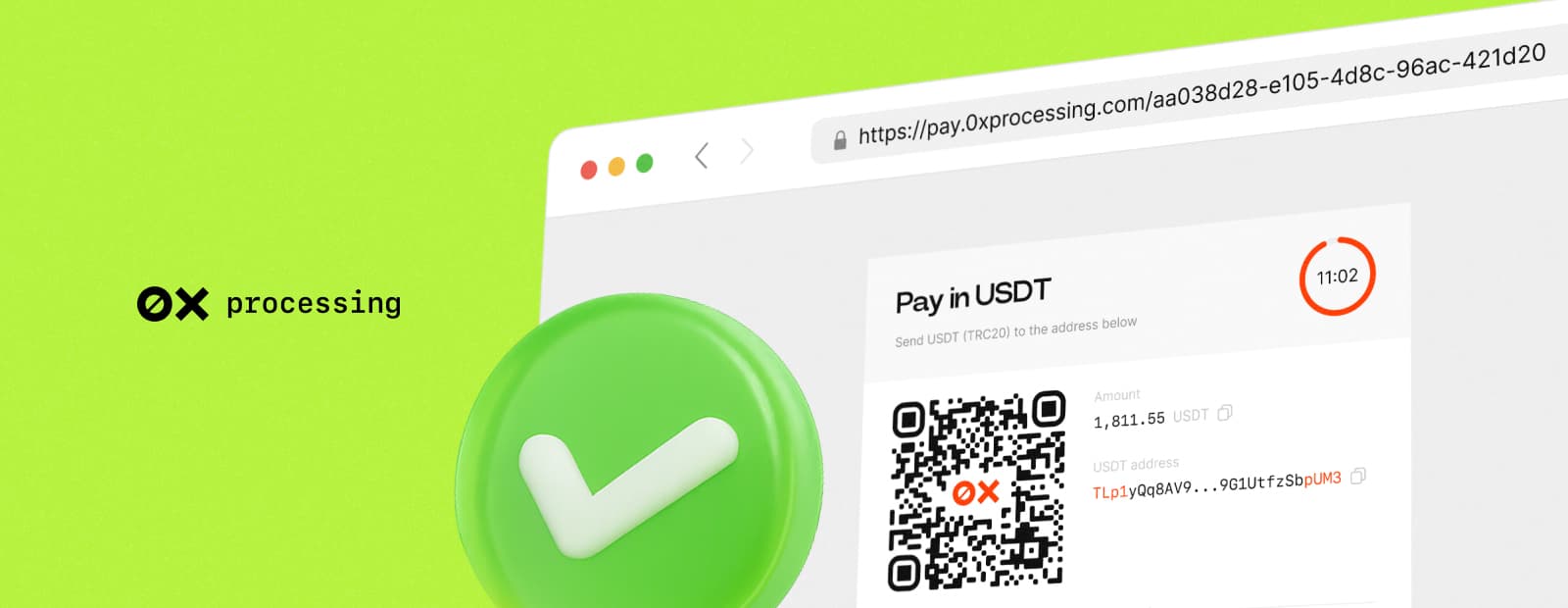
With the modern 0xProcessing service, you could offer a seamless, embedded native UI without sacrificing universal wallet compatibility or diving into details of technical integration. 0xProcessing is a full-stack conversion engine designed to eliminate the very friction points that define the crypto checkout crisis.
At its core, a 0xProcessing service acts as the complete backend and frontend facilitator for crypto transactions. It provides a simple API and SDK that abstracts away the entire complexity of blockchain interaction. Essentially, this service handles quote generation, gas estimation, multi-chain routing, transaction construction, and real-time confirmation monitoring, ensuring a smooth payment experience for users.
How 0xProcessing Supercharges Your Conversion Rates
By integrating this service, you will efficiently resolve the classic dilemma, as this solution addresses each major drop-off driver:
- The unified, embeddable native UI compatible with different platforms: As the most obvious advantage, 0xProcessing provides the pre-built,
customizable payment component that you embed directly into your checkout page. Unlike building your own native UI, this component comes with innate, universal wallet support. As a result, you get the seamless, single-context UX of a native flow with near-universal compatibility. The user never leaves your website, regardless of their wallet preference. - Smart routing and gas optimization to prevent failures: 0xProcessing intelligently manages main causes of drop-offs, such as network congestion or insufficient gas, by:
- Dynamically calculating optimal gas fees in real-time to ensure timely confirmation.
- Automatically routing transactions across different networks or layers (e.g., switching to an L2 like Polygon for lower fees) when appropriate and possible.
- Providing clear, upfront fee quotes within your UI, eliminating cost surprises.
- Session and state management for a coherent user journey: 0xProcessing manages the entire payment session, often condensing steps and maintaining a secure, persistent connection between your checkout and the user’s wallet. Due to this, the user experience becomes a single, logical progression rather than a series of isolated prompts.
- Cross-chain and cross-asset abstraction: 0xProcessing accepts hundreds of tokens across dozens of chains, automatically converts them to the asset of your choice, and shows a simple, unified "Pay with" interface to the user.
- Built-in analytics to diagnose friction points: The advanced 0xProcessing platform provides detailed dashboards that track the exact metrics, such as real-time payment initiation vs. completion rates, drop-off points, average confirmation times, and failure reasons.
In essence, 0xProcessing doesn't just patch the leaks in the crypto payment funnel; it rebuilds the funnel from the ground up to be wider, smoother, and leak-proof, and thus helps finally fix the drop-offs that have long plagued crypto commerce.
Conclusion: Building Frictionless Crypto Checkouts
For most businesses seeking growth and scale, the most efficient path forward is to leverage a dedicated 0xProcessing service instead of building and maintaining this complex infrastructure in-house.
This approach allows you to deploy a high-conversion, native-style checkout experience immediately, without becoming experts in gas optimization, multi-chain routing, or wallet SDK intricacies. You’ll gain a competitive UX advantage while outsourcing the blockchain complexity to specialists whose sole focus is payment conversion.
FAQ
What causes crypto checkout drop-offs?
Crypto checkout drop-offs are primarily caused by user experience friction.
- Cognitive overload related to wallet management and gas fee calculations.
- Technical failures such as transaction errors.
- Confusing redirects that interrupt and break the payment flow.
Which crypto checkout converts better: native UI or redirects?
A native, embedded checkout interface typically converts significantly better.
- Provides a seamless, on-brand user experience.
- Keeps users within the same interface without disruptive context switching.
- Reduces abandonment rates compared to external wallet redirects.
What is the role of a crypto payment gateway?
A crypto payment gateway serves as a bridge between the merchant and the blockchain network.
- Handles acceptance and verification of cryptocurrency payments.
- Manages conversion of crypto into fiat currency.
- Mitigates security and compliance risks for the merchant.
How does 0xProcessing reduce checkout friction?
0xProcessing minimizes checkout friction through:
- A unified, embedded checkout interface supporting multiple wallets and blockchains.
- Automation of backend processes such as gas optimization.
- Instant fiat settlement options.
This creates a smoother and faster payment experience comparable to traditional online payment systems.