The iGaming market is showing steady growth: according to forecasts, by 2029 its volume will reach $250 billion with an average annual growth rate of about 10.5%. In this environment, optimising payment flows is becoming an important task for operators: player satisfaction and business profitability directly depend on the speed, cost and reliability of transactions. iGaming payment solutions offer businesses a choice of payment methods. In 2025, more and more companies are looking to introduce crypto payments and abandon or combine them with traditional methods. Let's compare crypto and traditional payment methods in iGaming, identify their strengths and weaknesses, and show in which scenarios each of them is most effective.
Traditional payment methods in iGaming: pros and cons
For decades, traditional payment methods have remained the backbone of the iGaming industry. Their popularity stems from their familiarity to users and a well-developed regulatory framework, but they come with a number of significant limitations that are becoming particularly noticeable against the backdrop of growing global operations and increasing user experience requirements.
- Bank cards (Visa/Mastercard). This is the most recognisable payment method: players trust cards because they use them every day for purchases in offline and online stores. However, convenience comes at a price: transaction processing fees reach 3–8%, and funds are credited within 1 to 5 business days. Additionally, there are risks of chargebacks – refunds initiated by the player or the bank, which lead to financial losses and reputational risks for the operator.
- E-wallets (Skrill, PayPal). These services offer more flexible terms compared to cards: fees are usually lower (1–3%), and transactions are processed faster. However, their availability depends heavily on the region. For example, PayPal is restricted in a number of countries with high potential for iGaming, and Skrill requires strict verification, which may deter some of the audience.
- Mobile payments (Apple Pay, Google Pay). These are gaining popularity due to their ease of use: simply tap your phone on the terminal or confirm the transaction with biometrics. In iGaming, these methods are convenient for instant deposits, but their use is limited by geography (not all countries support Apple Pay/Google Pay) and commission fees (2–3%). In addition, some payment systems block transactions related to gambling due to the high risk of fraud.
Systemic problems with traditional methods
Traditional payments create a number of challenges that make it difficult to scale a business:
- High operating costs. Bank fees, payment system fees, and conversion fees eat up a significant portion of profits. For operators with high transaction volumes, this can mean millions of dollars in losses per year.
- Processing delays. Waiting for funds to be credited to a player's account degrades the user experience. In the age of instant transfers, even a delay of a few hours can lead to customer churn.
- Regulatory barriers. In some jurisdictions, banks and payment systems refuse to serve iGaming companies because they are classified as ‘high-risk’ industries. This forces operators to look for local providers, which increases integration and support costs.
- Complexity of AML/KYC compliance. Anti-money laundering and customer verification requirements vary from country to country. Operators have to adapt their processes to each jurisdiction, which takes time and resources.
These factors create igaming payments challenges – a set of restrictions that limit business growth and flexibility. Traditional methods remain relevant for a conservative audience, but more modern solutions are needed for global scaling.
Want to accept crypto payments on your website?
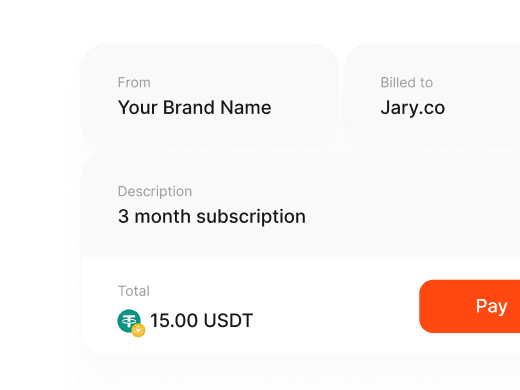
Crypto payments in iGaming: the new reality
Cryptocurrencies are gradually evolving from an experimental tool into a mature payment mechanism for iGaming. Their implementation allows operators to circumvent many of the limitations of traditional systems, offering players speed, transparency and low costs. However, success depends on choosing the right assets and understanding the risks.
Which cryptocurrencies are in demand
- Ethereum (ETH) – thanks to its developed smart contract ecosystem and high liquidity.
- Stablecoins (USDT, USDC, BUSD) – their exchange rate is pegged to the dollar, which minimises volatility. These assets have become the standard for deposits and withdrawals, as players value stability.
- Bitcoin (BTC) – used less frequently due to high fees and slow transactions, but retains its status as ‘digital gold’ for large payments.
The choice of asset depends on the target audience and regulatory requirements. For example, in regions with unstable economies, stablecoins are an alternative to fiat currencies, and in countries with strict controls on currency transactions, they are the only way to withdraw funds.
Why crypto payments are changing the rules of the game
- Instant transactions. Blockchain networks process payments in seconds or minutes, regardless of the amount or geography. This is especially important for withdrawing winnings: players receive their money immediately, rather than waiting several days.
- Minimal fees. On average, the fee for a crypto transaction is < 1 %, which is 5–10 times lower than for bank transfers. For operators, this means significant cost savings.
- No chargebacks. Blockchain transactions are irreversible: once funds are sent, they cannot be recalled. This eliminates fraudulent returns and reduces business risks.
- Global access. Cryptocurrencies are not dependent on banking systems or borders. Players from regions with limited access to traditional payments (e.g., Latin America or Africa) can participate in iGaming without intermediaries.
- Transparency and auditing. All transactions are recorded on the blockchain, which simplifies accounting and reporting. Operators can track the movement of funds in real time, reducing the risk of errors and fraud.
Risks and limitations: how to minimise them
- Volatility. The exchange rate of non-stablecoins (e.g., BTC or ETH) can change dramatically during transaction processing. To avoid losses, operators use automatic conversion to stablecoins upon receipt of payment, fixing the exchange rate at the time of deposit.
- Regulatory uncertainty. In some countries (e.g., the US or the EU), requirements for crypto payments in iGaming are becoming more stringent. The solution is to work through licensed gateways that ensure AML/KYC compliance.
- Low awareness. Many players do not know how to use cryptocurrencies. Operators should add detailed instructions on how to top up an account, offer chat support for beginners, and use intuitive interfaces (e.g., QR codes for sending funds).
How crypto payments solve igaming payment challenges:
- They reduce conversion costs. Automatic conversion to stablecoins or fiat eliminates losses from exchange rate fluctuations.
- They speed up withdrawals. Players receive their winnings in minutes rather than days, which increases loyalty.
- Minimise fraud risks. The irreversibility of transactions and the transparency of the blockchain make fraud schemes more difficult.
- Expand the audience. Operators are entering markets where traditional payments are not available (e.g., countries with sanctions or weak banking infrastructure).
Want to reduce costs and speed up payments? Connect the 0xProcessing crypto gateway with automatic conversion of cryptocurrency to stablecoins and withdrawal in fiat. This will allow you to accept payments in any currency, minimise volatility, and offer players instant withdrawals.
Comparative analysis: selection criteria
The table compares payments for iGaming using cryptocurrency and fiat currency.
- Speed: Crypto payments – Seconds/minutes; Traditional methods – 1-5 working days
- Commissions: Crypto payments – On average less than 1%; Traditional methods – On average 2-8% plus conversion if different currencies are used
- Security: Crypto payments – Blockchain transparency, irreversibility of transactions; Traditional methods – Risks of phishing, data theft, chargebacks
- Scalability: Crypto payments – Global reach, easy adaptation to new markets; Traditional methods – Dependence on local providers and regulatory restrictions
- Regulatory compliance: Crypto payments – AML/KYC required, but flexible settings; Traditional methods – Strict requirements, vary by jurisdiction
- User experience: Growing popularity among millennials and tech-savvy gamers (both)
When to combine crypto and traditional payments?
Some iGaming payment platforms offer the option of connecting payments in both fiat and cryptocurrency. This approach allows you to reach different groups of players. For example: Deposits: crypto payments for speed and low fees, cards for players who prefer familiar methods. Withdrawals: crypto for large amounts and international transfers, banks for local payments (e.g., in countries with a developed SWIFT system). In some regions of the world, crypto payments remain the only option. If countries have restrictions on the use of traditional methods, blockchain payments allow players from these countries to be accepted.
Examples of successful hybrid strategies:
- European casinos offer a dual option (crypto + Skrill) to reach a wide audience.
- Asian bookmakers use USDT for cross-border payments, avoiding high currency conversion fees.
The use of universal iGaming payment solutions allows you to increase conversion and expand the audience that can use the services of a casino or bookmaker.
0xProcessing: optimal igaming payment solutions for crypto payments
In the face of fierce competition in the iGaming market, operators are looking for payment solutions that simultaneously reduce costs, increase security, and expand their audience. 0xProcessing meets these requirements by offering a specialised crypto gateway for the online gambling industry.
Why choose 0xProcessing:
- Extensive cryptocurrency support. The system works with more than 65+ popular coins, including major stablecoins (USDT, USDC, EURC), leading altcoins (ETH, SOL, MATIC), and niche tokens that are in demand in specific regions. This allows operators to cover 95% of cryptocurrency payments in iGaming without the need to connect multiple gateways.
- Instant conversion. The built-in feature automatically converts received cryptocurrencies into stablecoins to minimise volatility, and into fiat for withdrawal to the operator's bank account. The exchange rate is fixed at the time of the transaction, eliminating losses due to market fluctuations.
- Seamless integration. The API interface is compatible with popular CMS for iGaming, self-written platforms via REST API, and mobile applications (iOS/Android).
- AML/KYC automation. The system checks users against global databases, monitors suspicious transactions in real time, and generates reports for regulators.
Want to accept payments in 65+ cryptocurrencies and instantly convert them into your preferred currency? Connect 0xProcessing – your key to the global iGaming market. Submit a request to get access and personalised advice.
Services and benefits for businesses
- Branded payment pages. Customisable interface with casino logo and brand colour scheme.
- Multi-currency wallets. Store and manage funds in different cryptocurrencies without additional fees.
- Real-time analytics. Reports on transaction volume, average deposit size, and bounce rate.
- 24/7 technical support. A team of experts resolves issues within 15 minutes via chat, email, or phone.
The use of more than 65 cryptocurrencies opens up access to new audiences, especially in Latin America, Africa, and Asia. These regions have banking restrictions on transfers, as well as a demand for anonymity. With the introduction of cryptocurrencies, the average time for account replenishment and withdrawal of funds is reduced. Crypto payments in 0xProcessing have lower commission costs than traditional providers, so businesses benefit from reduced costs for servicing customer accounts.
How to implement crypto payments: a step-by-step guide
- Needs analysis. Transaction volume, target markets, currency basket.
- Choosing a crypto gateway. Registering in your personal account. Setting up API keys. Connecting webhooks for notifications.
- Testing. Trial transactions in a test environment, currency conversion verification.
- Launch. Integration with CMS/iGaming platform, staff training.
- Monitoring. Metrics analysis (transaction time, failures), commission optimisation.
Security and compliance: what is important for iGaming
- AML/KYC in crypto payments. Automatic user verification. Monitoring of suspicious transactions.
- Fund protection. Cold wallets, multi-signature, theft insurance.
- Regulatory aspects. Compliance with MiCA (EU) and FATF recommendations. Data localisation depending on jurisdiction.
0xProcessing ensures security through two-factor authentication, proprietary blockchain infrastructure, transaction encryption, and regular audits.
The future of payment integrations in iGaming
- Growth in the share of stable coins.
- Introduction of CBDCs (central bank digital currencies).
- DeFi solutions for automatic payments.
- Smart contracts for bonuses and cashback.
- NFT as a loyalty tool.
By 2030, up to 40–50% of transactions in iGaming may go through crypto gateways. Therefore, it is worth considering the possibility of connecting crypto payments now.
Conclusion
Crypto payments are not a replacement for traditional methods, but rather a supplement to them, allowing key iGaming problems to be solved. 0xProcessing gives operators speed, savings, security, and access to new markets. For maximum effect, it is recommended to combine payment methods, taking into account the specifics of the audience and region. If you have additional questions or need help with integration, please contact us. We are ready to discuss the details and find the best solution for your business.
Frequently asked questions (FAQ)
How quickly can 0xProcessing be integrated?
On average, integration takes 1–3 business days with technical support.
What are the fees for crypto payments?
Fees depend on the selected gateway and cryptocurrency, but are usually 0.5–1%.
How to deal with volatility?
Use stablecoins (USDT, USDC) or the automatic conversion to fiat function.
Do I need a licence to accept crypto?
Requirements depend on the jurisdiction. In most countries, a licence is not required, but AML/KYC must be complied with.
How can you protect your account from being hacked?
Use two-factor authentication, cold wallets, and regular security audits.