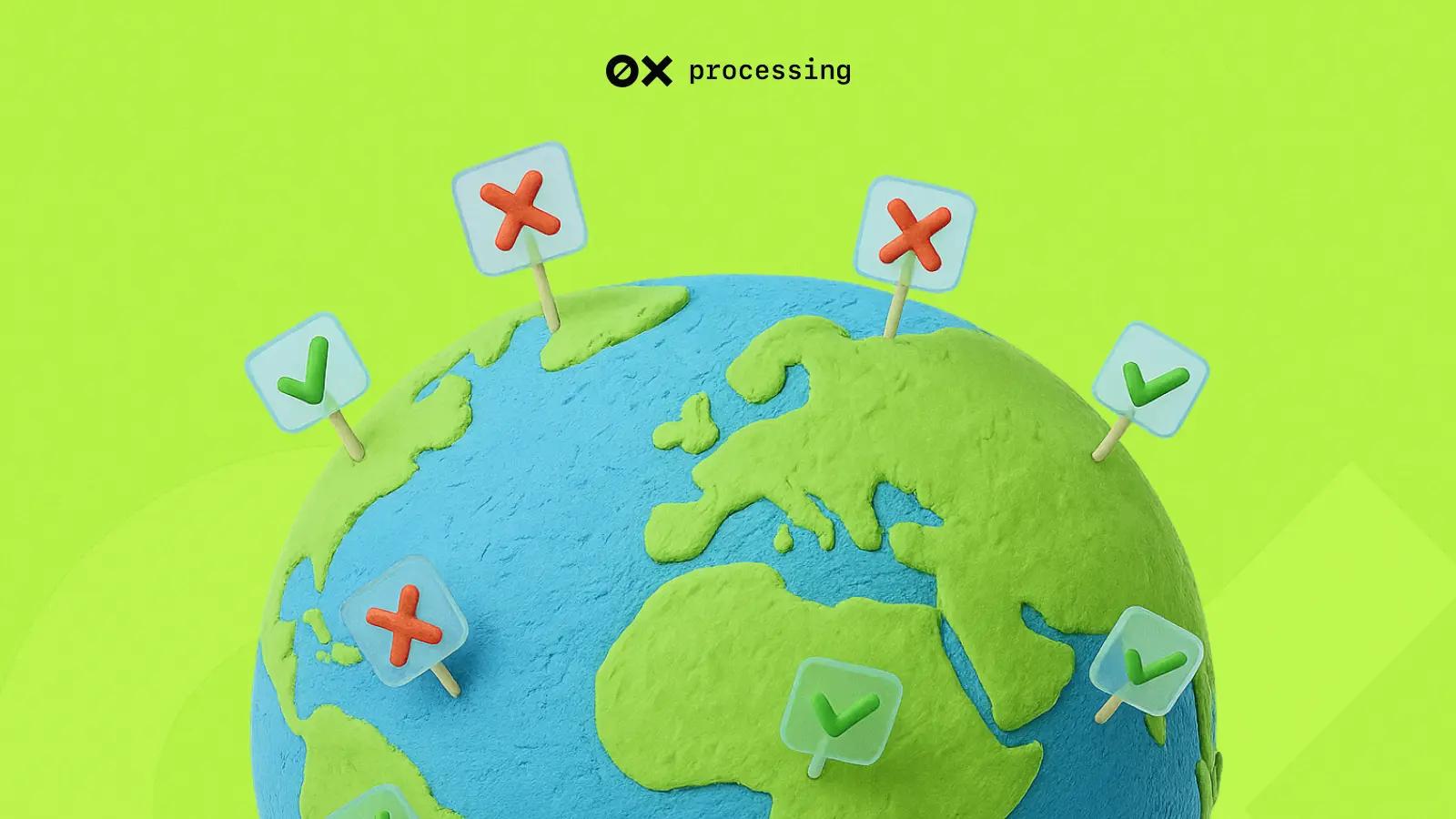
Across the globe, governments weigh opportunity and risk. Some champion free adoption, while others impose rigid bans. This article will tell you about crypto regulation and acceptance worldwide. Read carefully.
Understanding Cryptocurrency Regulation: The Global Picture
The approach to regulating cryptocurrencies is constantly changing. Some countries are actively implementing blockchain technologies to attract innovative businesses. Others impose strict restrictions in an effort to minimize risks.
Why is there such a difference? It is based on national priorities. Regulators focus on countering money laundering, protecting investors, or maintaining economic stability. This creates significant legal differences between countries, forcing entrepreneurs to carefully study the legislation of each specific jurisdiction.
Why do some countries Accept cryptocurrencies while others Ban them
A number of states support the crypto industry to modernize the financial system. They consider blockchain as a tool for the development of international trade and are usually guided by the following goals:
- Stimulating fintech innovation and creating new jobs.
- Reducing the cost of money transfers for citizens working abroad.
- Attracting venture capital investments in developing crypto markets.
At the same time, other governments are imposing strict bans. The main arguments are the risks of using cryptocurrencies in illegal activities, fears of capital outflow and the threat to financial stability due to speculative activity. This is how a list of countries with a ban on cryptocurrencies is formed, where the authorities are trying to limit uncontrolled transactions. However, even with partial restrictions, users often find ways to circumvent the bans.
List of Countries Where Cryptocurrency Is Fully Legal
Below, discover a broader array of places that permit crypto usage. These countries where crypto is legal highlight openness to digital assets.
United States
The United States regards cryptocurrencies as property for tax purposes. People pay capital gains tax. Exchanges must comply with a complex web of federal and state regulations, including registration with FinCEN as Money Services Businesses (MSBs) and adherence to state-level Money Transmitter Licenses (MTLs). This fosters a labyrinth of laws. Yet, individuals and enterprises can generally trade. Major banks and traditional financial institutions now increasingly offer crypto custody and trading services. The climate remains complex but not wholly prohibitive.
Canada
Canada treats crypto assets as commodities under securities law. Gains might be taxed as business revenue or capital profit. Exchanges follow strict AML/CFT obligations and must register with FINTRAC. This approach is considered clear and transparent, though stringent. Citizens freely acquire, sell, and hold various tokens. Canadian regulators value transparency and investor protection, actively licensing and supervising local platforms.
Germany
Germany's cryptocurrency tax regulations reward long-term holders. If you keep coins for over one year, capital gains are completely tax-exempt. That entices countless enthusiasts. The government imposes standard AML norms. Germany believes prudent oversight is paramount. Thus, it remains a pioneer for balanced and innovation-friendly regulation.
Australia
Australia sees crypto as a capital gains tax (CGT) asset. Tax is due on disposals. Firms must track each trade for compliance. That can be tedious, but it fosters clarity. Merchants can accept crypto if they heed consumer protection and tax laws. The Reserve Bank and financial regulators keep watch but do not forbid.
Switzerland
Switzerland, revered as a “Crypto Valley”, fosters robust blockchain enterprises. Federal councils outline meticulous guidelines. The Swiss believe in well-defined rules. Numerous dedicated crypto banks and traditional banks support crypto projects. Also, certain cantons like Zug accept tax payments in Bitcoin. That underscores a deep institutional acceptance.
France
France treats crypto as digital property. People pay capital gains tax on profits. Regulators require exchanges to register as Digital Asset Service Providers (PSAN). This ensures accountability. Many French entrepreneurs applaud the clarity. Paris aims to become a European blockchain hub, hosting major industry players.
Want to accept crypto payments on your website?

Nigeria
Nigeria’s approach is complex and in transition. The Central Bank initially banned banks from servicing crypto exchanges (2021), but this does not constitute a ban on citizen ownership. Citizens hold a robust appetite for Bitcoin, often using peer-to-peer (P2P) platforms. Remittances often utilize digital coins. Officials are actively developing a new regulatory framework to provide clarity and consumer protection.
Brazil
Brazil recognizes crypto as a legitimate digital asset under specific law. The government enforces strict AML checks. Traders pay income tax on gains, with progressive rates. Many local fintech firms and large banks incorporate crypto services. The nation’s progressive stance draws foreign investors and fosters a vibrant market.
Indonesia
Indonesia permits trading on regulated exchanges but prohibits the use of crypto as a payment instrument. Authorities classify coins as commodities. Exchanges must meet official requirements set by the Commodity Futures Trading Regulatory Agency (Bappebti). Despite the regulatory nuance, retail and institutional enthusiasm remains high.
South Korea
South Korea enforces one of the world's most stringent frameworks. Exchanges undergo tight scrutiny and must partner with banks to offer real-name verified accounts. Anonymous trading is banned. This system, while creating a high barrier to entry, aims to ensure strong investor protections and market integrity. Nonetheless, trading volume remains vibrant among the licensed platforms.
Taxation and Regulatory Frameworks in Legal Jurisdictions
Countries where crypto is legal tender—or recognized as property—differ in taxation. Some levy capital gains. Others impose business taxes. Many require licenses for exchanges. This fosters secure conditions for enterprises. However, compliance can be intricate. Many prudent ventures rely on 0xProcessing. This advanced gateway with up to 99% acceptance rate enables stablecoin conversions. It also orchestrates rigorous AML checks and provides access to 65+ popular coins within 15+ chains with the highest trading volume. Such solutions mitigate volatility and assure swift settlements.
Below is a table contrasting certain regulations:
| Country | Status | Regulation Type | Primary Tax Approach |
|---|---|---|---|
| USA | Legal | Property (for taxation) / Security (depends on the asset) | Capital gains tax |
| Germany | Legal | Private Money / Financial Instrument | Tax-Exempt if Held Over 1 Year |
| Switzerland | Legal | Active / Means of payment | Varied Canton Rules |
| France | Legal | Digital property | Capital gains tax |
| Nigeria | Legal (Shifts) | Banning banks from servicing exchanges (not banning ownership) | Unclear, Evolving |
| South Korea | Legal | Strict regulation of exchanges | Capital gains tax |
| Brazil | Legal | Regulated digital asset | Capital gains tax |
| Indonesia | Legal (Partial) | Product | Taxation as a commodity |
| Canada | Legal | The product (within the framework of the securities legislation) | Business income or capital gains tax |
| Australia | Legal | An asset for capital gains tax | Capital gains tax |
List of countries with bans or severe restrictions on cryptocurrencies
A number of states have completely banned or severely restricted operations with cryptocurrency. The main reasons for this approach can be summarized in four key points.
- Fight against illegal finance. The pseudonymity of many crypto assets is seen as a factor facilitating money laundering and terrorist financing, which is of serious concern to regulators.
- Protection of financial stability. According to the authorities, high volatility and rapid growth of crypto markets may pose systemic risks to the traditional financial system due to potential interconnections between sectors.
- Maintaining monetary sovereignty. States fear a loss of capital controls and a weakening of the national currency, as decentralized cryptocurrencies can contribute to large-scale and unaccounted-for outflows of funds, undermining the effectiveness of monetary policy.
- Promotion of government-owned digital currencies (CBDCs). In countries developing central bank digital currencies, decentralized crypto assets are often perceived as direct competitors to official digital money, which serves as an additional incentive to impose restrictions.
These bans and restrictions typically span the full crypto value chain:
- Mining operations are sometimes curtailed to prevent grid strain and energy shortages.
- National exchanges face shutdowns or are barred from domestic licensing.
- Banks and payment providers are prohibited from touching any crypto-related transactions, effectively walling off the financial system.
- In some cases, even peer-to-peer trading platforms and OTC desks operate under threat of fines or prosecution.
Examples of countries with full or de facto bans include:
- China (all exchanges, ICOs and mining forbidden)
- Egypt (religious edict plus legal prohibition)
- Bangladesh (criminal penalties under anti-money-laundering laws)
- Bolivia (outright outlaw under central-bank rules)
- Nepal (sweeping ban on any crypto dealings)
- Morocco (fines and enforcement by the central bank)
- Qatar (banking moratorium on crypto services)
- Iraq (government moratorium and bank refusals)
- Iran (partial ban—mining regulated, currency export controlled)
Despite these prohibitions, public curiosity and demand remain high. For instance, people in China are still interested in Bitcoin, according to Google Trends.
Countries in the Gray Zone: Unclear or Neutral Stances
Several jurisdictions maintain ambiguous or neutral positions. They neither promote nor forbid. Laws are incomplete or absent. This fosters caution among entrepreneurs.
India
India stands amidst legal twilight. Though bans were repealed, clear statutes have yet to arise. Authorities impose levies - 30% on gains, 1% on trades - yet legality hangs in the balance. The land treads cautiously, still mulling formal decrees.
Denmark
Denmark offers no tender regard to crypto. The coin is not legal currency. Regulation varies by token. Some fall under fund or prospectus edicts, others elude oversight. This piecemeal method stirs much befuddlement.
Moldova
Moldova’s position dwells in limbo. No bans. No sanctions. But no rulebook exists. The silence from lawmakers begets unrest among pioneers and guildsmen alike.
The Cook Islands
The Cook Islands whisper of forthcoming crypto statutes. Yet today, no public law commands the field. Visionaries await clarity, navigating by rumor and ministerial murmurs.
Why Regulatory Ambiguity Creates Market Uncertainty
Unclear rules cause perplexity for startups. They fear abrupt crackdowns or retroactive taxes. Potential investors hesitate. Meanwhile, some citizens trade discreetly. Regulators sometimes watch from afar, choosing not to intervene. This vacuum might shift suddenly if big scandals arise. Whoever you are — whether a C-level manager or a startup/business owner — you will likely encounter fundamental challenges:
- Uncertain laws hamper mainstream adoption.
- Startups struggle to plan expansions.
- Market remains prone to rumor-driven gyrations.
Countries That Have Legalized Crypto as Legal Tender
Some bold territories declare Bitcoin official money. These countries where crypto is legal tender dare to transform traditional finance. They see vantage in attracting tech-savvy tourism and foreign capital.
El Salvador
El Salvador made history in September 2021 by becoming the first country to adopt Bitcoin as legal tender alongside the U.S. dollar. Under the “Bitcoin Law,” all merchants are legally required to accept Bitcoin if customers request it, though small businesses can opt out if they lack the necessary technology.
To facilitate everyday use, the government launched Chivo, a state-sponsored digital wallet offering up to $30 worth of free Bitcoin credit to early adopters. Within the first few months, Chivo was reported to have over 2.1 million downloads.
Officials tout Bitcoin as a way to reduce remittance fees (which average 6–9 percent via traditional channels) and to bring roughly 70 percent of Salvadorans, who previously lacked bank accounts, into the formal financial system.
However, the rollout has faced headwinds:
- Volatility concerns. Sudden price swings have at times wiped out tens of millions of dollars of on-chain balances, prompting the government to hold contingency reserves in U.S. dollars.
- Infrastructure gaps. Although internet penetration is around 75 percent, rural users often struggle with connectivity, limiting their ability to transact on-chain.
- International skepticism. Both the World Bank and the IMF have cautioned that Bitcoin’s volatility and accounting challenges could undermine fiscal stability.
El Salvador is exploring a “Bitcoin Volcano Bond”—a $1 billion blockchain-based bond to finance geothermal-powered mining facilities at its Tecapa volcano. Proponents argue this could combine renewable energy development with long-term crypto holdings, though skeptics warn of execution risk.
Central African Republic
In April 2022, the Central African Republic (CAR) became the second country in the world to grant bitcoin the status of legal tender. This measure is aimed at modernizing the state's financial system with a low level of banking penetration — less than 10% of the adult population have access to traditional banking services. According to the law, citizens and companies can use bitcoin along with the CFA franc in all payments. The government also announced pilot projects to introduce registers of land rights and blockchain-based digital identification systems to increase transparency and combat corruption.
Key aspects of the strategy implementation:
- Financial inclusion. With about 50% of the population owning mobile phones and less than 25% having Internet access, the Government is investing in the development of satellite and terrestrial infrastructure to expand coverage, primarily in cities.
- Attracting investments. The CAR seeks to position itself as a blockchain-friendly jurisdiction in order to attract foreign capital. However, the International Monetary Fund and a number of development partners have expressed concerns about the risks of money laundering and macroeconomic stability.
- Education and competence development. To overcome the personnel shortage, the authorities are cooperating with NGOs and private companies to train young people in blockchain technologies and regulatory requirements in the field of cryptocurrencies.
Despite the existing challenges, the CAR leadership remains confident that the introduction of cryptocurrencies will bypass the obstacles of the traditional banking system, stimulate entrepreneurship in remote regions and create a model of digital transformation for other low-income countries.
Potential Next Movers
Speculation abounds on the next country to make crypto legal. Politicians from small nations occasionally hint at bold plans. They presumably foresee an influx of startups. Others may hold quiet discussions. Observers track signals from emerging economies that desire fresh capital.
Should You Be Worried If Crypto Is Illegal in Your Country?
If your homeland prohibits crypto, caution is vital. Enforcement can be severe. Citizens might adopt discreet routes. Many rely on 0xProcessing or similar advanced gateways to process cross-border payments. They reduce volatility by swift conversion to stablecoins. That framework can circumvent local restrictions, though always consult attorneys.
Final Thoughts: Legal Doesn’t Always Mean Friendly
A place that legalizes crypto can still hamstring traders with onerous taxes. Some demand burdensome licenses or pricey bonds. Countries where crypto is legal do not invariably treat it kindly. Conversely, a prohibition may fail to halt covert usage. Enthusiasts might find ways to carry on. Ultimately, each entrepreneur must gauge local edicts. Evaluate potential benefits. Observe the shifting climate. Then decide the best course with prudence.