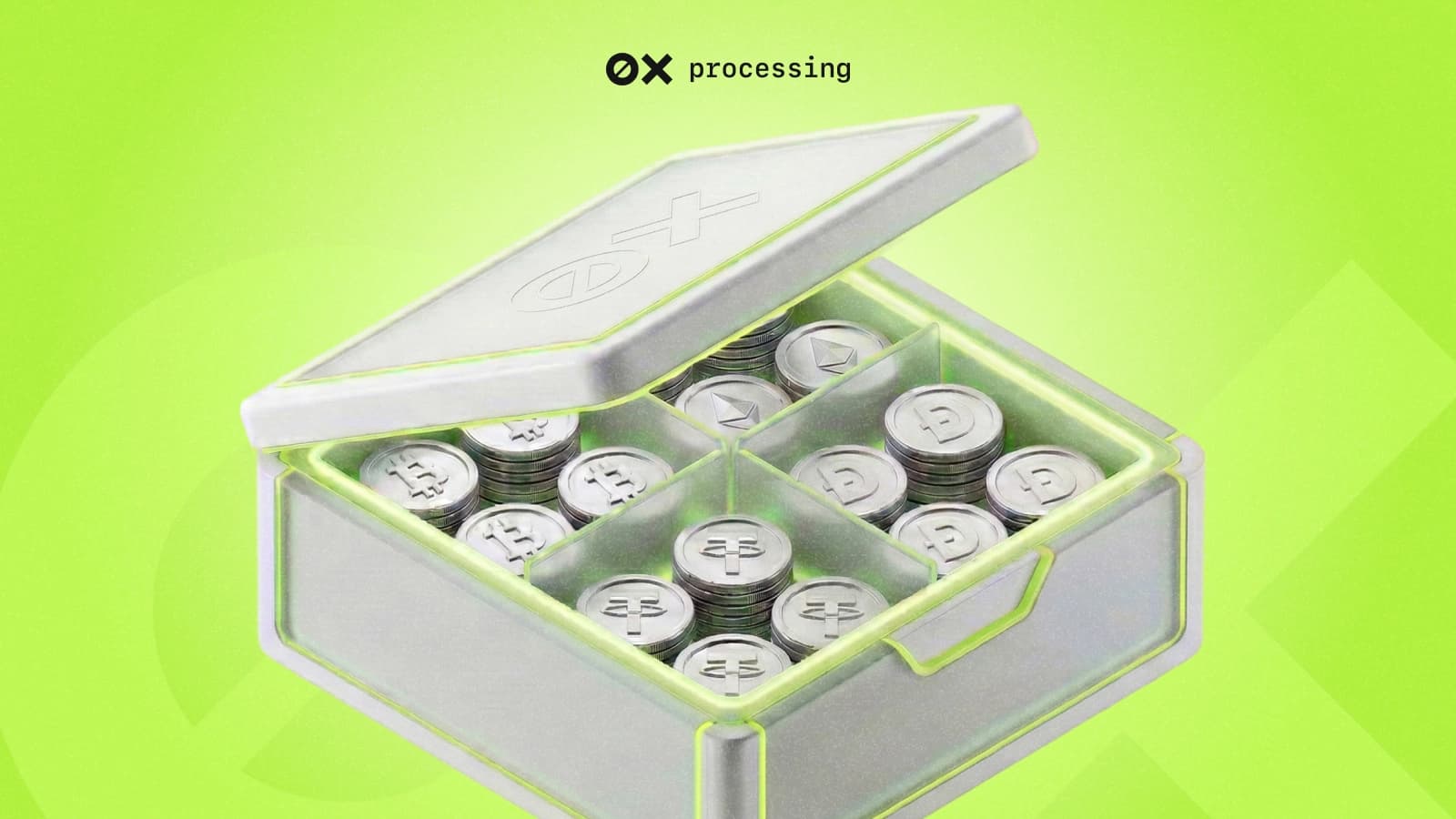
Crypto treasury management involves managing digital assets to address business objectives: international payments, capital preservation and generating additional income.
The key principle of successful cryptocurrency management is risk diversification. The optimal portfolio in 2026 is built on a balance of three components:
- 40–50% Bitcoin – for long-term accumulation and capital preservation;
- 20–30% Ethereum – utilising yield staking to generate returns;
- 20–30% stablecoins – for operational liquidity and swift settlements with counterparties across different jurisdictions.
In this article, we will explore how to build such a strategy, manage volatility and adapt the approach to regional specifics.
What is crypto treasury management and why is it important in 2026
Crypto treasury management is a set of strategies for managing corporate holdings of digital assets (Bitcoin, Ethereum, stablecoins) to preserve capital, ensure liquidity and generate additional income. This is not about speculation, but a systematic approach to a company’s balance sheet, similar to managing fiat reserves, but taking into account the specifics of the blockchain economy.
By 2026, digital assets had fully transitioned from a niche corporate experiment to a mainstream capital management strategy. According to data from AMINA Bank, nearly 200 public companies disclose their Bitcoin reserves, and the total volume of corporate crypto assets exceeds $110 billion, reaching peak values of around $180 billion. At the same time, the volume of stablecoins is approaching $320 billion, making them the third-largest class of digital assets after Bitcoin and Ethereum.
Why is this important for business in 2026? Institutional infrastructure continues to scale, even as short-term liquidity tightens. Corporate treasurers implementing digital asset strategies require integrated treasury management solutions, regulatory-compliant frameworks and multi-jurisdictional banking partnerships that understand both the mechanics of traditional finance and crypto-native operations.
The three pillars of crypto treasury: Bitcoin, Ethereum and stablecoins
Key features of cryptocurrency treasury management.
Corporate bitcoin treasury
Bitcoin remains the dominant asset for corporate treasuries, and there are compelling reasons for this. The long-term accumulation strategy (HODL) has evolved from a MicroStrategy experiment into a widely accepted corporate approach.
Advantages of the strategy:
- limited supply (21 million coins) provides protection against inflation;
- recognition by institutional investors through ETF and ETP products;
- global liquidity and a 24/7 market;
- transparency and auditability via the public blockchain.
Disadvantages and risks:
- high volatility (although this is decreasing as the market becomes more institutionalised);
- lack of passive income (does not generate yield);
- requires reliable custodial solutions.
A real-world example. Strategy (formerly MicroStrategy), led by Michael Saylor, continues to be the archetype of this strategy. As of 10 March 2026, Strategy
holds 738,731 BTC, representing approximately 3,5% of the total Bitcoin supply and more than half of all Bitcoin held by public companies. The current value of the position exceeds $52.2 billion. The company demonstrates the Bitcoin balance sheet, using it as collateral to attract fiat financing.
Interestingly, the trend is spreading to new companies as well. In March 2026, YY Group Holdings (NASDAQ: YYGH) announced the allocation of a portion of its corporate reserves to Bitcoin as a long-term strategic asset. The company, with over 500,000 members across 12 countries, plans to accumulate Bitcoin over a horizon of several years, viewing it as a “durable, scarce digital asset”.
Ethereum staking treasury
2025 marked a turning point when Ethereum established itself as a viable corporate alternative to Bitcoin, and this trend continues to gain momentum in 2026. The investment logic is simple: ETH functions both as a strategic reserve and as a productive, income-generating asset through staking.
Want to accept crypto payments on your website?
Advantages of the strategy:
- the potential to generate income (3–5% per annum through staking);
- participation in the DeFi ecosystem;
- access to a rapidly growing network of applications;
- regular income can be used to service corporate obligations.
Disadvantages and risks:
- smart contract risks;
- unbonding periods when withdrawing from staking;
- more complex operational infrastructure.
The key difference from Bitcoin is that ETH staking transforms a pure accumulation strategy into a hybrid “carry and accumulation” strategy. Under realistic assumptions of a 2–3% yield, staking can cover a significant portion of debt servicing at a moderate level of leverage.
A real-world example. The most prominent ETH treasury company of 2026 is BitMine Immersion Technologies (BMNR), chaired by Tom Lee of Fundstrat. BitMine holds approximately $11.5 billion in crypto assets, predominantly in ETH ($6.6 billion), with a smaller proportion in Bitcoin. The company has stated its aim to accumulate 5% of the total Ethereum supply and has already begun to move beyond simple accumulation by investing in operational businesses, such as Jimmy Donaldson’s (Mr. Beast) Beast Industries.
Key event of 2026. The Ethereum Foundation itself announced the start of staking a portion of its treasury. On 24 February 2026, the foundation made its first deposit of 2,016 ETH, and plans to stake a total of around 70,000 ETH (over $135 million). Income from staking will be directed towards funding protocol development, research and grants, demonstrating the maturity of the approach even at the level of the foundation itself.
Stablecoins for operational liquidity
Stablecoins (USDT, USDC) act as “fiat on the blockchain” for fast B2B settlements, payments to counterparties and managing daily liquidity.
Advantages of the strategy:
- transaction speed (minutes versus days);
- lower fees (~1% versus 6% for SWIFT);
- no volatility (pegged to the US dollar);
- programmability via smart contracts.
Disadvantages and risks:
- regulatory risks (particularly in Europe with MiCA);
- dependence on the issuer and reserves;
- lack of yield (unless invested in DeFi).
Strategy comparison: a selection table for your business
| Strategy | Asset | Return | Risks | Ideal scenario |
|---|---|---|---|---|
| Long-term reserve | Bitcoin | 0% (capital growth) | Volatility | Companies with a long-term investment horizon, public corporations |
| Yield staking | Ethereum | 2–4% per annum | Smart contract risks, slashing | Tech-savvy companies ready for DeFi, funds |
| Operational liquidity | USDT/USDC | 0% | Regulatory | International trade, payments to counterparties |
| Hybrid approach | BTC+ETH+stablecoins | 1–2% on average | Diversified | Ideal for most international companies |
Regardless of which cryptocurrency treasury management strategy you choose – Bitcoin accumulation, income-generating Ethereum staking, or operational liquidity in stablecoins – you will need a reliable infrastructure for collecting, consolidating and converting funds. 0xProcessing provides businesses with a single gateway for accepting payments in 85+ cryptocurrencies, automatic conversion via VRCS (volatility protection) and flexible withdrawals to fiat or stablecoins. API integration allows you to automatically route funds in line with your treasury strategy – whether that involves accumulating Bitcoin, staking Ethereum, or making operational payments in USDT to counterparties in Asia, Europe or the Middle East.
Regional considerations for crypto treasury management
Digital asset strategies must take regional characteristics into account, as legislation and tax rules vary.
Europe – MiCA regulatory certainty
In Europe, the MiCA (Markets in Crypto-Assets) regulation will be fully applicable from the start of 2025, establishing clear rules for stablecoin issuers, custodians and crypto-service providers.
Key features:
- MiCA classifies liquid staking tokens (LSTs) as regulated crypto-assets.
- Reserve and transparency requirements boost trust but restrict certain DeFi strategies.
- Staking services must comply with disclosure standards, custody requirements and operational procedures.
Taxation. In Germany, Bitcoin held for over a year is exempt from capital gains tax. In France, a flat tax of 30–45% applies. This creates different incentives for corporate treasuries depending on the jurisdiction.
Asia – Singapore and Hong Kong as hubs
Singapore continues to attract international companies thanks to the absence of capital gains tax (0% CGT) and a favourable regulatory climate. Singapore-based YY Group Holdings has chosen this jurisdiction specifically for its Bitcoin strategy.
Hong Kong is actively developing its regulatory framework: on 7 April 2025, the SFC and HKMA issued joint guidelines permitting licensed platforms and funds to offer staking services, whilst also allowing Ethereum ETFs to include staking income.
USA – tax rules and ETFs
In the USA, spot Bitcoin and Ethereum ETFs have become the main driver, making access to assets easier for institutional investors. BlackRock, Fidelity and Invesco collectively hold significant positions in Bitcoin through qualified custodians rather than exchange wallets.
Tax considerations:
- capital gains tax of up to 20% (plus state taxes);
- careful planning of the timing of realisation is required;
- In May and August 2025, the SEC issued guidance on protocol staking and liquid staking, removing significant regulatory uncertainty.
Bitcoin volumes on centralised exchanges have fallen to 2.4–2.8 million BTC by early 2026, reflecting a shift by institutional and retail holders towards long-term holding.
The Middle East – UAE as a tax haven
The United Arab Emirates has created ideal conditions for crypto treasuries:
- 0% personal income tax and 0% capital gains tax in Dubai and Abu Dhabi;
- regulators VARA (Dubai) and FSRA (ADGM) are establishing transparent rules for the crypto business;
- in October 2025, the FSRA proposed a special framework for staking, regulating proof-of-stake validation with client protection.
Trend. Family offices in the UAE are showing growing interest in diversification through digital assets, seeing them as a hedge against geopolitical risks and inflation.
Real-world business cases
- BitMine – a new model for ETH treasuries. BitMine Immersion Technologies, led by Tom Lee, is implementing a strategy unavailable to Bitcoin treasuries: a large ETH holding can be staked to generate cash flow, which is directed towards servicing dividends on preference shares and coupon obligations. This reduces reliance on continuous share issuance and creates a more sustainable financing model.
- BlackRock and institutional Ethereum. The world’s largest investment firm is demonstrating interest in Ethereum through its ETF products and growing focus on staking. This signals to the market the maturity of Ethereum as an institutional asset. In 2026, expectations of a staking ETF launch are fuelling interest among corporate treasuries.
Volatility risk management

Crypto risk management is a crucial part of the strategy. The crypto market can fall by 50–80%, which threatens the company’s capital. In the first quarter of 2026, Bitcoin fell by more than 20% – the worst start to the year in eight years, despite ongoing corporate accumulation.
Solutions:
- Diversification. A hybrid approach (BTC + ETH + stablecoins) reduces reliance on a single asset. Corporate treasuries have accumulated over 1 million BTC in 18 months, but this is structural rather than speculative demand.
- Hedging with derivatives. Institutional players actively use options and futures for hedging. The Chicago Mercantile Exchange (CME) has announced the launch of round-the-clock trading in crypto futures and options, which improves hedging opportunities.
- Automatic conversion to stablecoins. 0xProcessing with the VRCS option allows volatile assets to be automatically converted into stablecoins when certain levels are reached, locking in profits.
- Management discipline. As WisdomTree experts note, success depends not on maximising exposure, but on optimal exposure with clear rebalancing and management rules.
Checklist: 5 steps to creating a crypto treasury
- Define your objectives. Reserve, yield or operational liquidity? The asset allocation depends on this.
- Select assets and allocations. For example, 40% Bitcoin, 30% Ethereum (with staking), 30% USDC.
- Set up secure storage. Multi-signature, institutional custodian, distribution across jurisdictions.
- Implement a hedging policy. Define triggers for profit-taking and protection against price drops.
- Review your strategy regularly. Quarterly audit, taking into account changes in regulation and market conditions.
How 0xProcessing helps businesses manage crypto treasury
Managing a cryptocurrency treasury requires not only a strategy, but also a reliable infrastructure for collecting, consolidating and withdrawing funds. 0xProcessing provides businesses with a single gateway for accepting payments in 85+ cryptocurrencies, automatic conversion via VRCS (volatility protection) and flexible withdrawals to fiat or stablecoins.
Our platform allows you to:
- automatically route funds in line with your treasury strategy;
- consolidate payments from different networks and currencies;
- set up automatic conversion to protect against volatility;
- integrate via API with your existing financial systems.
Find out more about 0xProcessing’s treasury management capabilities during a free consultation.
Conclusion and findings
By 2026, cryptocurrency treasury management had become an essential element of the financial strategy for international businesses. The market has evolved from experimentation to institutional maturity:
- The optimal approach is diversification, taking into account regional characteristics and business objectives. Hybrid strategies (Bitcoin + Ethereum + stablecoins) demonstrate the greatest resilience.
- Institutional players confirm the market’s maturity: BlackRock is accumulating ETH, BNP Paribas is launching tokenised funds, and the Ethereum Foundation is switching to staking instead of sales.
- Regulatory certainty in Europe (MiCA), the US (SEC guidance), Asia (Singapore, Hong Kong) and the Middle East (UAE) creates predictable conditions for corporate treasuries.
- Staking transforms Ethereum from a simple asset into a productive resource that generates income to service corporate liabilities.
Top tip: start small, use stablecoins for operational liquidity, and gradually build up reserves in Bitcoin and Ethereum. Disciplined management and clear rules are more important than trying to time the perfect entry point.
Ready to set up professional crypto treasury management for your company? Sign up to 0xProcessing today and gain access to infrastructure that automates conversion and withdrawals in line with your strategy. All clients receive a personalised consultation on setting up treasury processes.
Frequently asked questions about crypto treasury management
What is crypto treasury management?
Crypto treasury management involves managing corporate cryptocurrency holdings (Bitcoin, Ethereum, stablecoins) to preserve capital, ensure liquidity and generate additional income, rather than for speculation.
Which companies hold Bitcoin on their balance sheets?
As of early 2026, nearly 200 public companies disclose Bitcoin reserves, including Strategy (formerly MicroStrategy, ~712,647 BTC) and YY Group Holdings. The total volume of corporate Bitcoin reserves exceeds $110 billion.
How to protect corporate crypto assets from volatility?
Key methods: portfolio diversification (including stablecoins), hedging with derivatives (options, futures), automatic conversion to stablecoins via VRCS, and disciplined management with clear rebalancing rules.
What are the tax implications of crypto treasury in different regions?
In the US – capital gains tax of up to 20%; in Germany – exemption if held for over a year; in France – 30% flat tax; in Singapore and the UAE – 0% capital gains tax.
Can companies earn yield on their crypto holdings?
Yes, through Ethereum staking (2–4% per annum) or by placing stablecoins in institutional DeFi protocols with appropriate risk management. The Ethereum Foundation already uses this strategy to fund its operations.
How to choose between Bitcoin, Ethereum and stablecoins for treasury?
Bitcoin – for long-term reserves and protection against inflation; Ethereum – for income through staking and participation in the Web3 ecosystem; stablecoins – for operational liquidity and fast international settlements. The optimal strategy combines all three asset classes.
