The modern digital economy is unthinkable without payment gateways – infrastructure nodes that process financial transactions between ecosystem participants. However, the rapid growth in payment volumes has exposed a critical vulnerability: the need to balance verification (confirming the legitimacy of transactions) with the protection of personal data.
Traditional payment systems face a number of systemic risks:
- data interception in transmission channels, especially when cryptographic protection is insufficient;
- leaks of KYC data from operators' databases – examples of major incidents in the 2020s demonstrate the scale of the threat;
- excessive disclosure of information – to confirm a transaction, the user is forced to provide full details, including full name, address, and passport details.
Against this backdrop, zero-knowledge proofs (ZK proofs) offer a convenient solution: proving the truth of a statement without revealing its content. This resolves a key dilemma for payment systems – how to verify the correctness of a transaction without accessing sensitive data.
What are zero-knowledge proofs?
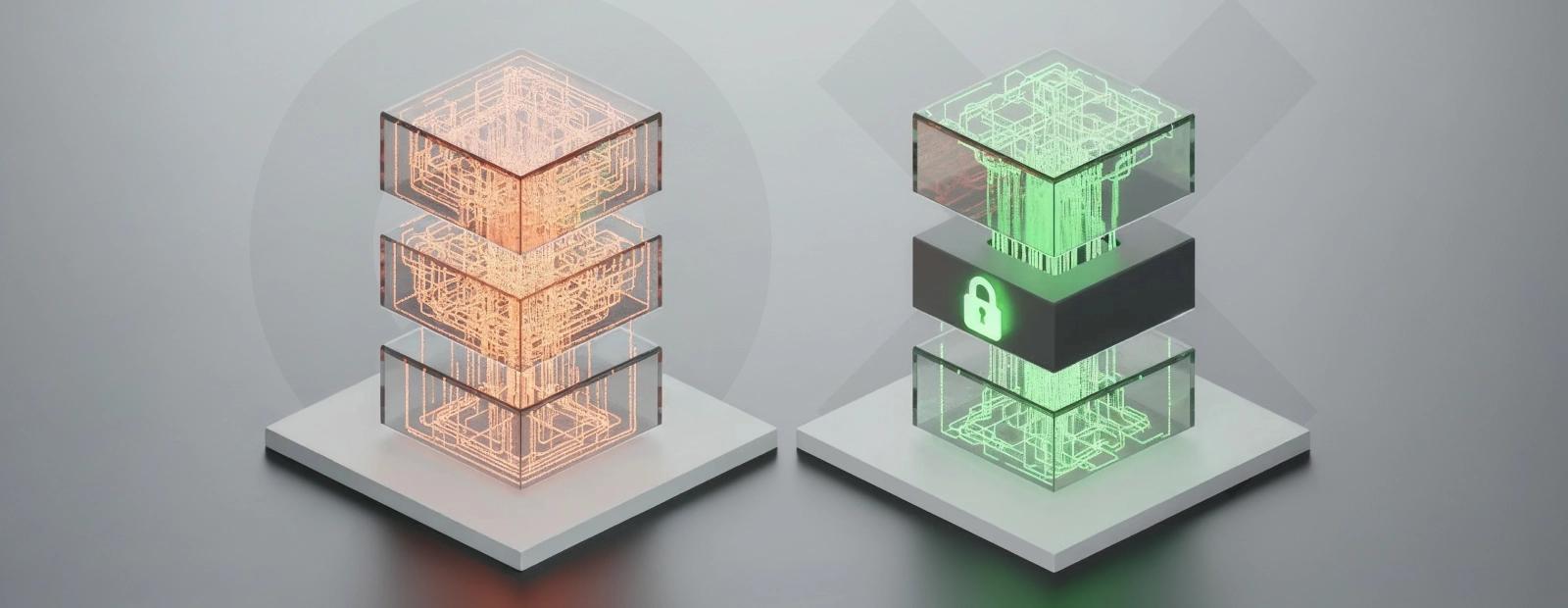
Key benefits of implementing ZK-proofs:
- Privacy – minimisation of personal and financial data disclosure.
- Scalability – reduction of the load on the blockchain by aggregating transactions.
- Compliance – meeting GDPR, CCPA, and AML requirements without storing PII (Personally Identifiable Information).
This solves the main dilemma of payment systems: how to guarantee the accuracy and legality of a payment without having direct access to sensitive personal information.
Basic principle of operation
The ZK-proof protocol is a cryptographic algorithm that allows one party (the prover) to convince the other party (the verifier) of the correctness of a certain statement without providing additional information. A classic example is a situation where a user wants to confirm that they have sufficient funds in their account (≥$100) without revealing the exact balance.
The process is as follows: first, the proving party generates a special proof that confirms the truth of the statement. Then, the verifying party examines this proof and verifies the truthfulness of the statement without learning anything unnecessary about the account status.
The mathematical foundations of ZK-proofs guarantee two important things:
- If the statement is false, the chance of successfully passing the verification is practically zero.
- The verifying party cannot extract any additional information from the proof itself, other than confidence in its truthfulness.
Types of ZK protocols
There are several types of ZK protocols, each with its own advantages and limitations:
- zk-SNARK (Succinct Non-interactive Arguments of Knowledge). Advantages: very short proof, no need for constant messaging (non-interactive). Disadvantages: need for prior trusted setup. Used for private transactions on the Zcash network and Ethereum scaling through rollup technologies.
- zk-STARK (Scalable Transparent Arguments of Knowledge) Advantages: transparency of the process without trusted setup, resistance to potential attacks. The main disadvantage is the larger size of proofs compared to zk-SNARK. It is used for high-load systems where maximum reliability and data protection are important.
- Bulletproofs. Advantages: compactness and ease of implementation, no complex trusted setup required. Main disadvantage: interactivity, interaction between parties is necessary. Used for anonymous Monero cryptocurrency transfers.
Key properties of ZK proofs
Any high-quality ZK protocol must have three fundamental characteristics:
Want to accept crypto payments on your website?

- Completeness – if the statement is true, an honest prover will be able to convince the verifier.
- Correctness – a fraudster will not be able to convince the verifier of a false statement.
- Zero disclosure – the verifier receives no information other than the fact that the statement is true.
How ZK proofs enhance the security of payment gateways
Zero-knowledge transactions not only keep payment data anonymous, but also increase its security. There are three main ways.
Confidential transactions
The use of ZK protocols opens up opportunities to increase the level of secrecy of operations. It is now possible to hide specific transfer amounts, leaving only the successful facts of transactions visible. The sender and recipient addresses can remain anonymous, providing an additional level of protection.
An example is a payment network that uses ZK-proofs to process money transfers between customers. An outside observer can only see the final status of the transaction, while the details (transfer amount, transaction participants) remain unknown.
Personal data protection
Technology is changing approaches to customer identification procedures (Know Your Customer, KYC). Instead of providing copies of passports and bank statements, customers now provide cryptographic proof of their identity and financial reliability.
For example, it is now possible to confirm age (‘over 18’) or citizenship (‘EU resident’) without showing a passport or ID card number. This practice fits perfectly with the concept of minimising the amount of data collected, as provided for in the GDPR.
Detecting fraud without compromising privacy
Anti-crisis mechanisms of payment systems are gaining additional tools to combat fraud, while simultaneously improving the protection of private information. Payment gateways are able to check a customer's transaction history (‘no suspicious transactions in the last month’), assess the riskiness of a profile or monitor compliance with set limits (‘transfer amount is less than the set daily threshold’). These procedures are performed without disclosing details of the customer's financial situation, significantly reducing the chances of malicious actors exploiting stolen data.
ZK-proofs in KYC/AML procedures
It is impossible to achieve complete anonymity in payments. There are regulatory bodies that set requirements for companies that process transactions. This is especially true for businesses that have age restrictions. To ensure that companies do not violate regulations and fall under sanctions, ZK-proofs offers several ways to verify customer data.
Certification without disclosing documents.
It is now possible to replace the transfer of paper copies of documents with digital identity verification using ZK protocols. Customers confirm their identity through cryptographic proof issued by a certification centre. Examples of such assertions include:
- Confirmation of age (‘over 18 years old’).
- Proof of solvency (‘income allows this transaction to be carried out’).
- Guarantee of the legal origin of funds (‘money received from an authorised source’).
This eliminates the need to send scanned images of passports and income statements in plain text.
Interbank information exchange
ZK protocols make it possible to securely exchange compliance confirmations between financial institutions without revealing the source data. This helps to avoid unnecessary duplication of checks and to create distributed registries of verified customers. For example, Bank A can send Bank B proof that a customer has passed an AML check without transferring personal information.
Compliance with GDPR and CCPA
ZK protocols comply with key provisions of data protection legislation:
- Minimisation of stored information – personal data is not stored in payment system databases.
- Right to be forgotten – deleting the source data does not interfere with the functioning of previously created evidence.
- Transparency of processes – users independently determine which information is subject to verification.
Scaling payment systems through ZK-rollups
ZK-rollup is a technology for combining hundreds of individual transactions into a single cryptographic certificate. The process involves four stages:
- Collecting a large number of transactions outside the main block chain.
- Creating a single ZK-proof confirming the correctness of each individual transaction.
- Recording the received proof directly in the blockchain.
- Automatic verification by a smart contract and updating the overall state of the system.
This approach reduces the computational load on the main network, increasing its performance by tens and hundreds of times.
Advantages for payment gateways:
- lower fees – gas is paid only for the proof, not for each transaction;
- increased throughput – up to 2,000 transactions/sec;
- finality guarantee – instant finalisation after proof verification.
Integration of ZK-proofs into existing payment infrastructures
For full implementation of ZK solutions, companies will need to modernise their internal processes and infrastructure:
- Modify existing API interfaces by adding special entry points for generating and verifying ZK proofs.
- Installing specialised cryptographic libraries (e.g., solutions from Zcash or StarkWare).
- Configuring Trusted Execution Environments (TEEs) for secure proof generation.
- Organising employee training to understand the principles of ZK protocols.
Ready to take your payment system to a new level of security and efficiency?
0xProcessing specialists are ready to advise you on the integration of ZK protocols, select the optimal technical solution, and provide comprehensive support at all stages of implementation. Contact us today to be the first to take advantage of this breakthrough technology!
Challenges and limitations of ZK technologies
Despite its obvious advantages, the use of ZK protocols is associated with certain difficulties:
Complexity of calculations
Generating some types of proofs requires significant processor and memory resources, sometimes taking several seconds. Specialised devices such as graphics processing units (GPUs) or application-specific integrated circuits (ASICs) are often required to speed up calculations. The energy costs of such calculations are also quite significant.
Legal nuances and regulation
There is no single international legal framework defining the status of ZK proofs. Different countries' legislations treat them differently, which creates uncertainty in the legal recognition of such evidence. A separate issue remains the reconciliation of the right to privacy and the obligation of banks to know their customers (KYC).
Ease of use
Users often find it difficult to understand the concept of ‘proof without disclosure.’ It is necessary to develop convenient and intuitive interfaces that allow ZK mechanisms to be applied unnoticed by the end user. Banks and services will have to launch educational programmes explaining the essence of the technology, how evidence is generated, and the guarantees it provides to customers. It is also useful to introduce visual interface elements that demonstrate the verification stages (e.g., a progress bar with the explanation ‘ZK proof is being generated...’).
The future of ZK proofs in the payment industry
ZK technologies are developing in several directions:
- Hardware acceleration of calculations (specialised chips reduce the time it takes to generate proofs from seconds to milliseconds).
- Standardisation of interfaces (development of unified APIs based on the recommendations of consortia such as W3C).
- Hybrid protocols (combining the advantages of zk-SNARK and zk-STARK).
Completely new scenarios for using ZK protocols are emerging. Credit assessments without income disclosure (proof of credit rating above a specified value without disclosing salary or property value). Insurance payments with automatic event verification (e.g., flooding of a house is recorded by Internet of Things sensors and confirmed by a ZK protocol). Tokenisation of assets with complete concealment of transaction details (investor, investment amount, origin of capital). Micropayments with minimal fees (e.g., pay-per-character for digital content).
Regulators are beginning to consider the integration of ZK protocols into industry security standards (PCI DSS). There is an active dialogue with international organisations (Financial Action Task Force, FATF) on the combination of monitoring suspicious transactions and respecting the right to privacy. Some countries are creating experimental zones to test innovative approaches in the fintech industry. It is expected that case law will develop that recognises the legal significance of ZK evidence alongside traditional documents.
Conclusion
ZK protocols represent a new security paradigm in payment systems, harmoniously combining three key aspects:
- Security. Absolute confidence in the accuracy of transactions thanks to reliable cryptography.
- Confidentiality. Maximum restriction on the disclosure of personal and financial data.
- Performance. Effective reduction of infrastructure load through transaction aggregation.
Today, investments in the development of ZK infrastructure allow organisations to stay ahead of future regulatory standards, release unique financial products (e.g., private stablecoins) and strengthen consumer confidence through maximum transparency of the algorithms used.
Companies implementing ZK technologies gain significant competitive advantages:
- Attracting customers who care about the security of their personal information.
- Readiness for new legislative initiatives (GDPR, CCPA, etc.).
- Savings on the storage and processing of large amounts of personal data.
0xProcessing specialists are ready to advise you on the integration of ZK protocols, select the optimal technical solution, and provide comprehensive support at all stages of implementation. Contact us today to be among the first to take advantage of this technology.
FAQ
What is ZK-proof in relation to payments?
ZK-proof is a cryptographic method for confirming the truth of a statement (for example, the availability of sufficient funds to pay for a service) without disclosing the underlying information itself.
How does ZK-proof protect my personal data?
Instead of providing sensitive documents such as a passport or bank statement, the system accepts mathematical proof that you meet specific requirements (age, income level, legal source of funds) without revealing the data itself.
Does ZK-proof slow down my transactions?
No. For most users, ZK proofs are generated in a fraction of a second on modern devices. Moreover, the use of ZK-rollups can significantly speed up the processing of large volumes of payments.
Is it possible to cheat ZK-proof?
The probability of successful falsification is extremely low due to the strict mathematical foundations of the technology. Security depends on correct protocol implementation and the reliability of the underlying cryptographic algorithms.
How do banks carry out KYC procedures if the data is hidden?
Banks rely on trusted intermediary services, such as government registries or certification authorities, which issue ZK proofs confirming data validity without directly disclosing the personal information.
Do users need to install anything to work with ZK proofs?
In most cases, no. ZK-proof technology is integrated into existing applications, such as wallets and banking services, and operates as a background mechanism without requiring additional installation.