The world of cryptocurrency is changing rapidly. Ten years ago, users were satisfied with simple wallets for storing one or two assets. Today, the market demands more: convenience, security, and versatility. Narrowly focused solutions are being replaced by unified wallets – a single hub for managing all digital assets.
According to Chainalysis, in 2025, cryptocurrency activity grew by 49% in North America and 42% in Europe. If we evaluate the growth of B2B payments in
stablecoins, since the beginning of 2023, it has grown 30 times to $3 billion. Businesses cannot ignore the rapid growth in demand for cryptocurrency. Introducing it as a payment method allows them to enter new markets, accept payments from customers in different countries, and save on commissions, as the cost of crypto transfers is lower than that of traditional methods.
To simplify user interaction with the crypto world, I use Unified Wallets. They are a single point of entry for interacting with various blockchains, protocols, and financial services. These innovative solutions allow users to easily perform transactions with dozens of cryptocurrencies, interact with decentralised applications, and even integrate with the traditional financial system.
What are Unified Wallets?
Unified Wallet is a new generation wallet that provides centralised control over all your digital assets. Instead of multiple applications and services, you only need one solution that combines BTC, ETH, stablecoins, NFTs and more in one intuitive interface.
Key features:
- Multi-currency support. Manage a wide range of cryptocurrencies and tokens.
- DeFi and CeFi integration. Access lending, borrowing, staking, and other financial products.
- Single sign-on. Simplicity and reliability thanks to a single point of entry.
- Key management. Secure storage of private keys with social recovery capability.
These features make Unified Wallet an indispensable tool for both experienced traders and beginners looking to simplify their interaction with the world of cryptocurrencies.
Use cases:
- Payments – pay for goods/services in cryptocurrency without conversion.
- Staking – passive income directly from your wallet (e.g., 5% per annum on USDC).
- Cross-chain transfers – sending assets between blockchains in one click (e.g., BTC → ETH via Lightning Network + Rollup).
- NFT operations – buying, selling, and transferring digital collectibles.
Full functionality depends on the specific features of a particular wallet.
How Unified Wallets work
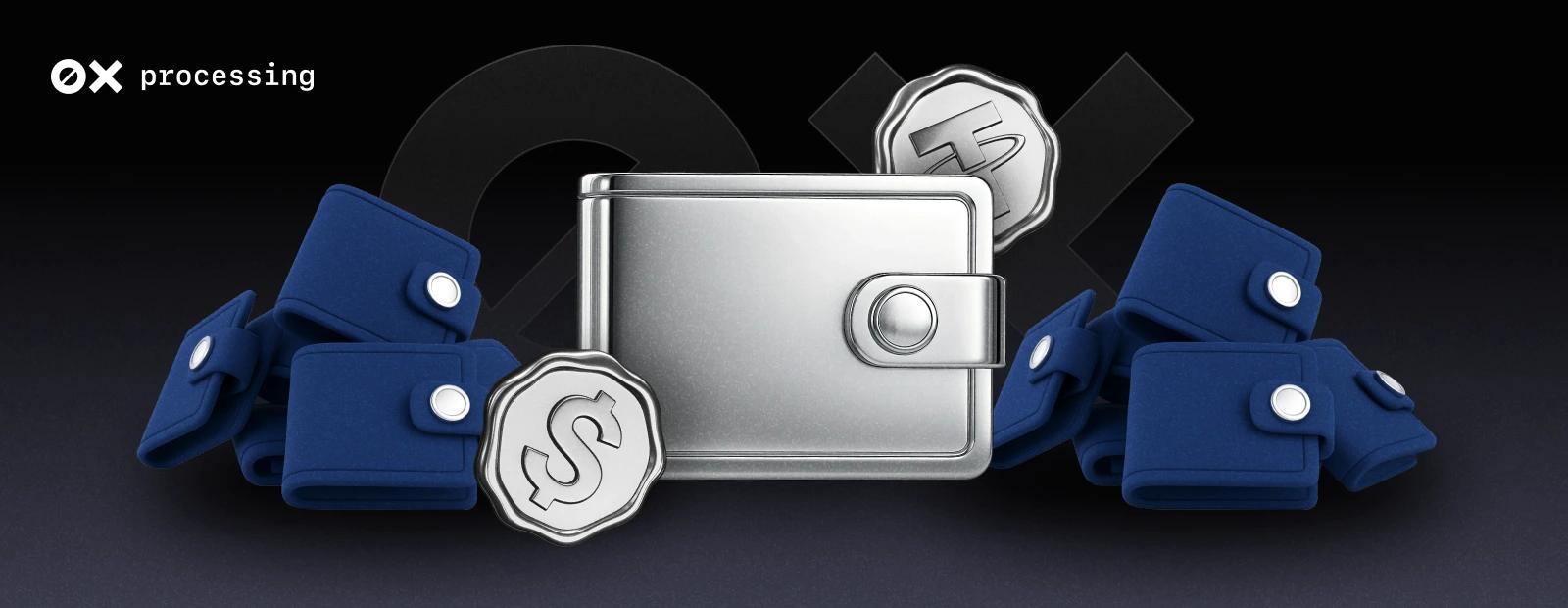
Unified Wallets are based on two models – non-custodial and custodial. In the first format, the user has complete control over the keys. MPC can be used – the key is divided into fragments stored at different nodes. Even if one fragment is compromised, the assets remain secure. Examples: Guarda, MetaMask.
Want to accept crypto payments on your website?
Custodial wallets:
- The keys are stored with the provider.
- Convenient for beginners, but with increased risks (hacks, freezes).
- Examples: Coin Wallet, centralised exchange wallets.
MPC (Multi-Party Computation) and smart contracts play a key role in ensuring the security of cryptocurrency wallets. MPC allows traditional private keys to be replaced with distributed signature schemes. Smart contracts are designed to automate operating rules, such as transaction limits and multi-signature.
Modern crypto wallets can be connected via API to biometrics, payment systems, or decentralised applications.
Transaction process:
- The user selects the asset and amount in the interface.
- The wallet analyses the network: it determines the optimal network (main blockchain or L2, for example, Arbitrum), calculates the commission (comparing Gas Fees on different networks).
- The transaction is signed via MPC or smart contract.
- The data is sent to the network and confirmed by miners/validators.
- The user receives a notification of completion.
Thanks to standardisation, such as EIP-4337 for abstract accounts, the process has become easier and faster than ever before.
Top 5 Unified Wallets 2026
There are several solutions on the market, each with its own advantages and disadvantages. The table compares the performance of five popular Unified Wallets.
| Name | Key features | Target audience | Pros | Cons |
|---|---|---|---|---|
| Trust Wallet | Supports 50+ blockchains, built-in exchange | Retail investors | Open source, integration with Binance, simplicity | Limited DeFi capabilities, no fiat gateway |
| Coin Wallet | Fiat gateways, fast P2P transactions | Mass market | Low fees, intuitive interface | Custodial model, limited asset selection |
| Guarda | Hardware protection, anonymous coins | Privacy advocates | High security, hardware key support | Complex interface for beginners |
| MetaMask | Deep integration with the Ethereum ecosystem | Developers and enthusiasts | Popularity, support for L2 solutions (Optimism, Arbitrum) | Focus on EVM blockchains, no fiat transactions |
| Ari Wallet | Automatic exchange, AI transaction routing, RWA support | Businesses and institutions | Commission optimisation, predictive analytics, corporate API. | Closed code, high subscription cost |
Each of these wallets offers a unique experience that meets the needs of different market segments.
Why is it important for businesses to keep an eye on the growth of Unified Wallets?
In 2025, the number of online shops accepting cryptocurrency for payment increased. This growth trend will continue in 2026. This is due to the demand for cryptocurrency as a means of payment and for conducting business. The volume of B2B payments via stablecoins has reached $50 billion annually. In 2024, 562 million people used cryptocurrency. According to former hedge fund manager and cryptocurrency advocate Raul Pala, the total number of cryptocurrency users could reach 4 billion by 2030.
Businesses cannot ignore these trends. Companies that integrate crypto payments enjoy a number of significant advantages:
- Lower fees. The average cost of processing transactions is halved compared to traditional methods.
- Global accessibility. The ability to instantly serve customers around the world without currency control restrictions.
- Speed of settlement. Payment confirmation takes minutes instead of days.
Today, crypto payments are accepted everywhere. E-commerce – Amazon, Alibaba and other giants are implementing cryptocurrency support. Travel and tourism – Booking.com, Airbnb and major airlines are actively developing partnerships with crypto payment providers. Software and subscriptions – Microsoft, Adobe and Netflix are testing new payment methods.
Want to quickly and reliably connect cryptocurrency acceptance? Check out 0xProcessing – a modern gateway for processing crypto payments. Advantages of 0xProcessing:
- Support for over 65+ cryptocurrencies and stablecoins.
- Convenient API for easy integration with existing systems.
- Automatic conversion of incoming funds into stablecoins.
- Individual tariffs for each client.
Connect to 0xProcessing now and start accepting cryptocurrency payments in less than a day.
How to use Unified Wallets safely?
To use Unified Wallets safely, it is important to follow security measures for both hardware and software wallets. The main recommendations can be divided into two categories: basic and advanced.
Basic security measures
- Do not store your seed phrase digitally. Write it down on paper and keep it in a safe place (safe, bank deposit box). Never photograph your seed phrase or store it in the cloud, messengers, or on your phone.
- Use two-factor authentication (2FA). Enable 2FA on all accounts related to cryptocurrency. It is better to use apps like Google Authenticator or Authy rather than SMS, as SMS codes can be intercepted.
- Update your software regularly. Update your operating system, wallet apps, and antivirus software. This helps to close vulnerabilities.
- Avoid phishing. Do not click on suspicious links, check website domains, and do not enter data on fake resources. Fraudsters often create fake exchange or wallet websites.
- Do not store large amounts on exchanges. Transfer the bulk of your funds to a personal wallet (hardware or software) after purchase.
- Check recipient addresses. Before sending cryptocurrency, check the first and last 4 characters of the address or use a QR code on two devices.
Advanced security measures
- Use a hardware wallet. Devices such as Ledger or Trezor store private keys offline, minimising the risk of hacking. Even if your computer is infected, your funds will remain safe.
- Separate your wallets. Keep small amounts for daily transactions in a ‘hot’ wallet (connected to the internet) and the bulk of your assets in a ‘cold’ wallet (hardware or paper).
- Set up multi-signature. Require multiple confirmations for fund transfers. This is useful if several people need to jointly manage assets.
- Use watch-only mode. It allows you to check your balance and receipts, but not transfer funds, which reduces the risks when working with public devices.
- Encrypt your data. If you store your seed phrase or keys on a device, use hard drive encryption.
- Avoid public Wi-Fi. When working with cryptocurrency, use a VPN or mobile internet. Public networks are vulnerable to man-in-the-middle attacks.
- Check your wallet activity regularly. Enable transaction notifications and monitor suspicious transactions.
Additional recommendations:
- Do not share access. Do not disclose passwords, seed phrases or keys to anyone, even close friends. Technical support never asks for such information.
- Use a password manager. Create unique and complex passwords for each service.
- Verify the authenticity of applications. Download wallets only from official websites, not from app stores, where there may be fake versions.
- Create a ‘crypto will’. Encrypt your seed phrase and access instructions, and store them in a safe or with a notary.
- If you suspect that your wallet has been compromised, immediately transfer your funds to a new address, change your passwords, and contact law enforcement.
Important: cryptocurrency security depends not only on technical measures, but also on your vigilance. Regularly learn about new threats and protection methods, and follow the news in the field of cybersecurity.
Conclusion
Unified Wallets are becoming a real bridge between the traditional banking sector and the rapidly developing world of cryptocurrencies. By 2030, full integration with traditional financial institutions, widespread use in developing economies, and a clear legal framework (such as MiCA in Europe and similar initiatives in the US and Asia). Businesses should already be considering integrating cryptocurrencies as a payment method so as not to miss out on the growing audience of crypto users.
FAQ
What is a Unified Wallet?
It is a new generation digital wallet that allows you to manage multiple cryptocurrencies and tokens through a single interface.
Are Unified Wallets secure?
Yes, when basic precautions are taken, modern Unified Wallets provide a high level of protection for your funds.
Which cryptocurrencies do Unified Wallets support?
How can a business start accepting crypto payments?
The easiest way is to use specialised payment gateways such as 0xProcessing, which provide fast and convenient integration.
Can I convert cryptocurrency to fiat through Unified Wallet?
Many advanced wallets offer this option either directly or through partner gateways.
What should I do if I lose access to my wallet?
Try to restore access through the recovery mechanism (if available) or contact your provider's support team.