When I talk to operators about payouts, the complaint is rarely “the blockchain is slow.” It is almost always somewhere between the withdrawal button and the moment someone actually signs the transaction.
Earlier in my career, I worked on growth at Cryptoprocessing by CoinsPaid, which provided API-based crypto payment infrastructure to online businesses and had a significant footprint in iGaming. That experience taught me to pay more attention to what happens before broadcast than to headline claims about blockchain speed.
Smart contracts and automated crypto infrastructure can remove several of these waits by automating approval and execution. But network congestion, transaction fees, fraud controls, compliance checks, and confirmation requirements still affect how quickly funds reach a player. That distinction determines what an instant payout payment gateway can honestly promise.
Why "Automatic" Withdrawals Are Not "Instant"
UK Gambling Commission data offers a benchmark for how automated withdrawals already are, though it does not isolate crypto payouts. Between June and September 2024, GB-licensed operators processed 44.2 million withdrawals: 96.3% cleared automatically, another 3.5% within 24 hours, and around 0.1% took more than 48 hours.
But automatic does not mean instant. Even after release, settlement can depend on external infrastructure, including whether the customer's bank supports instant payments.
This is where crypto shortens the final leg. Once approved, an on-chain payout bypasses banks and card networks. Settlement typically takes seconds to minutes, depending on the blockchain and required confirmation level.
Traditional payout vs. on-chain payout
|
Stage |
Card / bank payout |
Automated on-chain payout |
|
AML / fraud checks |
Operator / PSP |
Operator / gateway, often via API |
|
Approval |
Automated or manual |
Automated or manual |
|
Payment execution |
PSP / banking rail |
Transaction signing and broadcast |
|
Availability constraints |
May depend on processing windows and banking hours |
Blockchain settlement is available 24/7 |
|
Settlement |
Depends on PSP and receiving bank |
Depends on block inclusion and confirmation policy |
|
Reversal model |
Some payment flows remain exposed to reversals or disputes |
Confirmed blockchain transfers generally have no card-style chargeback |
The main advantage is that an automated crypto payout can remove intermediaries and waiting periods between approval and execution.
The difference becomes more visible when a payout enters a risk-scored flow. In a traditional setup, an operator may approve the withdrawal while the PSP still applies its own fraud rules, processing logic, settlement schedule, or manual-review triggers. Each additional decision point can extend the time between approval and actual payment execution.
With programmable crypto payouts, more of that logic can be evaluated before execution. A withdrawal that satisfies predefined balance, identity, fraud, and transaction-risk conditions can move directly from approval to signing and broadcast. Higher-risk withdrawals can still be diverted to manual review. The speed advantage therefore comes from reducing the number of sequential handoffs for routine payouts, rather than removing risk controls altogether.
How Smart Contracts Cut Withdrawal Times
What a smart contract replaces in the payout flow
Traditional payouts can be delayed by manual reviews, batch processing, payment providers, and banking hours. Smart contracts and programmable payout infrastructure can remove some of these waiting points by automating approval and execution.
In a basic smart contract escrow model, funds are held in a smart contract and released automatically once predefined conditions are met.
A simplified smart contract-enabled payout process might look like this:

Want to accept crypto payments on your website?
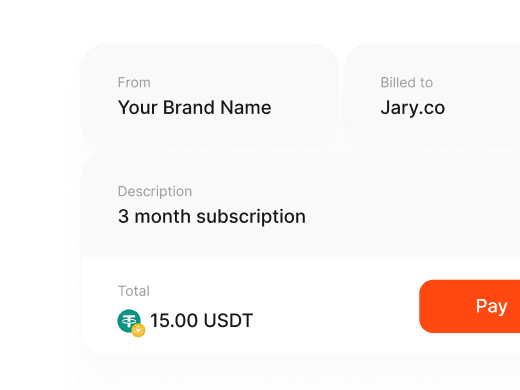
Routine payouts that pass eligibility and risk checks can proceed automatically, while flagged withdrawals move to manual review. This makes the gap between "this payout is valid" and "this payout has been executed" programmable.
Contract-enforced controls that make speed safer
Automation still needs constraints. Contract logic or programmable signing policies can enforce:
- per-transaction and daily payout limits;
- allowlisted or previously verified destination addresses;
- multi-signature approval above defined thresholds;
- batch functions that pay multiple players in one transaction.
These controls allow routine withdrawals to proceed automatically while exceptions are sent for additional review.
Three payout architectures, and only one uses on-chain escrow
"Smart contract payouts" can describe several architectures:
- On-chain escrow. A contract holds assets and its logic controls their release.
- Treasury-funded payouts with contract-enforced rules. Liquidity remains in operational wallets while contracts or programmable signing policies govern execution.
- Off-chain rules engine with an on-chain transfer. Eligibility, fraud, AML, and balance checks run in the operator's backend. Approved payouts are then signed and broadcast as ordinary blockchain transactions.
The third model can be fully automated without a contract holding player funds.
That is why the useful question for a casino payment gateway is which steps between a withdrawal request and transaction broadcast still require human intervention.
Anatomy of an Instant Crypto Withdrawal
A crypto withdrawal passes through several stages:
request → approval → compliance checks → transaction creation and signing → broadcast → block inclusion → confirmation or finality.
|
Stage |
Who controls it |
Timing |
|
Eligibility and compliance checks |
Operator or gateway |
Depends on automation and whether manual review is required |
|
Transaction creation and signing |
Gateway or operator |
Infrastructure-dependent |
|
Broadcast and block inclusion |
Network |
Typically around one block depending on the network |
|
Confirmation / finality |
Network + operator policy |
Network-dependent |
For operators choosing an iGaming payment gateway, the important metric is the total time across these stages. Delays should also be visible to the user, especially when a payout is waiting for review or blockchain confirmation.
0xProcessing supports API-based payment infrastructure, automated webhooks, and mass payouts. Its infrastructure tracks transaction status and sends payment and withdrawal updates via webhook, helping merchants monitor transaction progress.
This distinction matters because the bottleneck can occur before or after broadcast. A faster blockchain will not solve a slow approval process, while fast internal processing cannot eliminate network congestion or confirmation time.
Advertised vs. Experienced Crypto Withdrawal Times
Published withdrawal times describe the expected normal flow, not necessarily how long every player waits from clicking Withdraw to receiving funds.
|
Casino |
Official crypto withdrawal claim |
Review/KYC conditions |
What the claim tells us |
|
Stake |
“Instant” |
Mandatory KYC levels apply |
Describes the standard automated path, not a guaranteed end-to-end SLA |
|
Roobet |
“Instant” |
Risk-based KYC; additional verification may be triggered by player activity |
Automation can shorten the normal flow, while risk checks can still delay individual withdrawals |
|
Rollbit |
We could not find a published withdrawal-time benchmark |
Crypto transactions are screened and enhanced due diligence may apply |
Without a published time benchmark, “automatic” processing should not be treated as an instant-withdrawal guarantee |
|
Shuffle |
Says independent tests found withdrawals taking under a minute to a few minutes, depending on the network |
Tiered KYC; additional verification can be triggered |
Provides a measurable benchmark while leaving room for exceptions and review |
Note: Information is based on publicly available operator materials and reviews as of September 2026 and may change.
The pattern is important for iGaming payment processing: “instant” usually describes the normal automated path, not a guaranteed end-to-end SLA. The largest delays occur when a transaction leaves that path and enters KYC, AML, fraud, or manual review.
Confirmation, Finality and Gas: Network Choice Changes the Bottleneck
A blockchain transaction may be authorized, signed, broadcast, included in a block, confirmed, and eventually considered finalized. Those are different states.
Ethereum distinguishes block inclusion from later justification and finalization, while Solana uses processed, confirmed, and finalized commitment levels. Casino operators and gambling payment processors therefore need to define when a withdrawal counts as complete.
For stablecoin payouts, network choice can produce very different results:
|
Network |
Block / slot time |
Typical finality |
Typical fee characteristics |
|
Ethereum mainnet |
~12 s |
~15 min |
Gas varies with demand |
|
TRON |
~3 s |
~1 min |
USDT transfer costs depend on available Energy |
|
Solana |
Sub-second slots |
Around 13 s |
Typically low transaction fees |
Technical performance is only part of network selection. Player access can matter just as much. As Gleb Garusov, CBDO at BCRAFT, explains:
“TRON is generally the preferred network, although this can vary by region. How easy it is for players to acquire assets on a particular network, as well as changes in transaction costs, can make one network more practical than another in different markets.”
The fastest network on paper is therefore not always the most practical payout rail for a particular market.
How Irreversibility Reduces Settlement Uncertainty
Confirmed blockchain payouts generally have no card-style chargeback mechanism. Once the required confirmation threshold has been reached, the operator can treat the payout as settled without keeping it operationally open for a later chargeback or dispute. This gives crypto payouts a clearer settlement endpoint and can simplify reconciliation and post-payment operations.
The trade-off is that key risk checks need to happen before execution. The system needs to validate the destination address, network, asset, amount, authorization, fraud signals, and sanctions exposure before signing and broadcasting the payout.
Stablecoins can add a separate layer of issuer control. For example, a USDC transfer may be final on-chain, while Circle retains the ability to block certain addresses from sending or receiving USDC. Blockchain finality and issuer-level controls should therefore be treated separately.
Compliance at Payout Speed: Travel Rule, VASP Status and Sanctions
Crypto payouts remain subject to applicable AML, KYC, sanctions, and Travel Rule requirements. FATF reported in July 2026 that 83% of surveyed jurisdictions had Travel Rule legislation in force. The exact obligations depend on which entity moves the funds, what activities it performs, and where it operates.
Who is regulated in the payout chain?
Depending on their role, the regulated entity may be the operator, crypto payment provider, custodian, or another intermediary that handles the transfer. The key factor is what each company actually does in the payout flow.
Under FATF standards, a business that transfers virtual assets on behalf of another person can fall within the definition of a VASP. In the EU, CASPs involved in crypto transfers have obligations to collect and transmit information about the originator and beneficiary.
Self-hosted wallets add another requirement. When an EU CASP handles a transfer exceeding EUR 1,000 to or from a self-hosted address, it must take adequate measures to assess whether the address is owned or controlled by its client.
At my company, PBC, we deal with a similar distinction on the banking side: having the right licence and passing a risk assessment are two different things. I think the same distinction matters in payouts. A withdrawal that was clean when requested is not automatically clean when it is signed, especially if the risk picture changes while the transaction is waiting.
The time-of-check problem
A destination address can pass screening when a withdrawal is requested but become linked to sanctioned or high-risk activity before the transaction is signed. Screening only at request time can therefore leave a compliance gap.
The final risk check should occur as close to signing as possible, while the payout can still be stopped before broadcast.
Stablecoin Cross-Border Payments for Casino Payouts
Stablecoins such as USDT and USDC can reduce exchange-rate exposure when operators collect deposits in one market and fund payouts in another. But accepting volatile assets still creates treasury risk between receipt and conversion.
0xProcessing, for example, addresses this with its Volatility Risk Control System (VRCS), which can automatically convert incoming crypto payments into USDT. This allows operators to accept a broader range of cryptocurrencies while keeping incoming value in a stable asset for treasury management and payouts.
Stablecoin choice still depends on network fees, liquidity, wallet support, and the regulatory requirements of the markets where the operator is active.
What Happens When an Instant Payout Fails?
When an instant crypto payout fails, it may remain pending, require a safe retry, or be routed for manual review, depending on where the failure occurred. Before retrying, the system needs to determine whether the transaction reached the blockchain to avoid sending the same payout twice.
Failures can result from:
- a failed connection to the blockchain network
- insufficient gas or liquidity
- signing problems
- network congestion
- changing compliance signals
- insufficient treasury balances
This is why payout infrastructure needs duplicate-payment protection: one withdrawal request should correspond to one intended payment even when infrastructure calls are retried.
Monitoring, reconciliation, alerts, retry logic, and fallback infrastructure are therefore part of payout performance. A system that broadcasts transactions quickly but regularly requires manual recovery cannot reliably deliver instant withdrawals.
How to Evaluate an Instant Payout Payment Gateway
A crypto payment gateway can remove much of the blockchain-specific complexity from a casino's core infrastructure. This can include RPC connectivity, transaction construction and signing, fee estimation, confirmation tracking, AML/KYT integrations, reconciliation, webhooks, and multi-chain treasury operations.
The first question is what the provider means by "instant." A claim such as "under one minute" could measure request-to-broadcast, broadcast-to-first-confirmation, or the entire process from withdrawal request to finality.
Before choosing a casino payment gateway, operators should ask:
- Which payout architecture is used, and which stages are automated?
- Where does the payout SLA start and stop?
- How long do approved payouts take to reach the blockchain?
- Which confirmation level marks a withdrawal complete on each network?
- How are stuck transactions, retries, and duplicate payouts handled?
- When does the final AML/KYT and sanctions screening occur?
- Which legal entity moves the funds, and under what licence or registration?
- How are private keys and hot-wallet limits managed?
0xProcessing provides crypto payment infrastructure for industries including iGaming, with features such as mass payouts to players, webhooks, and volatility protection. Mass payouts can help operators handle withdrawal peaks, while webhooks provide payment-status updates without requiring the operator to repeatedly poll the network.
These capabilities should be evaluated across the full payout lifecycle: approval, broadcast, confirmation, compliance intervention, and failure recovery.
The Bottom Line on Instant Crypto Withdrawals
Smart contracts can shorten the gap between payout approval and execution, but they are only one part of the system. Actual withdrawal speed also depends on risk checks, signing infrastructure, liquidity, network confirmation, and failure recovery.
Providers such as 0xProcessing can handle parts of this infrastructure, while operators still need to understand where delays and manual intervention can occur.
For me, this leads to a much more useful question for any payment gateway:
“Don’t just tell me your payouts are instant. Show me where a payout can stop, who or what stops it, and how long it waits there.”
That answer tells an operator far more than the word “instant” ever will.
Disclaimer. This article is published for research and educational purposes only. It is not financial, legal, tax or investment advice, and nothing in it is an inducement or encouragement to gamble. Digital assets and gambling both carry a risk of total loss; any decision you take on the basis of this material, and any consequence of it, is yours alone.
FAQ
Are crypto casino withdrawals really instant?
Not always. Approval and broadcast can happen within seconds, but the blockchain still needs to include and confirm the transaction. Total withdrawal time also depends on compliance checks, network congestion, and the operator's confirmation policy.
What is the difference between an automatic and an instant withdrawal?
An automatic withdrawal proceeds without manual intervention. An instant withdrawal implies a very short end-to-end processing time. A payout can therefore be automatic while still waiting for a PSP, bank, blockchain confirmation, or compliance check.
Do smart contracts automatically pay casino winnings?
They can. Smart contracts can release funds when predefined conditions are satisfied, but not every automated crypto payout uses on-chain escrow. Some systems perform checks off-chain and then automatically sign and broadcast a normal blockchain transaction.
Can crypto casino withdrawals be reversed through a chargeback?
Confirmed blockchain payouts generally do not have a card-style chargeback mechanism. This creates stronger settlement finality, but it also makes pre-execution checks important because a transfer sent to the wrong address may not be recoverable.
What should operators look for in an iGaming payment gateway?
Operators should compare approval-to-broadcast speed, supported networks, confirmation policies, AML/KYT integration, licensing, treasury management, signing security, retry logic, reconciliation, and the percentage of withdrawals that require manual review.
 Crypto payment processors, Smart Contracts, Gambling payments, Payment integration, Compliance, Igaming business