If I were building an iGaming payment stack today, I would start with one question: which parts of the payment flow actually need to be solved?
At Paliani Business Consulting, where we work with businesses on growth and payments strategy, this is usually the more useful starting point than choosing between fiat and crypto too early. In 2026, the stronger approach is to understand where each rail works best and build the stack around that.
Key Takeaways
- Hybrid fiat + crypto setups give operators more payment coverage and flexibility.
- A dedicated crypto gateway like 0xProcessing is most useful when crypto deposits, withdrawals and stablecoin settlement are a regular part of the payment flow.
- The right setup depends on cost, settlement speed, compliance requirements and how much control the operator needs.
iGaming Payment Gateway vs PSP vs Payment Orchestration
iGaming payment solutions combine gateways, PSPs, acquirers, payment methods, orchestration and crypto infrastructure to handle deposits, withdrawals and settlement.
Before comparing iGaming payment providers, it helps to separate the jobs inside the payment stack.
The cashier is the interface the player sees. It displays available deposit and withdrawal methods, currencies, limits, amounts and payment status.
An iGaming payment gateway connects the cashier to the infrastructure processing the transaction, while a PSP can also provide acquiring, cards, bank payments, payouts, settlement and risk tools.
Payment orchestration connects and manages multiple PSPs or payment providers through one layer for routing, failover and reporting.
A crypto payment gateway connects the operator to blockchain networks. It can detect incoming transactions, track payment status, notify the operator, support withdrawals and, depending on the provider, manage conversion or settlement.
These models can overlap. Some providers combine traditional and crypto payments in one stack, others keep fiat with their PSPs and connect a dedicated crypto gateway alongside them.
Do You Need Payment Orchestration or a Direct Merchant Account?
A direct merchant account can be enough when an operator works with one acquirer and has a relatively simple payment setup. Payment orchestration becomes useful when several PSPs, markets, payment methods or backup routes need to be managed together.
A dedicated crypto payment gateway can run alongside the fiat setup. Orchestration is mainly useful when the operator needs to coordinate multiple fiat providers with dedicated crypto rails.
Types of Gambling Payment Processors
Different types of processors solve different parts of the payment flow.
Acquirer / full-stack PSP – handles card acceptance, acquiring, settlement and alternative payment methods. Examples include Nuvei and Paysafe. Gambling businesses usually fall under MCC 7995 (Merchant Category Code for gambling businesses), which can affect approval rates, reserves and fees.
Crypto-native gateway – handles blockchain deposits, payouts, transaction tracking and, depending on the provider, conversion. 0xProcessing is one example.
Payment orchestration platform – connects multiple PSPs or acquirers for routing, failover and reporting. Examples include Akurateco and Gr4vy.
E-wallet provider – supports deposits and withdrawals through stored-value wallets such as Skrill or Neteller.
Open Banking / Pay by Bank provider – enables direct account-to-account payments without relying on card rails. Trustly and Paysafe Pay by Bank are examples of this model.
Card payout provider – sends withdrawals directly to eligible payment cards. Services such as Visa Direct and Mastercard Send can support faster fiat payouts where available.
How iGaming Payment Processing Works
Traditional and crypto payments take different paths from deposit to settlement.
|
Stage |
Traditional payments |
Crypto payments |
|
Player initiates payment |
Card, bank, wallet or local method |
Crypto wallet |
|
Payment is checked |
Authentication, fraud and KYC controls |
Wallet, transaction and compliance screening |
|
Payment is authorized |
Bank or payment provider approves it |
Player signs and broadcasts the transaction |
|
Payment is routed |
Through PSP, acquirer or banking network |
Through the selected blockchain |
|
Value is settled |
Provider settles funds, usually in fiat |
Operator receives crypto, stablecoin or converted value |
|
Player balance is updated |
Operator credits the player after the required payment status |
Operator credits after the required confirmation and compliance status |
|
Player withdrawal |
Bank, card or wallet payout |
Transaction sent to the player's wallet |
|
Records are reconciled |
Provider reports + internal records |
Gateway records + blockchain transaction + internal records |
Blockchain removes some intermediaries, but operators still need to match deposits to players, verify the asset and network, complete required checks and wait for confirmations.
Crypto withdrawals add another sequence:
request → approval → compliance check → transaction sent → blockchain confirmation → status update
I broke down what actually happens at each stage in my previous article on instant crypto withdrawals. If payout speed is important to your payment setup, I recommend reading that one next.
Where iGaming Payment Processing Fails
Every payment rail has predictable failure points – the difference is whether the operator finds out from a support ticket or from an automated status.
On the card side, a payment can be declined by the issuing bank, flagged by fraud scoring, sent through 3DS authentication and abandoned mid-flow, or reversed later as a chargeback.
Crypto fails differently. A player can send funds on the wrong network, send less than the expected amount, let the payment window expire before broadcasting, or trigger an AML flag that holds the transaction for review before it can be credited.
What separates a workable setup from an operational headache is whether the provider turns failures into a status the operator's system can act on. 0xProcessing, for example, returns distinct statuses for cases such as underpayment or canceled payments, and sends updates to the merchant through webhooks. That gives the operator’s backend a clear trigger for the next step.
Crypto Payment Gateway Costs vs Traditional Payment Costs
Traditional and crypto payments create different costs for an operator.
|
Cost |
Traditional payments |
Crypto payments |
|
Processing |
Acquiring and PSP fees |
Gateway or processing fee |
|
Transaction costs |
Usually included in provider pricing |
Blockchain network fee |
|
Currency conversion |
FX fees may apply |
Conversion fees may apply |
|
Chargebacks |
Possible |
No card-style chargebacks |
|
Rolling reserves |
Often required by acquirers for high-risk businesses such as iGaming |
0% at blockchain level; provider-specific reserves may apply |
|
Settlement |
Depends on provider and currency |
On-chain transfer or conversion/off-ramp costs |
Let’s put some numbers on it.
Assume an iGaming operator processes $600,000 in deposits per month, with an average deposit of $100. That is roughly 6,000 transactions.
For the example below, I’ll use a 4% card processing rate, an 8% rolling reserve held for 180 days, a 0.5% chargeback rate and a $30 chargeback fee. For crypto, I’ll use USDT on TRON (TRC-20) with a 1% gateway fee. These are illustrative rates.

Here's what that looks like once the 180-day rolling reserve reaches a full cycle.
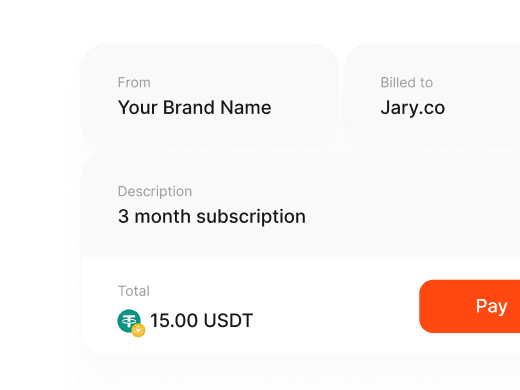
Want to accept crypto payments on your website?
So, over six months, card processing in this example costs $167,400 in processing and chargebacks, with another $288,000 tied up in rolling reserves. The same $3.6 million processed through USDT TRC-20 costs $36,000 in gateway fees before conversion and off-ramp costs.
Note: This is deliberately a simplified deposit-side comparison to make the cost difference visible. It does not include player withdrawals, payout fees, FX, conversion or off-ramp costs, all of which can change the final economics.
In practice, I’d follow the money all the way through: what does it cost to get a deposit in, and what does it cost to get a withdrawal out? That number matters much more than the fee advertised on a pricing page.
Crypto Settlement: What Happens After the Player Pays?
Once a player sends crypto, the payment goes through several stages before it appears in the casino balance.
1. The transaction goes to the blockchain.
The player sends the asset to the deposit address provided by the casino or its payment gateway. The transaction is broadcast to the selected network and included in a block.
2. The network confirms the payment.
The gateway waits until the transaction reaches its required confirmation threshold. This can take seconds or minutes depending on the network and the provider’s confirmation policy.
3. The gateway detects and verifies the deposit.
It checks that the payment reached the correct address and identifies the asset, network and amount. Depending on the setup, compliance checks may also happen before the deposit is accepted.
4. The casino credits the player.
Once the payment is accepted, the gateway sends the payment status to the operator, typically through an API or webhook. The casino then updates its internal ledger and the player sees the funds in their balance.
At that point, the deposit is complete from the player’s perspective.
Stablecoin Conversion and Treasury
What happens next depends on how the operator manages the received assets.
The operator can keep the original cryptocurrency, convert it into a stablecoin or eventually move the funds into fiat. Those stablecoin balances can also be used to pay partners or service providers, bringing B2B crypto payments into the same treasury flow.
0xProcessing's VRCS, for example, can automatically convert specified incoming cryptocurrencies into supported USDT balances.
This lets the operator offer players a wider choice of cryptocurrencies without necessarily holding every asset it accepts.
Casino Payment Gateway Integration
A casino payment gateway has to work with the operator’s existing cashier and backend. From the payment side, the integration comes down to three things: tracking deposits, automating payouts and keeping transaction records in sync.
API, Webhooks and Payment Statuses
The API connects the casino to the payment provider, while webhooks report what happens after a player pays.
For crypto, the operator needs to know which player made the deposit, which asset and network were used, how much arrived and when the balance can be credited. Underpayments, delays or transactions sent for review should also return clear statuses that the casino can handle automatically.
Fiat setups may also use routing or cascading. If one payment route fails, the transaction can be sent through another available provider instead of ending the payment attempt there.
Payout Automation
Gateway integration can also extend to withdrawals.
Once the casino approves a crypto payout and completes its required checks, the gateway can create the blockchain transaction and report its status back to the operator. For higher volumes, payout APIs can also process multiple withdrawals without the finance team creating every transaction manually.
Fiat payouts can involve additional rules around payment methods, limits and returning funds to the original payment method.
Reconciliation and Reporting
Every crypto payment leaves records in several places: the casino backend, the gateway and the blockchain. The operator needs to connect them.
Payment IDs, transaction hashes, assets, networks, amounts, fees and statuses make it possible to trace a deposit or withdrawal from the player account to the corresponding on-chain transaction.
Fiat reconciliation has its own complications, particularly when several PSPs or acquirers are involved. When chargebacks happen, the operator needs to connect disputes back to the original transaction and payment records.
Build vs Buy: Should Operators Build Payment Infrastructure?
Most operators do not need to build payment infrastructure in-house. A dedicated provider can handle network connectivity, payment detection, transaction monitoring, payouts and reconciliation while the operator retains control over its cashier and internal rules.
|
Buy / integrate |
Build in-house |
|
Faster launch |
Greater infrastructure control |
|
Provider handles infrastructure maintenance |
Operator owns maintenance and security |
|
Suitable for most payment setups |
Suitable when scale or custom requirements justify the cost |
|
Less internal engineering overhead |
Requires dedicated engineering and payment expertise |
Building makes more sense when owning the infrastructure creates enough operational or commercial value to justify the additional engineering, security and maintenance work.
Crypto-Native Gateway vs Traditional PSP With Crypto
In April 2026, Paysafe launched Pay with Crypto, powered by MoonPay, for eligible U.S. iGaming and daily fantasy sports operators. Players can deposit supported cryptocurrencies and stablecoins, while operators can receive settlement in fiat or stablecoins.
I think this is a useful example because it shows what “adding crypto” can actually mean. The operator does not have to build its own blockchain payment flow: MoonPay handles the crypto processing, monitoring, required KYC/AML checks, conversion and settlement.
For some operators, that is exactly enough. If players mostly use crypto as one more way to deposit, I would not overcomplicate the stack.
But if the operator is regularly moving money on-chain, handling crypto withdrawals, supporting several networks and keeping part of the treasury in stablecoins, I would want infrastructure built for that job.
Based on how these setups work in practice, the choice comes down to this:
|
If the operator needs... |
Setup to evaluate |
|
Crypto mainly as another cashier option |
PSP with integrated crypto support |
|
Cards and APMs alongside meaningful crypto volume |
Traditional PSP + dedicated crypto gateway |
|
Multiple fiat providers plus dedicated crypto rails |
Payment orchestration + dedicated crypto gateway |
|
Multi-network crypto deposits and withdrawals as a core payment flow |
Crypto-native gateway |
|
Direct control over stablecoin conversion and crypto treasury |
Dedicated crypto infrastructure |
|
Fiat and crypto through one provider relationship |
Full-service PSP with crypto support |
Ultimately, the amount of control you need over the crypto flow is what separates these setups.
Compliance and Regulation for iGaming Payments
If I were evaluating an iGaming payment setup, I would look at compliance early.
Fraud, AML and KYC Controls
Card processing comes with authentication, fraud monitoring, chargeback management and player KYC. Crypto removes card-style chargebacks, but it brings a different set of controls: wallet screening, sanctions checks, transaction monitoring and, where required, source-of-funds review.
A crypto gateway can automate part of this work, but it does not take over the operator’s own AML, KYC or licensing obligations. Operators still need to know which checks are handled by the provider and which remain on their side.
Crypto Payments and Licensing Requirements
Crypto support is not the same as permission to use crypto.
The rules also move at different speeds. In the UK, crypto is still treated as a higher-risk payment method, but the Gambling Commission said in May 2026 that it had started exploring how cryptoassets could be used more easily for payments in licensed gambling. Malta takes a more formal route, requiring approval for DLT-based payment methods.
That affects the payment flow too. A crypto transaction can already be on-chain and still not be ready to credit to the player if additional compliance checks are required.
A third-party gateway can make these workflows easier to manage, but it does not remove the operator’s own regulatory responsibilities.
How to Choose iGaming Payment Providers
When operators compare gambling payment processors, provider marketing tends to converge around the same words: global, seamless, secure, instant and scalable.
Those claims become more useful when converted into measurable questions:
- “We support crypto.” Does that mean deposits, withdrawals or both?
- “We support USDT.” On which networks?
- “Instant payouts.” Where does the timer start: withdrawal request, approval, broadcast or settlement?
- “Low fees.” Does the quoted price include network, conversion, payout and FX costs?
- “Automatic conversion.” Which assets can be converted, at what stage and at what cost?
- “AML included.” Which wallet, transaction and sanctions checks are actually performed?
- “Global coverage.” Which licensed markets and merchant categories are supported in practice?
- “Easy integration.” Which statuses and events are available through APIs or webhooks?
- “High success rate.” For which payment method, market and measurement period?
A normal payment flow demonstrates that a provider works. But it is failed payments, delayed withdrawals, compliance flags and reconciliation mismatches that reveal how much operational work the integration will create.
That is why tracking the right payment metrics after launch matters. Core performance data and rail-specific indicators help operators see where traditional and blockchain payment flows create friction.
 So, at minimum, operators should track deposit success rate, payout time, total processing cost, chargeback and fraud rates for fiat, blockchain confirmation time, compliance review rates and reconciliation exceptions.
What iGaming Payment Solutions Do Operators Actually Need?
I think that in 2026, operators have a strong reason to support both traditional and crypto payments.
Traditional payments cover familiar payment habits. Crypto adds another global rail for deposits, withdrawals and stablecoin settlement. Where regulation allows it, that can be a real competitive advantage.
For me, a hybrid fiat + crypto setup is one of the strongest models today: traditional payments through PSPs and local providers, with dedicated crypto infrastructure where blockchain payments become meaningful.
The exact setup depends on the operator’s markets, players, volumes and compliance requirements. The goal is to find the right mix of coverage, cost, settlement speed and operational control.
Disclaimer. This article is published for research and educational purposes only. It is not financial, legal, tax or investment advice, and nothing in it is an inducement or encouragement to gamble. Digital assets and gambling both carry a risk of total loss; any decision you take on the basis of this material, and any consequence of it, is yours alone.
FAQ
What are iGaming payment solutions?
iGaming payment solutions are systems used to accept player deposits, process withdrawals, manage payment risk and settle funds. They can include gateways, PSPs, acquirers, e-wallets, Open Banking providers, orchestration platforms and crypto payment gateways.
What is the difference between an iGaming payment gateway and a PSP?
A casino payment gateway connects the operator's cashier with payment infrastructure. A PSP can provide broader services such as acquiring, payment methods, settlement, payouts and risk tools.
Should operators use a crypto-native gateway or a PSP with crypto support?
A PSP can be sufficient when crypto is simply another deposit option. Dedicated infrastructure becomes more relevant when the operator needs direct blockchain payouts, several networks, stablecoin settlement or greater control over transaction flows.
Can iGaming operators use stablecoins for cross border payments?
Yes, where the regulatory setup allows it. Stablecoin cross-border payments can be used for business-side settlement, such as paying overseas service providers, rather than only for player deposits and withdrawals.
Which payment metrics should iGaming operators track?
Operators should track deposit success rates, payout time, processing costs, payment failures and reconciliation issues. Fiat setups also require chargeback and fraud monitoring, while crypto rails add confirmation time, network performance and compliance-review metrics.
 Crypto payment processors, Merchant strategies, Gambling payments, Payment integration, Compliance, Igaming business