No single AML provider suits every business, so start with the job you need done. Have to trace funds back to their source for a regulator? Most exchanges in that position run Chainalysis or TRM Labs. DeFi teams worried about bridges usually go with Elliptic, while Crystal Intelligence traces 330+ chains in a single graph and builds its reports to survive an audit. Small teams are the exception. Scorechain sells pay-as-you-go and monthly plans and gives away the first wallet check so that you can try it without an enterprise contract. Below we compare the best crypto AML software on screening, monitoring, API and cost, then look at when built-in payment monitoring is enough on its own.
Worth clearing up one thing first, because it saves a round of pointless demos. These crypto compliance providers get stuck with the "AML" label, but it covers two jobs that aren't the same. One is screening and monitoring, which answers a live question: is this wallet or transaction risky right now, usually through an API call at deposit or withdrawal. The other is investigation, which answers a backwards-looking question: where did these funds come from? It follows them across chains and bridges after an alert has already tripped. Plenty of businesses need both. Plenty only need the first. Figure out which you're buying, and the shortlist shrinks fast.
Best crypto AML providers at a glance
A few vendors count screening and forensic coverage separately, so compare the numbers for the module you'd actually buy.
|
Provider |
Screening & KYT |
Investigations |
Chain coverage |
API |
Pricing |
Best for |
|
Chainalysis |
KYT for transactions, plus wallet screening |
Reactor |
Yes, by contract |
Quote only |
Big exchanges, banks, government teams | |
|
TRM Labs |
Transaction Monitoring and Wallet Screening |
Forensics |
184+ blockchains for risk screening; 65+ blockchains for full investigative tracing |
Documented Wallet Screening API |
Quote only |
Wide screening with investigations |
|
Elliptic |
Lens, with continuous monitoring |
Investigator |
65+ chains, 250+ bridges |
Under 500ms per check |
Enterprise contract |
DeFi and cross-chain risk |
|
Crystal Intelligence |
Crystal Expert (screening and KYT) |
Crystal Expert |
330+ chains, 10,000+ assets |
REST, webhooks, Python and Node SDKs |
Through sales |
VASPs that need audit-ready evidence |
|
Scorechain |
Wallet screening, risk scores, monitoring |
Entity clustering |
21+ chains |
AML API |
Usage-based plans, first check free |
Small teams that want to start fast |
Read that table, and the real split isn't good providers versus bad ones. It's scope, price, and model. The top three live on enterprise contracts you negotiate your way into; Crystal also goes through sales, and Scorechain is the easiest to start with on pay-as-you-go. The question isn't who tops some leaderboard; it's which one matches where your business is right now.
Top crypto AML providers compared
Each review below is based on the vendor's own material.
Chainalysis
Regulators know Chainalysis, and so does almost every large exchange. Its KYT product watches transactions in real time, with wallet screening running alongside, and Reactor is where investigations happen. One risk-intelligence base feeds all of it. KYT covers 400+ networks and 50M+ tokens. Full tracing in Reactor reaches fewer, 27+ blockchains with 40M+ assets and 300+ bridges and DEXs.
Most of the price buys credibility. Supervisors trust the data, and the investigation tools have years of real cases behind them. Onboarding is slow and enterprise-heavy; there's no public price list or confirmed free tier, and you'll only learn the cost on a sales call.
TRM Labs
TRM Labs competes with Chainalysis on both fronts. Per the vendor's 2025 update, Wallet Screening reaches 184+ blockchains and Forensics 65+, so ask which number applies to you before signing. There's a documented Wallet Screening API for real-time deposit and withdrawal checks, which is what most businesses actually run.
Screening breadth is the main reason teams pick it. The cross-chain investigation side holds up too, and both crypto companies and public-sector users have been signing on. Pricing is quote-only, same as Chainalysis, with no confirmed free tier. If you want wide wallet coverage and investigations from one vendor, it's a sensible choice. Just check coverage for the module you'll lean on most.
Elliptic
Elliptic started on cross-chain tracing earlier than most. Lens screens wallets and transactions in real time, with continuous monitoring layered on, and Investigator handles casework. It all sits on one dataset and one risk engine. The vendor lists 65+ blockchains and 250+ bridges, claims 99% of digital-asset trading volume, and quotes synchronous API checks at under 500 milliseconds.
Its strength is anything that hops between chains, including DeFi and NFTs. You can set the risk scale from 0.0 to 10.0, and developers can get the API running quickly. Independent comparisons give Chainalysis more forensic brand weight and Elliptic faster real-time screening. Bitcoin and Ethereum have always had the deepest coverage; newer L1S and privacy coins get less attention. Pricing is by enterprise contract. Fintechs with DeFi integrations get the most out of it, and anyone who needs quick checks across bridges and protocols does, too.
Crystal Intelligence
Once known as Crystal Blockchain, Crystal Intelligence stands out for tracing breadth, following 330+ blockchains and 10,000+ digital assets in a single graph. Crystal Expert handles monitoring with 300+ rule configurations, investigation backed by attribution across 118,000+ entities, and reporting built to survive a VASP licence review or a courtroom. Sanctions screening runs against OFAC, EU, UN, UK, South Korea and Israel lists, refreshed roughly every 15 minutes, and there's a free BTC explorer, Crystal Lite, for a first look.
Its strengths are its chain coverage, attribution blending automated clustering with human verification, a full REST API with webhooks and Python and Node SDKs, and strong Travel Rule support through native integrations. The flip side is sales-led pricing with nothing published, and all that breadth can mean more setup before you're running. Lands best with VASPs and investigation-first teams that need audit-grade evidence across a lot of chains.
Scorechain
Scorechain is the one you can get started with on your own. It does wallet screening, risk scoring, transaction monitoring and entity clustering across 21+ blockchains through a documented Blockchain AML API. Plans are monthly, annual or pay-as-you-go and priced by usage, and the first wallet check through its Telegram AML bot costs nothing.
Smaller teams like it because they can start small, pay for what they use, and the API is built with compliance workflows in mind. It covers fewer chains than the big players, and its intelligence database is smaller. A team running deep cross-chain investigations will probably hit that ceiling at some point. For screening on a budget, without an enterprise contract, it's the most practical pick here.
Is your payment gateway screening incoming funds? With real-time KYT, every transaction in 100+ cryptocurrencies across 20+ networks gets checked against blacklists and sanctions data before it's credited.
Get startedHow we evaluated the AML providers
This look at the best blockchain analytics tools comes from each vendor's published product and documentation pages as of October 2026, not from us benchmarking detection accuracy by hand. For each provider, we checked eight things, roughly in this order: blockchain and asset coverage, wallet and transaction screening, risk scoring, sanctions coverage, continuous monitoring, API and integration options, pricing, and compliance workflows like case management and reporting.
Detection accuracy can't be ranked fairly from vendor material, since the same wallet gets scored differently by different providers (see the FAQ). Chain coverage also moves fast, on L2s especially, so verify the figures before you buy.
Which AML provider fits your business?
A global exchange and a two-person fintech aren't solving the same problem, so these crypto AML solutions end up in very different hands.
If you run a large exchange across dozens of chains, you’ll probably end up choosing between Chainalysis and TRM Labs. Regulators already know both names. At that volume, a yes-or-no answer on each wallet isn't enough, and you need proper investigations.
Payment processors and fintechs are in a different spot. Most of their risk sits at the moment of deposit, so speed matters more than depth. Elliptic answers in under 500ms. Scorechain is cheaper and easier to start with. Buying a full investigation suite here usually means paying for features nobody opens.
DeFi is where Elliptic earned its reputation, because bridges are its strongest area. Crystal makes more sense when your users move funds across a long list of chains. A CASP or VASP going through licensing cares about something else again: evidence an auditor will accept, and Travel Rule support that works. Crystal covers both, with Travel Rule handled via partners like Notabene.
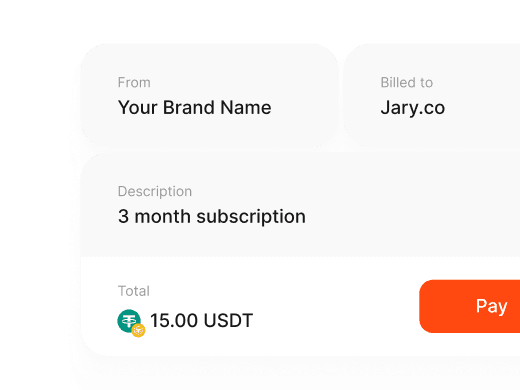
Want to accept crypto payments on your website?
Compliance team of two or three people? Start with Scorechain. You can pay as you go, and the first check is free.
Sales decks tend to pitch the setup you’d need after you’ve grown. Buy for the business you run now. An investigation suite with nobody to operate it is worth less than a screening API someone checks every day.
Compare wallet screening and transaction monitoring
Screening checks a wallet once, when the payment comes in. Monitoring keeps watching it after that. Many teams only start caring after a wallet they’d already cleared turns out to be dirty. Here’s how the five compare on the checks that run inside a payment flow.
| Capability | Chainalysis | TRM Labs | Elliptic | Crystal | Scorechain |
|---|---|---|---|---|---|
| Real-time wallet screening | Yes | Yes | Yes | Yes | Yes |
| Continuous re-screening of cleared wallets | Yes | Yes | Yes | Yes | Partial |
| Sanctions alerts (OFAC and more) | Yes | Yes | Yes | Yes (6+ regimes) | Yes |
| Transaction risk scoring | Yes | Yes | Yes (0–10 scale) | Yes (dynamic) | Yes |
| Cross-chain / bridge tracing | Yes | Yes | Yes (250+ bridges) | Yes (330+ chains) | Growing |
All five screen in real time. The bigger vendors pull away on continuous monitoring, meaning they go back to a wallet you cleared last week if its exposure changes, and on deeper cross-chain tracing. Is your main risk just whether a payment is clean when it arrives? Then a lighter tool covers you. If a wallet turning risky after you've cleared it would actually cost you something, make continuous monitoring a requirement.

API integration and compliance workflow
A piece of cryptocurrency AML compliance software is only as useful as how it plugs into your deposit and withdrawal flow. Run any provider you're considering against this list first:
- Risk-scoring API that returns risk categories, not just a bare number, so your logic can act on the reason.
- Hop-level attribution that traces funds several addresses back. That depth often decides whether a laundered deposit gets caught.
- Webhooks that alert you when a cleared wallet turns risky.
- Case management and reporting for escalating flagged transactions, with SAR narratives where offered.
- Audit logs showing who decided what and why, since that's what a regulator checks.
- A sandbox or test mode to push a deliberately risky check through before launch.
A synchronous screening call should add well under a second; Elliptic, for one, quotes under 500ms. Test that latency during evaluation, not after launch.
AML software pricing and procurement checks
Pricing here is mostly a black box. None of the five publishes a full price list; Scorechain comes closest with pay-as-you-go. The bill depends on subscription, API or transaction volume, analyst seats, chains covered and add-ons like investigations or Travel Rule, so two businesses can pay very different amounts for the "same" product.
Before you sign, run through this:
- Push for pricing against your real transaction and API volume, not some generic tier.
- Nail down what's in the base package versus an add-on, because investigations and Travel Rule are often billed separately.
- Check whether the chain coverage you need comes included or costs extra.
- Get the overage terms for exceeding your API or volume limits, and take the free trial, if one exists, Scorechain's free check or Crystal's free BTC explorer, before you commit.
A vendor that won't quote against your real volume is a yellow flag.
Standalone AML software vs built-in monitoring
A dedicated AML platform and the screening baked into a payment gateway get talked about as one thing. They aren't.
The five providers above are dedicated AML platforms. Between them they cover investigations, case management, reporting and Travel Rule support, but not every vendor builds each piece in-house: Crystal and Scorechain, for example, handle the Travel Rule through partner integrations. Running your own regulated compliance program? Check which tools each vendor offers natively.
Built-in monitoring in a gateway does a narrower job. It screens the funds moving through your checkout in real time, so tainted crypto doesn't get credited without anyone noticing. It doesn't replace a compliance platform and doesn't pretend to.
Most merchants never need to pick an enterprise AML platform. What they need to know is whether their payment provider screens incoming funds in the first place. A gateway with real-time KYT checks each transaction against blacklist and sanctions data before crediting it, and adds account-level antifraud. Businesses with formal regulatory obligations will still want a dedicated AML provider on top of that.
Want tainted crypto stopped before it reaches your balance? 0xProcessing runs real-time AML and KYT screening on every incoming transaction, plus account-level antifraud, across 100+ cryptocurrencies.
Get started
FAQ
Why do crypto AML providers assign different risk scores to the same wallet?
Each uses its own attribution data, clustering logic, and risk model. So one might flag an address as a known mixer while another sees an unattributed wallet, and even the scoring scales don't line up. A risk score is an informed estimate, not a single objective truth, which is why some teams run high-value decisions past two providers.
Can AML software detect indirect exposure to sanctioned addresses?
Yes, the better tools do. Hop-level attribution follows funds several addresses back, so a wallet that took money from a sanctioned entity through two or three middlemen still lights up. Screening that only looks at the direct counterparty misses that, which is why it's worth confirming any provider's API does hop-level tracing.
How can businesses verify an AML provider's accuracy before purchase?
Trial it on wallets whose history you already know. Use a free check where there is one, like Scorechain's or Crystal's BTC explorer, run the API in a sandbox against addresses you understand, then compare against a second provider. A sales deck's accuracy claims aren't verifiable; a test against known data is.
Can companies use multiple AML providers to cross-check transaction risks?
They can, and bigger compliance teams sometimes do on high-value or borderline cases, precisely because the scores disagree. It costs more and is harder to integrate, so most run one primary provider and keep a second opinion in reserve for calls where being wrong gets expensive.
What happens when a previously approved crypto wallet becomes high-risk?
That's the whole point of continuous monitoring. A wallet you screened clean can later receive funds from a dodgy source, and continuous re-screening catches the shift and fires an alert, often over a webhook, so your team can move on it. Without it, you wouldn't know until your next manual check.


Lead Writer
Lucas Anderson