There's no single best crypto card. The right one depends on where you live and how you spend. If you just want to pay for everyday stuff without thinking about it, a zero-fee debit card like Kraken or Coinbase does the job. For maximum cashback, if you're deep in one exchange's ecosystem, Crypto.com or Bybit pay more if you stake or hit a VIP tier. For US spenders who want a true credit line, Gemini earns crypto on category spend. And if you want to spend stablecoins without selling first, Nexo's credit mode borrows against your holdings. This guide compares six current cards by fee, reward, and country, then shows where the real cost hides.
Two things are worth settling before the comparison. A crypto card isn't one product type. The best crypto debit cards spend your balance. Prepaid cards make you load funds first. The best crypto credit cards earn crypto on fiat spend without touching your coin. Those three behave very differently at checkout and at tax time, which is where most of the confusion starts. And the headline cashback number is rarely what you actually pocket, for reasons the real-cost section gets into. If you want a shortcut, any decent crypto card comparison really comes down to whether you can get the card where you live, what it costs once you factor in the fine print, and whether the reward is worth it after the conditions.
Top crypto cards at a glance
We checked every figure below against each issuer's own card page in October 2026. These are among the best cryptocurrency cards you can actually sign up for right now. Rates, tiers, and availability do shift, though, so confirm the current terms before you apply.
|
Card |
Type / network |
Best region |
Funding |
Headline cashback |
Notable fees |
|
Krak (Kraken) |
Debit; Visa (US), Mastercard (UK/EEA) |
US, UK, EEA |
Crypto + fiat balance |
up to 2% (by balance tier) |
No monthly/FX/ATM fee; conversion spread applies |
|
Coinbase Card |
Debit; Visa |
US (excl. Hawaii) |
Coinbase balance |
Variable, set in app |
$0 annual; spread + taxable event on crypto spend |
|
Crypto.com (US) |
Credit; Visa Signature |
US |
Credit line |
1.5% base, up to 6% |
0–29.99/mo tier; higher rates need CRO stake |
|
Crypto.com (prepaid) |
Prepaid; Visa |
UK, EEA, Canada |
Loaded balance |
0% free tier, up to 5% |
3% FX on lower tiers; 12-mo CRO lockup for rates |
|
Bybit Card |
Debit; Mastercard |
Outside EEA |
Exchange balance |
2% to 10% (top VIP) |
No annual fee; FX/conversion vary |
|
Gemini |
Credit; Mastercard |
US + Puerto Rico |
Credit line |
4/3/2/1% by category |
$0 annual, $0 FX; APR on revolving balance |
|
Nexo Card |
Debit + credit modes; Mastercard |
EEA, UK, CH |
Balance or crypto-backed credit |
0.5–2% (Credit Mode) |
No card fee, but cashback only kicks in above a $5,000 portfolio |
There's a split here worth understanding. Debit and prepaid cards spend your coins. They convert them to fiat at the register, so you pay a conversion spread, and in a lot of places you've just triggered a taxable event buying a coffee. Credit cards like Gemini work the other way: you pay with fiat from a credit line and earn crypto on top, so you never sell your holdings. Which side you want depends on one thing. Are you trying to spend the tokens you already hold, or stack more of them.
Best crypto cards by spending scenario
Pick by what you actually do with the card, not by the biggest number on the homepage.
Everyday purchases
For daily spending where you want no recurring cost and nothing to think about, Krak and Coinbase are the easy picks. Neither charges a monthly or annual fee, both spend straight from your balance, and neither makes you stake anything to get started. Krak layers on up to 2% cashback, scaled to how much you hold across the Kraken ecosystem; Coinbase pays variable rewards you set in the app. Watch the conversion spread on both, since it bites whenever you pay with crypto instead of fiat.
Cashback maximisers
If the cashback rate is the point, Bybit (up to 10% at its top VIP tier) and Crypto.com (up to 6% on the US credit card, up to 5% on the prepaid) sit at the top. Read the conditions first, though. Bybit's 10% needs its highest VIP level; most users land at 1–2%. Crypto.com's higher rates need a paid subscription or a 12-month CRO stake, which carries price risk on the staked token. The headline rate and the realistic rate are rarely the same.
Travel and international spending
For spending abroad, the FX fee matters more than cashback. Krak charges no FX markup and passes the Mastercard rate straight through. Gemini has no foreign transaction fee. Nexo runs 0.2% on weekdays inside the EEA, UK and Switzerland, which is low, but 2% outside that zone. Crypto.com's prepaid free tier charges a steep 3% on foreign spend, so it's a poor travel choice unless you're on a high staked tier.
Stablecoin spending
To spend USDT or USDC balances, a debit card that supports stablecoins is simplest. Krak spends from 600+ assets including USDC, converting at the point of sale. Note that spending a stablecoin still routes through the card's conversion, so check the spread even on a dollar-pegged asset where you'd expect none.
Preserving your crypto
If you don't want to sell your holdings at all, two routes exist. Nexo's Credit Mode lets you borrow against your crypto collateral and spend the credit line, so nothing is sold at the register. A crypto-earning credit card like Gemini spends fiat from a credit line and pays you crypto on top, again leaving your stack intact. Both keep your coins; they differ in whether you're borrowing or just earning.
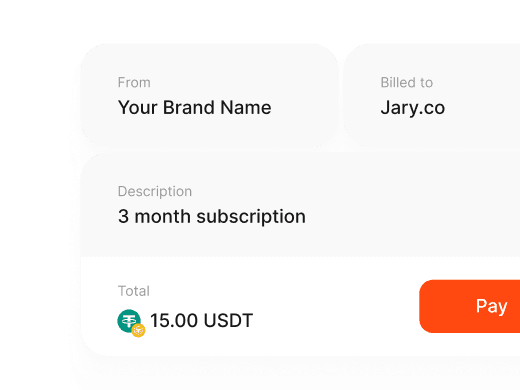
Want to accept crypto payments on your website?
Compare the real cost of crypto card payments
Cashback gets the headline. The cost lives in three places most comparisons skip: the conversion spread, the FX fee, and any subscription or stake you paid to unlock the rate. Here's what spending actually nets across a few cards, using their stated terms.
|
Scenario |
Krak (debit) |
Gemini (credit) |
Crypto.com prepaid free tier |
|
$100 everyday purchase |
~2% back if balance tier qualifies; spread on crypto spend |
1% back (2–4% in bonus categories); no FX |
0% back; no cashback at free tier |
|
$500 abroad |
No FX fee; spread applies |
No FX fee; 1% base back |
3% FX = ~$15 cost; 0% back |
|
$2,000/month spend |
Up to ~$40 back at 2% tier |
~$20–40 depending on category mix |
$0 back unless you stake CRO |
Two readings jump out. A card with zero FX and no monthly fee can beat a flashier high-cashback card once you account for what you paid to unlock the rate. And a "free" prepaid tier that earns nothing and charges 3% abroad can quietly cost more than a 1% card with no fees. The rate you see advertised is the ceiling, not the floor.
One more hidden cost specific to debit and prepaid cards: when you spend crypto, you're selling it, and in many jurisdictions that's a taxable event (more in the FAQ). A credit card that earns crypto sidesteps this on the spend side because you're paying with fiat.
How to choose a crypto card for your country
Availability is the first filter, and it knocks out more options than fees do. If you can't get a card in your country, it's irrelevant, no matter the cashback.
|
Region |
Available now |
Not available |
|
US |
Krak (most states, not NY/ME/MA/IN), Coinbase (excl. Hawaii), Crypto.com US credit, Gemini |
Nexo, Crypto.com prepaid, Bybit (US) |
|
UK |
Krak/Kraken, Nexo, Crypto.com prepaid |
Gemini, Coinbase (card) |
|
EEA / Europe |
Krak/Kraken, Nexo, Crypto.com prepaid |
Gemini, Bybit (not for EEA) |
|
Canada |
Crypto.com prepaid |
Gemini, Coinbase (card), Kraken |
The regional split is real and worth checking on the issuer's page, because eligibility shifts. Gemini is US-plus-Puerto-Rico only, full stop. Bybit's card explicitly excludes EEA customers. Krak runs on Visa in the US, and Mastercard in the UK and EEA, with a handful of US states carved out. Don't assume a card available in one market is available next door.

When is crypto card cashback actually profitable?
Cashback looks like free money until you count what unlocks it. The honest answer: these rewards are profitable when the rate is high, the cost to reach it is low, and the reward token holds its value.
Walk through a real example. Crypto.com's prepaid card advertises up to 5%, but reaching even 2% needs a 12-month CRO stake of several hundred dollars, and the reward is paid in CRO, whose price can move against you during the lockup. If CRO drops 20% over those months, your "5% cashback" is worth less than a flat 1% card paying in a stablecoin. By contrast, Gemini pays its category rates with no stake and lets you take the reward in a stablecoin, so the nominal rate is closer to what you keep.
A quick net-benefit check for any card:
- Subtract any monthly or annual subscription from your expected yearly cashback.
- Discount reward-token cashback for the token's volatility and any lockup.
- Add back any FX savings versus a normal card if you spend abroad.
Do that math and a plain 1% card with no fees, paying in a stable asset, often beats a 5% headline locked behind a stake and paid in a token whose price swings. Match the card to how much you actually spend, too: under a certain monthly amount, a paid subscription tier never earns back what it costs you.
How we compared the cards
Everything here comes from each issuer's published terms as of October 2026, not from hands-on testing. For each card, we read the provider's card page and support docs and pulled the card type, network, issuing and monthly fees, cashback rate and conditions, FX and ATM terms, funding, any staking requirement, KYC, and availability. When a rate hangs on a tier, a stake, or a balance, we've said so, instead of quoting the top number as if everyone walks away with it.
A couple of cards didn't make the list on purpose. We skipped deep re-reviews of individual debit and credit cards, since those already live on the blog. And Gnosis Pay, once a popular pick, will stop working on 20 December 2026, so there's no sense signing up now.
Crypto cards or direct crypto payments?
A crypto card lets one person spend digital assets at a shop that only takes cards. Flip to the business side of the counter, and the problem changes completely. A merchant doesn't need a card to take crypto; it needs a way to receive payment directly.
That distinction matters because the card route stacks costs. A customer paying with one of these cards triggers a conversion spread, the card network's interchange, and sometimes an FX fee, all before the money reaches the merchant, who still receives it over card rails with the usual settlement delay and chargeback exposure. Accepting payment directly skips the card layer entirely.
0xProcessing is a strong fit for a business that wants to accept crypto without card infrastructure because it takes payment straight from the customer's wallet across 100+ assets and 20+ networks, with no card network or interchange in the path. Incoming crypto can auto-convert to a stablecoin through VRCS at no extra fee, so a price quoted in dollars is what lands on the balance. Because a confirmed on-chain payment is final, chargebacks that come with card payments don't exist. For a merchant weighing "should my customers use a crypto card" against "should I accept crypto directly," direct acceptance removes the middle layer the card depends on.
Want to accept crypto without the card layer? 0xProcessing takes payments directly from a customer's wallet, 100+ assets across 20+ networks, with free auto-conversion to stablecoins and no chargebacks.
Get startedFAQ
Can I use a crypto card directly from a self-custody wallet?
Usually not. Mainstream crypto cards spend from an exchange or platform balance rather than a self-custody wallet, so you fund the card from the issuer's account (Kraken, Coinbase, Bybit, and the rest), which means your coins have to move there first. A few self-custody-linked cards exist, but the major debit and credit cards in this comparison all draw from a custodial balance. In practice, that means your coins sit with the issuer for as long as the card is funded.
What happens if a crypto card payment is refunded after the exchange rate changes?
On a debit or prepaid crypto card, a refund normally comes back as the fiat amount, not the exact crypto you spent. Your coins were already sold for fiat at the time of purchase, so the refund credits that fiat value; if you then re-buy the asset, the price may have drifted. That's how you can end up holding fewer coins than you started with, even with a full refund. Each issuer handles it differently, so read the policy before you lean on refunds.
Can crypto cards be used for hotel deposits and car rental pre-authorizations?
Often yes, but go in with your eyes open. A pre-authorization holds funds on the card, and on a debit or prepaid crypto card, that hold ties up your balance until it's released, which can take days. Credit-based crypto cards handle pre-auths more like a normal credit card. For large deposits, a credit card (Gemini, Crypto.com US, Nexo Credit Mode) is usually smoother than a prepaid card where the hold locks your loaded funds.
Can a crypto card transaction trigger a taxable event?
Yes, on debit and prepaid cards in many jurisdictions. Spending crypto means selling it for fiat at the time of purchase, which can realize a capital gain or loss, so that every purchase can be a taxable disposal. A credit card that earns crypto on fiat spend doesn't trigger this on the spend side, since you pay with fiat; the cashback crypto has its own cost basis. Tax treatment varies by country, so consult a tax advisor for your situation.
What happens to unused funds if a crypto card program is discontinued?
You get a notice period to move your funds out, as with Gnosis Pay's December 2026 shutdown. With a debit or prepaid card, withdraw the remaining balance back to your account before the cutoff; with a credit card, stop using it and settle any balance. The main risk is timing, so act within the issuer's window rather than leaving funds on a card that's winding down.


Lead Writer
Lucas Anderson