Money still passes through banks, card networks, acquirers, clearing systems, correspondent banks, and payment service providers, with each participant adding cost, delay, cutoff times, data mismatches, and extra finance work.
Blockchain payment processing allows businesses to move funds through digital networks that operate around the clock and maintain a permanent record of each transfer.
Understanding how these systems work helps companies assess where they fit alongside existing payment methods. This guide covers the payment flow from wallet approval to settlement, compares blockchain payments with cards, ACH, and SWIFT transfers, and highlights the factors worth considering when choosing a payment provider.
Blockchain Payments Explained
A blockchain payment transfers value between participants through a distributed network rather than through a central intermediary. Once validated by the network, the transaction becomes part of a permanent ledger, giving both sides visibility into its status and history.
Blockchain is the technology. Cryptocurrencies and stablecoins are the assets moving across the network. A blockchain payment system is the business setup around the payment, including checkout, invoices, wallets, APIs, confirmations, conversion, reporting, and settlement. A blockchain based payment can use Bitcoin, Ethereum, USDT, USDC, or another supported asset.
Business blockchain payment use in 2026 is best supported by stablecoin data, because stablecoins were designed to reduce crypto price volatility and make digital assets usable for settlement. DeFiLlama showed total stablecoin market cap at around $315.2 billion in June 2026.
Artemis reported roughly $26 trillion in annual on-chain stablecoin settlement, although McKinsey’s February 2026 analysis warned that raw stablecoin transaction volume includes exchange transfers, smart contract activity, arbitrage, trading, and internal routing. Payment teams should therefore review adjusted volume, active users, payment categories, settlement use, and business-purpose flows rather than relying on raw blockchain volume alone.
A merchant can price goods in fiat, accept a crypto payment, and use a crypto payment gateway to convert funds into stablecoins or fiat where supported. 0xProcessing supports 85+ popular cryptocurrencies according to its 2026 documentation, Web3 wallet payments, recurring payments, and automatic conversion into supported stablecoins through VRCS (Volatility Risk Control System).
Blockchain Payment Processing Step by Step
Blockchain for payment processing has five main stages.
- The payer starts a transaction from a wallet. The public address acts like a visible account identifier, while the private key signs the payment and proves control over the funds.
- The wallet broadcasts the transaction to the network with the sender address, recipient address, asset, amount, and network fee, also known as gas fees on some blockchains.
- Validators or miners check the signature, available balance, and double-spend risk.
- The transaction enters a block or validated ledger update. Confirmation time depends on the network, fee level, validator design, congestion, and processor policy.
- Funds appear in the recipient wallet after the required confirmation level. Transaction finality means reversal has become economically unrealistic or technically unavailable.
A blockchain payment processor connects this network process to business operations by creating payment addresses or checkout sessions, detecting funds, tracking confirmations, sending API callbacks, updating invoices, preparing reports, and managing conversion or settlement.
Want to accept crypto payments on your website?
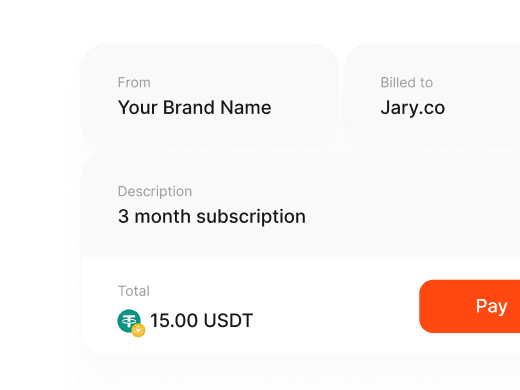
Smart contracts and programmable payments can route marketplace commissions, release escrow funds, split revenue, automate usage-based billing, or trigger payouts after pre-agreed conditions are met.
Blockchain Payment Systems vs Traditional Payment Methods
Traditional payment methods rely on account ledgers controlled by banks, card schemes, and payment providers. Blockchain based payment systems use a shared ledger where participants can verify payment status through a transaction record.
| Criterion | Cards | ACH and local transfers | SWIFT and correspondent banking | Blockchain based payment systems |
|---|---|---|---|---|
| Settlement timing | Often T+1 to T+3 for merchants | Same day to several business days | Same day to several days, depending on route | Seconds to minutes on many networks after confirmations |
| Availability | Strong consumer reach | Bank-day and local-system dependent | Bank-day and correspondent-bank dependent | 24/7/365 network operation |
| Cost model | Usually percentage fee plus fixed fee and possible cross-border charge | Usually lower than cards, with local limits | Transfer fees, FX spread, and intermediary charges | Processor fee plus network fees |
| Intermediaries | Issuer, acquirer, card scheme, processor | Originating bank, receiving bank, clearing operator | Sending bank, correspondent banks, receiving bank | Network validators plus wallet or processor |
| Reversibility | Chargebacks and disputes | Returns or recalls in some cases | Recalls can be complex | Final after confirmation; refunds require a new transaction |
| Transparency | PSP reports and bank payout files | Bank statements and batch files | Tracking improved through SWIFT gpi | On-chain record plus processor reporting |
| Best fit | Mass consumer checkout | Domestic bank payments | Bank-led international transfers | Stablecoin settlement, cross-border payments, crypto-native users, payouts |
Traditional methods remain useful where consumers expect card protections, local bank payments dominate, or fiat-only settlement is mandatory. Blockchain payment solutions become useful where fees, failed payments, payout delays, cross-border transfer costs, or payment reconciliation create measurable business drag.
SWIFT GPI data shows bank-led cross-border payments improving, with nearly 60% of GPI payments credited to beneficiaries within 30 minutes and almost all within 24 hours. Blockchain payment systems add a route built around constant availability, transaction finality, and on-chain auditability.
Key Benefits of Blockchain Payment Solutions for Business
Cost reduction is a strong commercial driver. Merchant card processing fees commonly range around 1.5% to 3.5% in 2025-2026 fee guides, before additional cross-border charges or FX spread. A blockchain payment processor usually charges a processing fee plus network fees, and low-fee networks can reduce the cost of high-volume digital payments, stablecoin checkout, and international transfers.
Cash flow improves when funds arrive after blockchain confirmation instead of later card settlement or correspondent banking completion. Faster access to funds can help companies manage suppliers, working capital, affiliate payments, and marketplace seller balances.
Global access improves because blockchain payments rely on wallet compatibility rather than local card acquiring in every market, subject to local rules and merchant policy.
Fraud exposure changes because confirmed blockchain payments have finality. Chargeback abuse becomes less of a risk for digital goods, subscriptions, gaming balances, online services, trading tools, and other products with instant delivery. Merchants still need refund policies, address checks, and support procedures.
Payment reconciliation can improve because the distributed ledger gives each transaction a traceable ID, timestamp, asset, sender address, recipient address, and confirmation status. Finance teams can match invoice IDs, blockchain transaction hashes, gateway reports, and settlement records in one reporting environment. Even 0.1% of unresolved discrepancies on $2 billion in annual volume equals $2 million of potential leakage or manual investigation.
Programmability creates new product options, including split payments, escrow, creator payouts, marketplace commissions, revenue sharing, recurring billing, and automated disbursements.
Business Use Cases of Blockchain Technology for Payments
Blockchain technology for payments is most useful in areas where companies deal with high fees, international customers, frequent payouts, or slow settlement. The strongest use cases usually begin with one payment flow, then expand once the business can measure cost, speed, and finance-team benefits.
E-commerce checkout
Online stores can use blockchain payment processing as an additional checkout option. A shopper selects crypto, chooses an asset and network, pays from a wallet, and receives order confirmation after the crypto payment gateway detects the required confirmation level.
Cross-border B2B invoices
Stablecoin settlement works well for international invoices. A supplier can issue an invoice in dollars and receive USDT or USDC across a blockchain network, while the buyer receives a traceable transaction record for audit and finance matching.
Payroll and contractor payouts
Blockchain based payment systems can support international teams, agencies, affiliates, and freelancers who already use digital assets. Companies still need tax, employment, and local compliance review, while blockchain payments can reduce payout delays in permitted markets.
Marketplaces and platforms
Marketplaces can use blockchain payment solutions for seller payouts, creator rewards, game rewards, trading rebates, affiliate commissions, and customer withdrawals. Mass payouts become easier with address management, payment batching, status tracking, and reporting exports.
Subscription and usage-based billing
Programmable payments can support SaaS tools, hosting providers, creator platforms, and digital membership products. This works best when the provider handles authorization, customer messaging, payment reminders, and failed-payment recovery.
iGaming, trading, entertainment, and global-first verticals
These sectors often face high card costs, acquiring restrictions, and high decline rates. A blockchain payment system gives them another deposit and withdrawal option with wallet screening, limits, monitoring, and faster settlement.
Blockchain Payment Processor Selection Checklist
A blockchain payment processor should reduce operational workload while giving finance, product, and compliance teams control over acceptance, conversion, settlement, and reporting.
- Asset and network support comes first. The provider should cover USDT, USDC, major cryptocurrencies, and networks customers already use, such as Tron, Ethereum, BNB Chain, Polygon, Solana, or Arbitrum.
- Custody model comes next. Merchant-controlled wallet acceptance gives more control while adding private-key management, address monitoring, compliance tooling, accounting, and support requirements. A processor abstracts much of this complexity through hosted checkout, invoices, static wallets, APIs, callbacks, dashboards, and settlement tools.
- Fiat conversion and off-ramp options should be reviewed early. Some companies prefer stablecoins, while others need bank settlement for accounting, taxes, suppliers, payroll, or treasury policy. The provider should explain supported currencies, jurisdictions, payout methods, conversion fees, and timelines.
- Pricing transparency deserves close review. Total cost includes processing fees, network fees, conversion spread, withdrawal fees, minimum charges, support cost, and finance labor. 0xProcessing describes hidden-fee-free onboarding on its pricing page, with transaction commission for client deposits and network fees applied to withdrawals.
- Integration options should match the first use case and future expansion. Smaller merchants may begin with payment links, invoices, hosted checkout, or e-commerce plugins, while larger platforms may need API integration, webhooks, static wallets, custom payment pages, callbacks, mass payouts, and reporting exports.
- Compliance posture. KYB, KYC, AML screening, sanctions checks, wallet risk scoring, transaction monitoring, recordkeeping, and region restrictions ought to be covered where needed. Requirements vary by jurisdiction and business type, so the processor should help merchants define suitable controls.
- Reliability under volume spikes. Tests should be done before launch through questions about uptime, webhook retries, delayed confirmation handling, overpayment and underpayment rules, wrong-network transfers, monitoring, support hours, and incident communication.
Challenges and Limitations to Plan For
Network congestion and variable gas fees can affect payment cost and confirmation time. Merchants can reduce this risk by supporting several networks, guiding customers toward low-fee options, and showing network fees before payment.
Irreversibility reduces chargeback fraud while increasing the need for careful checkout design. QR codes, address validation, payment timers, exact-amount detection, network warnings, and clear refund procedures help prevent customer errors.
Regulatory variation needs attention from the start. A company should define supported countries, customer checks, risk screening, recordkeeping, tax treatment, and settlement policy before public launch.
Customer education affects adoption. Merchants should explain supported wallets, assets, networks, confirmation times, and refund steps inside checkout and help-center materials.
Stablecoin risk needs treasury rules covering issuer reputation, reserves, liquidity, redemption access, depeg history, regulatory status, and conversion after payment receipt.
Implementing Blockchain for Payment Processing
Implementation should begin with a payment pain-point audit covering card fees, cross-border costs, payout delays, failed payments, chargebacks, reconciliation exceptions, customer demand, and support workload.
The next step is a focused pilot. An online store may start with stablecoin checkout, a B2B company with invoice settlement, a marketplace with seller payouts, or a SaaS platform with recurring crypto payments.
Processor evaluation should use the checklist above. Teams should confirm supported assets, networks, pricing, conversion, compliance controls, reporting, uptime, support, and integration options, then test transactions, validate callbacks, check accounting exports, define refund procedures, and document underpayment, overpayment, and wrong-network cases.
After launch, the business should track processing cost, settlement speed, conversion rate, failed payment rate, chargebacks, support volume, reconciliation effort, repeat use, and country-level adoption.
0xProcessing fits this pilot-led adoption model because it combines broad crypto acceptance, Web3 wallet payments, recurring payments, payment links, API integration, transparent fees, and automatic conversion into supported stablecoins through VRCS.
Blockchain payment processing gives companies a faster, more programmable way to move value across borders, accept digital assets, reduce fraud exposure, and improve finance operations. Stablecoins reduce price volatility, while processors turn blockchain technology for payments into checkout, invoices, reports, settlement, and back-office controls.
Frequently asked questions
What is blockchain payment processing?
Blockchain payment processing is the handling of payments over a blockchain network, from wallet payment initiation and transaction confirmation to merchant notification, conversion, settlement, and reporting.
Are blockchain payments safe?
Blockchain payments can be safe when merchants use trusted processors, secure wallets, confirmation policies, AML screening, address validation, and strong internal controls. Main risks include user error, phishing, weak custody, unsupported networks, and poor refund procedures.
How fast are blockchain payments?
Blockchain payment speed depends on the asset, network, fee level, congestion, and confirmation policy. Many stablecoin payments confirm in seconds or minutes, while some networks require more time during peak activity.
How much do blockchain payments cost?
Blockchain payment costs usually include a processor fee and network fees, also known as gas fees on some chains. Businesses should compare total cost by adding conversion fees, withdrawal fees, support effort, reconciliation time, and compliance operations.
Can I accept blockchain payments without holding crypto?
Yes. Merchants can price goods in fiat, accept blockchain payments, and use automatic conversion into stablecoins or fiat where supported, reducing exposure to crypto price swings.
What is the difference between a crypto payment gateway and a blockchain payment processor?
A crypto payment gateway focuses on checkout, invoices, payment detection, and status updates. A blockchain payment processor can cover a wider set of business needs, including wallet setup, conversion, settlement, compliance checks, recurring payments, mass payouts, and reporting.