Lightning Network is a payment layer built on Bitcoin. Merchants use it to accept BTC and stablecoin payments that are confirmed in seconds and cost less than a cent. To plug it in, three things need to be in place: a Lightning wallet or node, a processor that handles Lightning invoices, and an internal call on whether you want to keep BTC or move it to fiat. The rest of this article goes through how the network works, what Square, Kraken, and Cash App actually built in 2025, the new stablecoin layer added via Taproot Assets, and a setup checklist for 2026.
The experimental label no longer fits. December 2025 closed with Lightning network capacity somewhere between 5,606 BTC (per Bitcoin Visuals) and 5,637 BTC (per Amboss), depending on which crawler you trust – worth around $490 million at the time. Either way, that's up from roughly 4,200 BTC at the start of the year. Around 15% of merchant Bitcoin payments now move through Lightning, double what they were two years ago. So the question for finance teams isn't really whether the rail works. It's how to wire it into existing systems without burning a quarter on engineering.
What is Lightning Network, and how does it work?
Three things matter for a business case. Confirmations land in under a second, whereas on-chain Bitcoin needs roughly ten minutes. Fees usually drop below 1 satoshi per transfer – fractions of a cent – while the base chain can spike to several dollars when blocks get full. And throughput is on a different scale: theoretically, millions of transactions per second, compared to around 7 TPS for base-layer Bitcoin.
Channels don't need to be direct. Payments route through interconnected nodes, so a customer in Lisbon can pay a merchant in Tokyo even if neither runs a channel to the other.
Why merchants reduce Bitcoin fees with Lightning
The fee math is the easiest place to see the difference. A standard on-chain Bitcoin transaction during peak hours can cost $5–$15. The same transaction over Lightning costs fractions of a cent. For a coffee shop selling a $4 latte, on-chain BTC was never economically viable. With off-chain settlement, it is.
Why this matters for specific business models:
- Microtransactions. Content monetization, tipping, in-app purchases, IoT machine-to-machine payments – all of these collapse under base-layer fees and become practical on Bitcoin’s second layer.
- High-volume retail. A merchant processing 500 transactions per day saves thousands of dollars per month on fees alone compared to on-chain BTC.
- International remittances. Cross-border Bitcoin payments via Lightning settle instantly without correspondent banking fees or FX markups.
According to Amboss co-founder and CEO Jesse Shrader, Lightning currently processes around $10 billion annually on roughly $500 million in capacity, meaning the entire balance cycles about twice per month. That capital efficiency is the underlying reason fees stay so low.
How merchants are using Lightning Network in 2026
Lightning Bitcoin can accelerate payments for retail merchants in ways the base chain never could. Several major platforms have rolled out merchant-grade integrations.
Square
The most visible deployment is Square's. Block, Square's parent company, announced Bitcoin for Businesses at the Bitcoin 2025 conference in Las Vegas on May 27, 2025, and began bringing sellers onto the platform that summer.
Full availability for eligible Square sellers is the 2026 target. The customer-side flow is just a QR scan with any compatible BTC wallet. Pricing has been kept aggressive – no processing fees on Bitcoin transactions through 2027, with optional fiat conversion at 0.5–1.0% depending on the seller's plan.
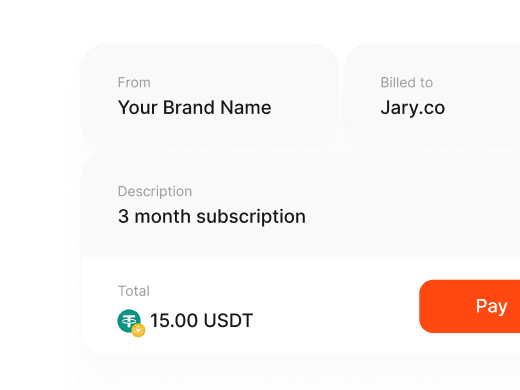
Want to accept crypto payments on your website?
Kraken
Kraken is the institutional side of the story. The exchange runs its own Lightning node with about 1,200 channels open. In January 2026, Secure Digital Markets pushed a $1 million Lightning transfer to Kraken – settled in seconds, fees under a dollar, the first publicly disclosed seven-figure Lightning payment of its kind. The takeaway: Lightning isn't only for micro-amounts anymore.
Cash App
Then there's Cash App. Block added Lightning QR support to Cash App in November 2025, allowing eligible users to pay any Lightning invoice directly from their USD balance – no Bitcoin holding required. From a merchant standpoint, that's a meaningful shift: every Cash App user is suddenly a potential Bitcoin payment user, even if they never thought about Bitcoin.
Lightning stablecoins for business: the Taproot Assets shift
The biggest change for Lightning in 2026 is the addition of stablecoin support. On March 21, 2026, Tether confirmed that USDT is live on Bitcoin's Lightning
Network via Taproot Assets. This completed a 14-month integration that began at the Plan ₿ Forum in El Salvador in January 2025.
Why this matters for merchants:
- Volatility protection. Businesses can now accept dollar-stable payments over Lightning without exposure to BTC price swings.
- Cross-border remittances. USDT-on-Lightning settles instantly at fees under a cent – directly competitive with traditional remittance corridors charging 5–7%.
- Same infrastructure. Lightning Labs CEO Elizabeth Stark stated that payment gateways and merchants already accepting BTC through the network today can add USDT as a payment option using the same infrastructure.
USDT processed over $10 trillion in on-chain volume in 2024, serving 350 million users. Bringing that volume to Lightning is the largest stablecoin migration in crypto history.
Lightning Network vs on-chain Bitcoin: what to compare
| Feature | On-chain Bitcoin | Lightning Network |
|---|---|---|
| Settlement time | ~10 minutes per confirmation | Under 1 second |
| Average fee | $1–$15 per transaction | Under $0.01 |
| Suitable for micropayments | No | Yes |
| Stablecoin support | No (native) | Yes (via Taproot Assets) |
| Set up complexity for merchants | Simple wallet | Wallet + payment channel(s) or processor |
| Reliability for large transfers | High | Improving (Taproot Assets v0.7 enables 20 inbound channels per recipient and reusable static addresses) |
The decision between the two is not either-or. Most production setups handle large, infrequent settlements on-chain and route everyday commerce through Lightning.
Start accepting Lightning-ready Bitcoin payments with 0xProcessing. API-first integration, automatic conversion to stablecoins, and access to 85+ cryptocurrencies, including BTC, USDT, and USDC.
Submit a requestHow to integrate Lightning Network for business payments
Option 1: Use a payment processor
The simplest path. A processor like 0xProcessing or a Lightning-specific service handles channel management, liquidity, and routing. Merchants get a clean API and a dashboard. Customers see a QR code at checkout.
Best for: Most merchants. SaaS, e-commerce, content platforms, restaurants, and anyone without a dedicated crypto infrastructure.
Option 2: Run your own Lightning node
For businesses that want full control or operate at high volume. This requires:
- A node implementation – LND, Core Lightning, or Eclair- is the main option.
- Channel liquidity – BTC committed to channels with peers, ideally including high-capacity hubs.
- Monitoring – uptime, channel rebalancing, and fee tuning.
Self-hosted nodes give merchants the lowest possible fees and full sovereignty over funds, but they also require ongoing operational work.
Best for: Exchanges, large-volume retailers, businesses with crypto engineering teams.
Option 3: Hybrid – payment processor + your own node
Some merchants run their own Lightning node for outbound payments while using a processor for inbound merchant flows. This keeps control over the treasury without taking on full routing responsibility.
Lightning setup checklist for 2026
Use this list to audit readiness before launch.
- Choose your wallet or node. Custodial options like Wallet of Satoshi or Speed work for simple cases. Self-hosted options like LND or Core Lightning give you full control.
- Integrate a payment gateway that supports Lightning invoices and webhook callbacks.
- Decide on a conversion policy: hold BTC, auto-convert to fiat, or convert to a stablecoin like USDT.
- Test invoicing end-to-end with a small payment before going live.
Risks and limitations to plan for
Lightning is mature enough for production, but not without trade-offs.
- Channel liquidity is real work. Self-hosted nodes need active management. Channels can become unbalanced and stop routing payments until rebalanced.
- Network is consolidating, not democratizing. The node-capacity Gini
coefficient reached 0.97 in 2025, indicating that a small number of hubs control most of the routing capacity. - User-side complexity. Many customers still find Lightning wallets confusing compared to scanning a card: education and clear UX guidance at checkout matter.
- Stablecoin liquidity on Lightning is early. Taproot Assets routing depends on edge nodes converting BTC to and from stablecoins. Liquidity is growing but not yet uniform across all corridors.
Real-world performance: what merchants are reporting
Concrete data from 2025–2026 deployments:
- Capacity growth: from 4,200 BTC to 5,606 BTC in 2025.
- Public volume: up 266% year-over-year in 2025, mostly driven by larger transactions per channel rather than higher transaction count.
- Merchant share: Lightning now handles around 15% of all Bitcoin payments to merchants, against about 7% in 2023.
Build your Lightning-ready payment stack. 0xProcessing offers BTC and stablecoin acceptance with API-first integration, programmable webhook callbacks, and automatic conversion to USDT or USDC for businesses that want to skip volatility entirely. Talk to our team →
Conclusion
What you're seeing is a network that's stopped being a side project. Square putting Bitcoin payments in front of 4 million merchants, Kraken settling million-dollar institutional transfers, Tether moving USDT onto Lightning through Taproot Assets – none of these are pilot programs anymore. They're the rail handling cross-border commerce, micropayments, and stablecoin settlement at a small fraction of what traditional systems charge.
So in 2026, the question isn't really 'should we support Lightning'. It's 'how do we connect it to what we already have'. The honest answer for most teams: pick a processor that handles Lightning out of the box, decide what to do with incoming BTC (hold, convert to fiat, or swap to a stablecoin), and start routing payments through it. Merchants who move on this in 2026 walk into 2027 with materially lower costs than those who are still figuring it out.
FAQ
What is the Lightning Network in simple terms?
A Layer 2 protocol on top of Bitcoin that lets two parties exchange BTC instantly and at near-zero fees by routing payments through pre-funded channels. Only opening and closing each channel touches the Bitcoin blockchain – everything in between settles off-chain.
How can a business reduce Bitcoin fees with Lightning?
By routing Bitcoin transactions through Lightning instead of the base layer. On-chain BTC fees can spike to $15+ during congestion. Lightning fees stay under $0.01 regardless of demand, which is what makes microtransactions and high-volume retail viable.
Can I accept stablecoins on Lightning?
Yes, since March 2026, USDT runs natively on Lightning via the Taproot Assets protocol. Other stablecoins, such as DePix and bridged USDC, are also supported by wallets like Speed and Joltz.
What businesses benefit most from Lightning Network integration?
High-volume retailers, content platforms, gaming, SaaS subscriptions, remittance services, and exchanges. The fit is strongest for businesses with international customers, frequent small transactions, or thin margins on card fees.
Is Lightning Network safe?
The protocol uses multi-signature smart contracts and pre-signed transactions to enforce off-chain agreements. Bitcoin's underlying cryptography secures funds. The main operational risks are channel mismanagement and routing failures, both of which a quality processor handles for you.
How does 0xProcessing handle Lightning payments?
We provide an API-first integration that accepts Bitcoin (including via Lightning), USDT, USDC, and 85+ other tokens. Auto-conversion to stablecoins, real-time webhooks, and programmable spending rules are included by default.