A customer had the money ready. USDT sitting in his wallet, finger hovering over your checkout – then he closed the tab, because the only options staring back were Visa and PayPal. You'll never see him in your analytics, never know he was thirty seconds from buying. He just left for a competitor who takes the coin he actually holds.
That quiet, invisible loss repeats every day you don't accept crypto, and a crypto payment gateway stops it. It's the software that lets a business take cryptocurrency and turn it into money it can use – generating the payment request, catching the transaction on the blockchain, confirming it, and settling the value to you, as crypto or converted to fiat. What a card processor does for Visa, this does for Bitcoin and USDT.
That's the easy part to say. The part that trips people up lives underneath: who holds your money before it reaches you, how long you should wait before you trust a payment is real, and what happens when a customer sends too little or pays on the wrong chain. This guide takes you through all of it – the flow, the terms nobody untangles, and the messy edge cases that quietly break a merchant's automation.
What is a crypto payment gateway, in simple terms?
Strip away the jargon, and a cryptocurrency payment gateway does three things: it takes a crypto payment, verifies it happened on the blockchain, and delivers the value to you.
Try doing that without one, and you're generating wallet addresses by hand, then watching the chain to catch each incoming payment, then figuring out which order it belongs to. After that comes conversion, and the security of holding the funds. A gateway swallows all of it behind a single integration you drop onto your site. What was a technical project becomes a checkout button.
The result is that crypto payments become as routine to accept as card payments, without your team touching a blockchain directly.
Gateway vs processor vs wallet: they're not the same thing
Here's a distinction almost every article blurs, and it matters because it decides who holds your money. Search results use "gateway," "processor," and "wallet" interchangeably. In practice, they describe different roles.
A gateway is the connection layer – it links your checkout to the blockchain, shows the customer the payment request, and confirms the transaction when it lands. That's the front door.
A crypto payment processor picks up once the payment is through the door. It converts the crypto, screens it against compliance data, settles the value to you, and handles payouts. If the gateway is the door, the processor is the machinery behind it doing the actual work. Most cryptocurrency payment processors on the market bundle the gateway and the processing into one product and market it as a single thing – which is why the terms get used as synonyms.
A wallet is where crypto is actually stored. The critical question is whose wallet holds the funds between payment and settlement – the provider's (custodial) or yours (non-custodial). That single answer, covered below, shapes your risk more than any feature.
So when you compare crypto payment solutions, don't get stuck on the label. Ask what the product actually does across the whole flow: accept, verify, convert, screen, settle. That's the real comparison.
How a crypto payment works, step by step
Here's the full path of a single payment, from a customer clicking "pay" to funds landing on your balance.
1. The customer chooses crypto at checkout
Your gateway shows crypto as a payment option alongside whatever else you accept.
2. The gateway generates a payment request
It creates a unique receiving address and the exact amount, usually with a QR code and an invoice expiration window – pay within, say, 15 minutes or the request lapses.
3. The customer sends the funds
They pay from their wallet. The transaction broadcasts to the blockchain and gets a transaction hash – its unique fingerprint.
4. The gateway detects the payment
It sees the transaction appear on-chain, often within seconds, and usually fires a payment webhook to notify your system.
5. The payment reaches finality
Detection isn't the finish line. The gateway waits for enough on-chain confirmations that the transaction can't be reversed – more on why this gap matters below.
6. Settlement
Once final, the value settles to you: held as the original crypto, auto-converted to a stablecoin, or off-ramped to fiat, depending on your setup. You see it in your merchant dashboard.
On a fast network, the whole sequence takes seconds to a few minutes. On Bitcoin, it takes longer, and step 5 is the reason.
Detection vs finality: why "seen" isn't "settled"
This operational detail separates a technically sound setup from one that ships goods against a payment that later vanishes. Almost no overview draws the line clearly.
Detection
Is the moment the gateway sees your customer's transaction on the blockchain. It happens fast – often seconds. It's tempting to treat it as "paid."
Finality
Is the moment that transaction becomes irreversible – when a chain reorganization or double-spend can't undo it. That takes longer, and how much longer depends entirely on the network.
The gap is real money. A Bitcoin transaction shows up in seconds but reaches practical finality only after around six confirmations, roughly an hour. An Ethereum transaction gets its first confirmation in about 12 seconds, but true finality needs two epochs – about 13 to 15 minutes. Seeing an Ethereum payment with one confirmation is not the same as that payment being final.
Here's what it means in practice:
|
Network |
First seen |
Practical finality |
|
Bitcoin |
Seconds |
~60 min (6 confirmations) |
|
Ethereum |
~12 sec |
~13–15 min (2 epochs) |
|
Solana |
Sub-second (confirmed) |
~13 sec (finalized) |
|
Avalanche |
~1 sec |
~1 sec |
The rule for a merchant: set a confirmation policy by network and by value. A coffee shop might accept a $5 payment on zero confirmations, but that's the merchant's own risk decision, since an unconfirmed Bitcoin transaction can, in principle, be replaced or double-spent before it's mined. A business shipping a $5,000 order should wait for finality before it releases anything. A good gateway lets you set that threshold rather than treating detection as settlement.
Custodial vs non-custodial: who controls your money?
This is the biggest structural choice in any crypto payment system, and the honest framing isn't "convenience" – it's responsibility. Who holds the funds decides who's accountable when something goes wrong.
Custodial
Means the provider holds the crypto between the customer's payment and settlement to you. You get the full operational layer: conversion, compliance screening, fiat off-ramp, refunds, support. The trade-off is that your funds sit with the provider in between, and if a payment is flagged, the provider can freeze it.
Non-custodial
Means funds move wallet to wallet and never touch the provider. You keep control the whole way, which suits crypto-native businesses – but conversion, reconciliation, and compliance all land on you, and there's no one holding the funds to help when something breaks.
Here's the part nobody connects: the custody model interacts with "no chargebacks." On-chain payments are final, yes – a customer can't reverse one. But on a custodial rail, the provider or a compliance rule can still freeze or hold funds flagged by screening. So "chargeback-free" is true at the blockchain level and still subject to the provider's controls. Knowing which model you're on tells you exactly who can touch your money after it arrives.
For most regulated, high-volume businesses that want a fiat off-ramp and someone accountable for compliance, custodial fits. For those who value control and can carry the operational load, non-custodial does. The choice isn't abstract – it's about who's responsible on your worst day.
Comparing crypto payment providers?
0xProcessing is a custodial gateway with auto-conversion to stablecoins, real-time screening, and settlement across 105+ coins and 21 blockchains. Use it as one reference point while you weigh the model against your business.
Ways to integrate a crypto payment gateway
A provider can look great and still cost you two weeks of developer time. How you connect it depends on your platform and your team.
API
For custom and headless builds, a REST API gives full control: you generate payments, catch webhooks, and own the checkout logic. The most flexible route, and the one that needs a developer.
Ready-made plugins
On Shopify, WooCommerce, or similar, a plugin gets you live in an hour – install, add your key, pick your coins. Note that many providers advertise "easy integration" that turns out to mean a raw API and a build, so check whether a real plugin exists for your platform.
Payment links
Generate a link with the amount set and send it by email or chat. No website required, which suits invoicing and social selling.
Hosted checkout
The provider hosts the payment page; you redirect the customer there and back. Minimal code, at the cost of some branding control.
White label
The whole flow carries your brand while the provider's infrastructure runs underneath. The customer never sees a third party.
|
Method |
Dev effort |
Best for |
|
API |
High |
Custom builds, headless, full control |
|
Plugin |
Low |
Shopify / WooCommerce stores |
|
Payment link |
None |
Invoicing, social selling |
|
Hosted checkout |
Low |
Fast launch, less branding |
|
White label |
Medium |
Brands wanting an owned experience |
Match the method to your stack. A store on a supported platform should start with a plugin; a custom product needs the API; a business without a website can run on links alone.
Static vs dynamic payment addresses
A detail that sounds technical but shapes the customer experience and your reconciliation. Gateways generate receiving addresses in one of two ways.
Dynamic payment address
It is created fresh for each invoice. The customer gets a one-time address for that specific payment, which makes reconciliation clean – one address, one order – and improves privacy. The customer waits a moment for it to generate and pays the exact amount shown.
Static payment address
It is a permanent address assigned to a customer or a purpose. It's reused across payments, which suits recurring deposits – a returning player or subscriber pays to the same address every time without waiting for a new one. The trade-off is that reconciliation leans on other data, since multiple payments hit the same address.
Neither is better in the abstract. Dynamic suits one-off e-commerce orders; static suits repeat deposits where the same customer pays again and again.
 Why accept crypto payments? The advantages over fiat
Want to accept crypto payments on your website?
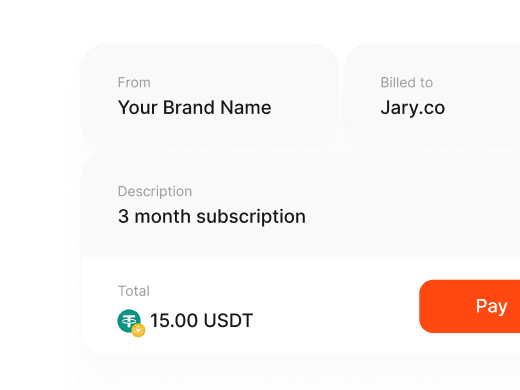
For a business weighing whether to accept crypto payments, the case comes down to four concrete gains, not ideology.
Lower cost
Crypto payments can cost less than cards, though the honest comparison counts two things, not one: the network fee (which the sender usually pays, and which ranges from under a cent on Solana to a few dollars on some networks depending on conditions) and the gateway's own processing fee (commonly around 1%, varying by provider and volume). Set against a card's 2.9% plus a fixed fee, plus international and conversion surcharges on cross-border payments, the total is often lower on crypto – but compare full cost to full cost, not a network fee to a card rate.
Speed
Payments settle in seconds to minutes on a fast network, against typically one to three business days for card settlement and often three or more for a bank wire.
No chargebacks
On-chain payments are final. Nobody reverses a charge months after delivery, which removes a major cost for digital goods and high-risk sellers – subject, as noted above, to a custodial provider's own controls.
Global reach
A customer needs an internet connection and a wallet. That removes the correspondent-banking chain and the FX spread that card payments carry on cross-border sales. It reaches customers in places where card acceptance is weak – within the sanctions and jurisdictional limits any regulated provider still applies, and noting that converting to fiat carries its own spread.
The risks and challenges to weigh
An honest guide names the downsides. Accepting crypto isn't friction-free, and three issues deserve a clear-eyed look.
Volatility
A volatile coin can move in value between payment and settlement. The fix is auto-conversion to a stablecoin at the moment of payment, which locks the value – covered in the next section – but it's a setting you have to turn on, not a default.
Compliance
Screening incoming payments and meeting AML obligations is real work. A good provider handles most of it, but it's a layer you're taking on, not avoiding.
Integration complexity
Beyond a plugin, connecting crypto payments to your systems takes developer time, and edge cases like underpayments (below) break automation if you don't handle them. Budget for it.
None of these is a reason not to accept crypto. Each is a reason to choose a provider that absorbs the hard parts rather than leaving them to you.
Settling in crypto, stablecoin, or fiat: what actually changes
Every provider says you can settle in crypto or fiat. Few compare the three options in one place, and your choice changes your volatility exposure, speed, and accounting.
|
Settle in |
Volatility exposure |
Speed |
Best when |
|
Crypto (as received) |
Full |
Instant |
You want to hold the asset |
|
Stablecoin |
None |
Instant |
You want a stable dollar value, fast |
|
Fiat |
None |
Slower (off-ramp) |
You need money in your bank |
Hold the crypto, and you keep full exposure to its price – fine if you want the asset, risky if you don't. Convert to a stablecoin and the value locks to a dollar the instant the payment lands, with none of the delay of a bank transfer; most businesses want this, and it's what an exchange rate lock delivers. Off-ramp to fiat, and the money reaches your bank in your local currency, at the cost of slower settlement and an extra conversion step.
The common setup: accept whatever the customer pays, auto-convert to a stablecoin on arrival so revenue holds its value, and off-ramp to fiat on your own schedule. That keeps your books in dollars without forcing a bank transfer on every payment.
Where compliance actually sits: KYB and KYT
Most articles mention "KYC/AML" in one line and move on. In a real gateway, compliance sits at two distinct levels, and knowing the difference tells you where the friction lands.
KYB – Know Your Business
A one-time check when you onboard. The provider verifies your company, its ownership, and what it does. This is the gate you pass once to open an account. Notably, a provider that runs KYB on your business but doesn't impose customer KYC at checkout keeps friction off your buyers – they pay without an identity check.
KYT – Know Your Transaction
Ongoing screening of every incoming payment. KYT transaction screening checks each transaction against sanctions and blocklist data in real time, so it catches payments traced to a flagged source before they settle to you. This is the layer that reduces the risk of unknowingly holding tainted funds – screening lowers exposure rather than eliminating it entirely.
The split matters operationally. KYB is your onboarding hurdle; KYT is the continuous protection. A provider strong on both verifies you once and screens your payments forever – which is the arrangement you want.
One more compliance question sits above both: the provider's own licensing. For EU-facing businesses, that means checking whether the provider holds a MiCA authorisation as a crypto-asset service provider – the transitional period for existing firms ended on 1 July 2026, so "registered under old rules" is no longer the same as authorised. Verify it against the public register rather than taking a homepage claim on trust.
What happens when a payment goes wrong?
This is the first question a CTO asks after understanding the mechanics, and it's where merchant automation most often breaks. Crypto payments don't always arrive clean. Here's how the edge cases resolve.
Underpayment
The customer sends less than the invoice. A good gateway credits the partial amount and requests the difference instead of silently rejecting it. Your underpayment and overpayment handling policy decides whether a short payment holds the order or cancels it.
Overpayment
The customer sends too much. The system should flag the excess and either refund it or credit it, not swallow it. Confirm how each provider handles overpayments before you rely on it.
Duplicate payment
A customer pays twice for one order – often because a slow confirmation made them think the first attempt failed. The gateway needs to detect the duplicate and flag it for refund, or you inherit a support ticket and a manual reversal.
Wrong network
A customer sends USDT on the wrong chain – BEP-20 to a TRC-20 address, say. The funds may be recoverable or may be lost depending on the setup, which is why clear network instructions at checkout matter. Ask a provider how it handles this, because it happens more than you'd expect.
These aren't rare events at volume – they're daily. The difference between a provider that resolves them automatically and one that doesn't is the difference between clean operations and a queue of manual fixes.
Choosing among crypto payment solutions
The market has real variety, and providers optimise for different things. A quick orientation to the main types:
|
Provider type |
Optimised for |
Best fit |
|
High-risk specialist |
iGaming, forex, verticals others decline |
Regulated high-risk operators |
|
Broad-coverage gateway |
Many coins and chains, one integration |
E-commerce, mixed audiences |
|
Enterprise processor |
Large volume, custom terms |
Established businesses at scale |
|
Self-custody / open-source |
Full control, no third party |
Crypto-native, technical teams |
A store on Shopify weighs plugins and checkout conversion; a SaaS company weighs recurring billing and API depth; an iGaming operator weighs deposit speed and mass payouts. Rather than chasing a single "best," score each candidate against the checks that matter to your business. For a deeper framework, see our guide on how to choose a crypto payment gateway.
Which businesses should accept crypto?
Crypto payments suit some models more than others. The clearest fits:
E-commerce with international customers, where fast settlement and near-zero fees beat cards that decline foreign buyers or overcharge them. SaaS and digital goods, where recurring crypto billing avoids expired-card churn and reaches a global base. iGaming, forex, and high-risk verticals, where mainstream processors decline the business and chargeback-free settlement is decisive. Cross-border B2B, where a crypto transfer skips correspondent banking. And any business whose customers simply prefer to pay in crypto and would otherwise take their money elsewhere.
If none of those describe you and your customers never ask for crypto, there's no urgency. If any does, a gateway turns a missed segment into paying customers.
A pre-integration checklist
Before you sign with any provider, confirm:
Licensing
Which authorisation it holds and where (for EU-facing businesses, a MiCA CASP authorisation, since the transitional period ended 1 July 2026)
Custody model
Custodial or non-custodial, and who holds funds before settlement
All-in cost
Processing fee plus conversion spread plus withdrawal fees, on your volume
Supported coins and networks
Do they match what your customers pay with
Settlement
Crypto, stablecoin, or fiat off-ramp, and how fast
Compliance
Real-time KYT screening and KYB, not customer KYC at checkout
Integration
Plugin, API, webhooks, sandbox, and documentation
Edge-case handling
Underpayments, overpayments, wrong-network transactions
Conclusion
A crypto payment gateway does something narrow and useful: it lets a business accept cryptocurrency without touching a blockchain directly – accept, verify, convert, screen, settle. Underneath that simple job sit the decisions that actually matter. Whether the provider holds your funds or you do. How long you wait between seeing a payment and treating it as final. Where compliance screens your money, and what happens when a payment arrives short, doubled, or on the wrong chain.
Get those right, and crypto stops being a technical project and becomes another way to get paid – often cheaper, faster, and more global than the card rail. The mistake is treating all gateways as interchangeable because the marketing sounds the same. Judge the whole flow, set a confirmation policy that fits your risk, pick a custody model you understand, and the rest is a checkout button that quietly works.
Ready to accept crypto payments for your business?
0xProcessing is a crypto payment gateway with auto-conversion to stablecoins, real-time KYT screening, KYB-not-KYC onboarding, and settlement across 105+ coins and 21 blockchains. Accept the coins your customers hold and settle cleanly.
FAQ
What is a crypto payment gateway in simple terms?
It's software that lets a business accept cryptocurrency and turn it into usable funds. It generates a payment request, watches the blockchain for the payment, confirms it, and settles the value to you – in crypto or converted to fiat. It does for Bitcoin and USDT what a card processor does for Visa.
What's the difference between a crypto payment gateway and a crypto payment processor?
A gateway is the connection layer that links your checkout to the blockchain and confirms payments. A processor handles what happens next – conversion, screening, settlement, payouts. Most providers bundle both into one product, which is why the terms get used interchangeably, but they describe different roles.
What happens if a customer sends the wrong amount of crypto?
On an underpayment, a good gateway credits the partial amount and requests the difference. On an overpayment, it flags the excess to refund or credit. The exact behaviour depends on the provider's policy, so confirm how each one handles short and excess payments before you integrate.
How many blockchain confirmations are needed before a payment is final?
It depends on the chain and the value. Bitcoin is treated as settled after about six confirmations (roughly an hour); small amounts may need only one. Ethereum reaches finality after two epochs, about 13–15 minutes, though the first confirmation appears in seconds. Avalanche finalises in about a second; Solana feels confirmed in under a second but reaches full finality in roughly 13 seconds, which is what most exchanges wait for. For a large payment, wait for finalized, not just confirmed.
What's the difference between a custodial and non-custodial crypto payment gateway?
Custodial means the provider holds your funds between payment and settlement, handling conversion, screening, and fiat off-ramp – convenient, but your funds sit with them, and they can freeze a flagged payment. Non-custodial means funds move wallet to wallet and never touch the provider; you keep control but carry conversion, reconciliation, and compliance yourself.
Do I need a compliance check for every transaction, or just when I sign up?
Both, at two levels. KYB (Know Your Business) is a one-time check when you onboard your company. KYT (Know Your Transaction) screens every incoming payment against sanctions and blacklist data in real time. A strong provider verifies you once and screens your payments continuously.
 Crypto payment processors, Crypto Gateways, Merchant strategies, How to, Blockchain payments, Crypto payment solutions
Lead Writer
Lucas Anderson