Setting up Solana acceptance for your business comes down to one decision – handle the wallet yourself or use a payment gateway. The gateway path is typically live within a week (hours of work on your side; the rest is KYB and onboarding), and it gives you a fiat off-ramp, stablecoin auto-conversion, and clean API integration.
Solana theoretically supports up to 65,000 TPS, while real sustained throughput in 2026 typically averages 1,000-4,000 TPS, with peaks exceeding 6,000 TPS during high-activity periods. Depending on network load, with sub-second finality (often ~400ms first confirmation) and average transaction fees typically $0.0005–$0.005, generally well under $0.01. Visa launched USDC settlement on Solana for U.S. banks on December 16, 2025, with initial participants Cross River Bank and Lead Bank. This enabled faster, near 24/7 settlement compared to traditional multi-day clearing. Helio’s Solana Pay plugin charges merchants a fiat 0.75% fee – significantly lower than traditional card processing fees of 1.5%-3.5%. In February 2026, Solana reached a record ~$650 billion in adjusted stablecoin volume (organic transactions), the highest monthly figure ever recorded on any blockchain, ahead of Ethereum’s approximately $551 billion.
The rest of this article covers how the integration actually works, why Solana fits commerce in a way most chains don't, and where the trade-offs hide.
Why Solana matters for payments in 2026
Three numbers explain the fit.
~400ms first confirmation (with full economic finality in about 12-13 seconds). The customer taps "Pay"; the network confirms, and the merchant sees the funds.
USDC transfers on Solana are extremely cheap, with fees typically ranging from $0.0005 to $0.005 per transaction. Even with minor priority fees during busier periods, costs generally stay well under $0.01.
USDC depth. Solana hosts roughly $7.5-8.6 billion in USDC as of Q2 2026, accounting for nearly 10% of total USDC supply across all chains, second only to Ethereum's ~66% share. That liquidity matters because most merchants prefer to settle in dollar-stable assets rather than in SOL itself.
Institutional comfort changed in late 2025. When Visa started using Solana for USDC settlement between Cross River Bank and Lead Bank, the message was that this chain is production-grade for finance. Goldman Sachs disclosed $108 million in SOL ETF holdings in February 2026, BlackRock's BUIDL fund cleared $550 million on the network, and Citigroup completed a full trade finance lifecycle on Solana.
What you can actually accept
Two practical options for merchants:
SOL – the native token. Useful for crypto-native customers, it exposes you to price moves between checkout and settlement.
USDC on Solana – dollar-stable, settles at the price you invoiced, no volatility risk. Where most merchant volume lives.
A third asset class, USDT on Solana, is widely used internationally. The choice depends on your customer base and settlement preference.
Three ways to accept Solana payments
The setup depends on technical resources and how much control you want.
Option 1: Use a SOL payment gateway
The most common path. A processor like 0xProcessing handles wallet management, transaction monitoring, fiat conversion, and webhook callbacks. You connect via API, drop a payment button on your site, or generate links to share with customers.
Best for: SaaS, e-commerce, content platforms, restaurants, and anyone who wants crypto acceptance without rebuilding internal infrastructure.
What you get when accepting cryptocurrency with 0xProcessing:
- Real-time webhook notifications on transaction confirmation
- Automatic conversion of SOL (and other cryptocurrencies) to USDT or USDC via VRCS*.
- Fiat off-ramp via SWIFT or SEPA when you need to pay suppliers in dollars or euros
- One dashboard for 85+ tokens across 18 chains, not Solana only
- Full AML and KYT screening on every incoming transaction
Integration usually takes a week, but if your dev team can handle it faster, the gateway team builds the connection on your side.
* Volatility Risk Control System (VRCS) is 0xProcessing’s proprietary technology that instantly converts incoming volatile cryptocurrencies into stablecoins (USDC or USDT) at settlement. This protects your business from price fluctuations – you receive the exact amount in stable value that was shown to the customer at checkout.
Option 2: Solana Pay directly
Solana Pay is the open-source protocol Solana Labs built for merchant payments. Install the SDK, generate a payment request URL, and the customer scans it with any Solana wallet; the funds land directly. The Shopify plugin runs on this protocol.
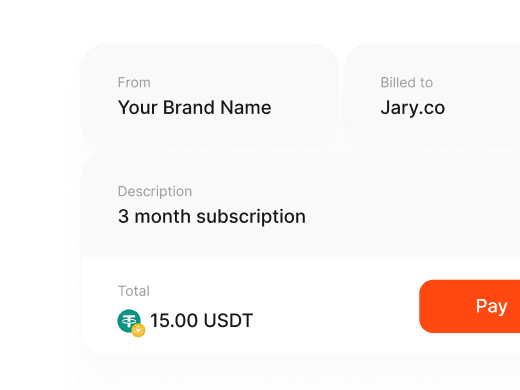
Want to accept crypto payments on your website?
Best for: Crypto-native businesses, projects already in the Solana ecosystem, and merchants who want zero processor fees and full control.
Trade-offs: You manage the wallet, tax accounting, refund logic, and fraud screening yourself. No fiat off-ramp built in. You handle conversion separately.
Option 3: Direct wallet
Publish a Solana address, ask customers to send funds, and manually verify each transaction.
Best for: Donations, one-off invoices, very small operations.
Trade-offs: Doesn't scale–no automatic order matching, no checkout integration, no analytics.
Step-by-step: Solana payment integration via a gateway
The fastest path to live SOL acceptance. Six steps:
- Sign up with a payment gateway and submit business documents for KYB verification.
- Choose your settlement preference. Hold SOL? Auto-convert to USDC? Convert to fiat via SWIFT? Most merchants pick the USDC route to avoid price moves.
- Get API credentials and webhook endpoints. A sandbox environment lets you test without touching production funds.
- Implement the checkout flow. Drop a payment button on your site, generate a payment link, or call the API directly.
- Configure webhook callbacks. Your system needs to know when a transaction confirms, fails, or expires. Webhook is where reconciliation lives.
- Test end-to-end with a small transaction before going live.
The whole sequence takes a week or less for most teams. The longest part is webhook reconciliation – ensuring orders are marked paid exactly once, retries are idempotent, and partial payments have their own branch.
Start accepting Solana payments with 0xProcessing. API-first integration, automatic conversion to stablecoins, and access to 85+ cryptocurrencies, including SOL, USDC, USDT, and BTC. Submit a request →
Protecting revenue from volatility
SOL traded over a wide range in 2025, hitting an all-time high of $293 in January 2025 before correcting; by Q2 2026, it had stabilised in the $80-$100 range. For merchants who hold incoming SOL on their balance, that's real risk. The fix: auto-conversion.
Modern gateways offer real-time conversion of incoming crypto into stablecoins at settlement. The customer pays in SOL; the gateway converts it immediately; the merchant's balance is shown in USDC. The price you quoted is the price you receive.
For businesses that want full fiat exposure, gateways also offer SWIFT and SEPA off-ramp. Crypto lands in the merchant account, is converted to USD or EUR, and is wired to your bank on the next business day.
The choice depends on the model:
- High-margin retail: holding SOL pays off if the market trends up
- Subscription businesses: auto-conversion to USDC is the default. Predictability matters more than upside.
- B2B settlements: fiat off-ramp via SWIFT keeps accounting simple
Regulation in 2026: what merchants need to know

The compliance picture changed in 2025. The U.S. passed the GENIUS Act in July 2025, establishing federal rules for stablecoins. The EU MiCA framework is fully in force. Major jurisdictions now expect KYB on merchants accepting crypto and AML screening on incoming transactions.
Practical implications:
- Payment gateways do KYB on every merchant at onboarding
- Every transaction passes through real-time AML and KYT checks
- Larger transfers may trigger additional review under FATF Travel Rule guidance
- Tax reporting is more standardized – 1099-DA in the U.S., similar frameworks elsewhere
For most merchants, working with a gateway that handles compliance is materially safer than building it in-house. The cost of an AML violation runs significantly higher than the processor fee.
Comparison: gateway vs Solana Pay vs direct wallet
| Feature | Payment Gateway | Solana Pay | Direct Wallet |
|---|---|---|---|
| Setup time | Days to a week | Hours | Minutes |
| Fees | 0.5–1% of volume | ~$0.0005–$0.005 network only | $0.00025 network only |
| Fiat off-ramp | Yes (SWIFT/SEPA) | Manual | Manual |
| Stablecoin auto-conversion | Yes | No | No |
| AML/KYT screening | Built in | Self-managed | Self-managed |
| Webhook callbacks | Yes | Self-managed | None |
| Tax reporting | Provided | Self-managed | Self-managed |
| Multi-chain support | 85+ tokens, 18 chains | Solana only | Solana only |
| Best for | E-commerce, SaaS, iGaming | Crypto-native projects | Donations, one-offs |
For commercial operations processing more than a handful of transactions per day, the gateway pays for itself in saved engineering time within the first month.
Comparison: 0xProcessing vs Solana Pay vs BitPay vs CoinGate vs NOWPayments
| Feature | 0xProcessing | Solana Pay | BitPay | CoinGate | NOWPayments |
|---|---|---|---|---|---|
| Processing fee | Custom merchant tariff | $0.00025 network only | ~1% (tiered for enterprise) | 1% flat | 0.5% (same-coin) / 1% (auto-convert) |
| Custody model | Custodial with auto-conversion to stablecoins | Non-custodial (funds direct to wallet) | Custodial | Non-custodial flow available | Custodial + non-custodial mode |
| Fiat off-ramp | SWIFT, SEPA | Manual | USD, EUR, GBP daily bank settlement | EUR, USD, GBP next business day | Through third-party partners |
| Stablecoin auto-conversion (VRCS-style) | Yes | No | Limited | Limited (some chain configs) | Auto-convert paid (+0.5%) |
| Supported coins | 85+ tokens, 18 chains | SOL + SPL tokens only | 16+ coins | 70+ coins | 350+ coins |
| AML/KYT screening | Built-in, real-time | Self-managed | Built-in | Built-in (MiCA-licensed) | Built-in, KYC optional below thresholds |
| Webhook callbacks | Yes | Self-managed | Yes | Yes | Yes |
| MiCA / regulatory status | Crypto payment processing license | N/A (open protocol) | US-regulated | MiCA + PI licensed (Lithuania) | Lighter framework |
| Setup time | 3–7 days | Hours | Days to weeks (strict KYC) | Days | Hours in a day |
| Best for | iGaming, e-commerce, SaaS, B2B | Crypto-native Solana projects | US enterprise, high-volume | EU merchants, MiCA-required verticals | Altcoin-heavy, niche verticals |
For commercial operations processing more than a handful of transactions per day, the gateway pays for itself in saved engineering time within the first month.
Sources for figures: CoinGate Best Crypto Payment Gateway Comparison 2026,
NOWPayments Review, Plisio Crypto Payment Gateway Field Guide 2026.
Which wallets support Solana Pay
The Solana Pay protocol is wallet-agnostic. Any Solana wallet that handles SPL token transfers can pay a Solana Pay request. In practice, that covers most of the consumer ecosystem:
- Phantom. The most-used Solana wallet is available as a browser extension, iOS, and Android apps. Built-in QR scanner for Solana Pay requests.
- Solflare. Multi-platform wallet (web, iOS, Android, Ledger integration). Native Solana Pay support.
- Backpack. Trader-focused wallet with full Solana Pay compatibility.
- Trust Wallet. Multi-chain wallet supports SPL tokens and Solana Pay flows.
- Coinbase Wallet. Self-custodial wallet from Coinbase supports Solana Pay alongside other chains.
- Glow, Brave Wallet, Exodus. All processes Solana Pay QR codes for SOL and USDC payments.
- Binance Pay. Through the CoinGate integration, Binance Pay users can pay Solana Pay invoices directly from their exchange balance.
If you accept payments via 0xProcessing, the customer's wallet choice doesn't matter – any Solana wallet works on the customer side. The merchant integration is unchanged.
Who do Solana payments fit best
A year ago, Solana was mostly for crypto-native businesses. The picture changed in 2026. The chain now suits any merchant who needs:
- High transaction volume with low ticket size. Micro-payments, in-app purchases, subscriptions under $20.
- Global customer base. Especially in LATAM, Southeast Asia, and Africa, where stablecoin payments grow fastest.
- Speed-sensitive checkout. iGaming deposits, marketplace settlements, anything where minutes matter.
- SaaS subscriptions. Recurring billing without card decline issues, especially across borders.
- Tip and creator economy platforms. Micro-amounts work where card-processing economics break down.
Where Solana fits less well: businesses with regulatory-heavy customer bases that strictly require fiat, or organizations with zero engineering capacity (where payment links remain the better path).
AI agents, x402, and why Solana keeps winning here
A meaningful share of Solana's growth in 2026 is being driven by something that didn't exist as a real category 18 months ago: AI agents paying for services on their own.
The protocol making that work is x402 – an HTTP-native payment standard built on top of the dormant HTTP 402 ("Payment Required") status code. Coinbase and Cloudflare launched it, with the x402 Foundation now backed by Google, Visa, AWS, Circle, Anthropic, and Vercel. An AI agent hits an API, gets a 402 response with payment terms, signs a stablecoin payment, retries the request, and receives the resource – no API key, no credit card, no human in the loop.
The numbers as of March–May 2026:
- x402 has processed over 119 million transactions on Base and 35+ million on Solana, with roughly $600 million in annualized volume.
- Solana holds approximately 49% of all x402 agent-to-agent transaction volume as of February 2026.
- Solana's $0.00025 per-transaction fee and 400ms finality make it the only major chain where sub-cent micropayments are economically viable at scale.
- Stripe added x402 support in February 2026. World (Sam Altman's project, formerly Worldcoin) integrated x402 into its AgentKit for human-verified AI payments in March 2026.
Why this matters for merchants: if you sell anything that an AI agent might want to consume on its user's behalf – API access, data feeds, compute time, content – Solana via x402 is now the default settlement layer. Pricing per API call, per query, or per second becomes economically viable in a way it never was on card rails. A gateway that handles SPL token settlement, USDC auto-conversion, and webhook reconciliation is one of the few ways merchants can plug into this flow without building x402 infrastructure from scratch.
0xProcessing supports SPL token settlement on Solana, USDC auto-conversion through VRCS, and the same webhook architecture that x402 flows expect. For merchants planning to monetize endpoints for AI agents, the rails are ready.
Setup checklist
- Pick a Solana payment gateway with the integration depth you need
- Complete KYB and submit business documents
- Decide on settlement preference: hold SOL / auto-convert to stablecoins / off-ramp to fiat.
- Get sandbox API credentials and test the flow end-to-end
- Implement webhook handlers with idempotent processing
- Add the payment option to your checkout (button, link, or full API integration)
- Set up monitoring and reconciliation dashboards
- Document the refund process – crypto payments are final; refunds need a separate flow.
- Train support staff to recognize Solana-specific issues (expired payment requests, wrong network)
- Plan for tax reporting and accounting integration
Accept SOL and USDC payments at scale with 0xProcessing. 0xProcessing supports SOL, USDC, USDT, and 85+ other tokens with API-first integration and instant conversion to stablecoins. Full AML monitoring, dedicated account manager, 24/7 support. Talk to our team →
Conclusion
Solana payments crossed the threshold from experimental to commercial in 2025. With Visa using Solana for USDC settlement, Shopify accepting it via approved plugins, and the network handling up to 65,000 TPS. For merchants in 2026, the rail works. The real question is how to connect it without overhauling existing infrastructure.
The pragmatic path: pick a payment gateway with native Solana support, configure auto-conversion to stablecoins or fiat off-ramp depending on settlement preference, and integrate via API or payment links. Setup takes a week. Operating costs sit well below card network fees. And the base of merchants accepting Solana is growing fast enough that early movers in 2026 land in a materially better cost position by 2027.
For businesses with crypto-native customer bases – especially in iGaming, content platforms, SaaS, and international e-commerce – the case writes itself. For everyone else, the question is timing: now or in two years.
FAQ
Which payment gateway is best for e-commerce businesses on Solana?
Best fit depends on volume and integration depth. For shops handling more than a few transactions per day, look for native Solana support, USDC auto-conversion, webhook callbacks, and clear pricing. 0xProcessing covers all of these and adds multi-chain support across 85+ tokens for merchants who don't want to limit customer payment options.
How do I accept SOL on my website without coding?
Use payment links. Most gateways generate a unique secure URL in your dashboard. You set the amount and accepted currencies, share via email, Telegram, or any channel. The customer pays, you get a webhook. No website needed, no developer needed.
Can I receive payments in USD even if my customer pays in SOL?
Yes. Gateways offer two paths: auto-conversion to the USDC stablecoin at settlement, or an off-ramp to fiat via SWIFT or SEPA wire transfers to your bank. The first happens instantly, the second settles on the next business day.
Is Solana fast enough for real-world payments?
Yes. Solana finalizes transactions in about 400ms, matching the speed of card network authorizations. For comparison, on-chain Bitcoin takes around 10 minutes per confirmation, and Ethereum L1 takes about 12 seconds. These are first-confirmation times – full economic finality differs across chains.
Are Solana payments legal for businesses?
In most jurisdictions, yes, subject to standard KYB and AML rules. The U.S. GENIUS Act and EU MiCA framework both provide regulatory clarity for stablecoin payments. Specific licensing requirements vary by country and merchant category. A good gateway handles the compliance layer for you.
What happens if a customer pays the wrong amount?
Edge case: the gateway handles. If a customer sends 0.029 SOL instead of 0.030 SOL due to a wallet fee, the system either flags the underpayment for review or automatically credits the partial amount, depending on the configuration. Webhook events include the actual amount received, so accounting reconciles correctly.