Tron has quietly become the most-used dollar rail in crypto, and hardly anyone writing about it says so straightforwardly. By mid-2026, the network had around $89 billion in USDT, a record. It also had about 47% of all Tether in existence. Most of the stablecoin volume moving across it was person-to-person, the highest share of any chain. That means real people are sending real money, not traders moving money around.
So when a business asks how to accept Tron, the honest translation is usually "how do I take USDT on Tron?" That's the question this guide answers first. TRX matters too, and there's a section on it, but the dollar is the reason you're here.
One number to anchor everything that follows. Receiving a USDT payment on Tron is free. Sending one is not, unless you set it up right. Most of this article is about that gap.
Tron in one section: what it is and why dollars live there
Justin Sun launched Tron in 2018 as a Layer-1 running on Delegated Proof of Stake. People vote for 27 Super Representatives, who then make the blocks. The design trades some decentralization for throughput, and the throughput is real: blocks are added every three seconds, the network is built for up to 2,000 transactions per second, and confirmation feels instant.
But that's not why it won. Tron won because Tether made it easy and cheap to move dollars there, and that became routine. Someone sending money from Lagos or Buenos Aires isn't paying an Ethereum gas fee to move $50. They use Tron because it costs next to nothing to receive and at most a couple of dollars to send. Over time, this has made Tron the most popular choice for stablecoins, and the second-quarter 2026 figures show no sign of that changing. It makes up 28.7% of the stablecoin market and has 3.5 million daily active users, second only to Solana.
TRX, the native token, sat near $0.33 in late July 2026 with a market cap around $31 billion. It pays for network resources, which is where things get interesting for a merchant.
The thing that trips everyone up: TRX is not USDT-on-Tron
These are two different payments with two different cost profiles, and conflating them is how businesses end up confused about fees.
TRX
This is Tron's own volatile coin. Sending it is genuinely cheap, a fraction of a cent, because a plain TRX transfer only consumes bandwidth.
USDT-TRC20
This is Tether's dollar token running as a smart contract on Tron. A transfer executes contract code, which costs far more in network resources than moving TRX does: same chain, completely different fee.
Here's the split laid out:
|
TRX |
USDT (TRC-20) | |
|
What it is |
Tron's native coin |
Dollar stablecoin, smart contract |
|
Price behaviour |
Volatile |
Pegged to $1 |
|
What a transfer consumes |
Bandwidth only |
Bandwidth + ~65,000 Energy |
|
Cost to send without prep |
Fraction of a cent |
$2.00–4.30 in burned TRX |
|
Why a customer holds it |
Tron ecosystem, trading |
Sending and saving dollars |
|
Your likely use |
Secondary option |
The main event |
If you're setting up a checkout, build it around USDT-TRC20 and offer TRX as a bonus. The overwhelming majority of "accept Tron" demand comes from people wanting to pay you in dollars.
Why USDT-on-Tron transfers cost money (and TRX transfers don't)
This is the part competitors explain badly, in validator jargon. Here it is in operator terms.
Tron doesn't charge a flat gas fee. It runs on two consumable resources, and every account gets a trickle of them free.
Bandwidth
This includes the basic size of a transaction. Every account gets a small free allowance every day, enough for about one transfer. A basic TRX send only needs bandwidth, so it's basically free.
Energy
Covers running smart-contract code. A USDT transfer is a contract call, so it burns around 65,000 Energy, and there's no meaningful free allowance for that. If your account holds Energy, the transfer costs nothing in TRX. If it doesn't, Tron takes the equivalent out of your TRX balance by burning it. That burn lands around $2.00 for a recipient who already holds USDT, and closer to $4.30 for a fresh address. The difference is an extra ~65,000 Energy: the transfer has to create the token account before it can credit anything. The first payment from any given customer is therefore the expensive one; every subsequent transfer to that same address costs half as much.
One wrinkle that catches payout-heavy businesses off guard: if you're sending USDT to an address that has never held USDT before, the transfer costs roughly double, about 130,000 Energy instead of 65,000. When you pay a batch of first-time affiliates or players, that doubling is real money, and it's worth budgeting for.
So the "fee" on a USDT transfer isn't really a fee. It's the network converting your missing Energy into burned TRX at whatever rate governance has set. Show up with Energy and the cost is zero. Show up without it, and you pay the burn.
That single mechanic is the whole story of Tron payment economics, and it splits neatly along a line most guides never draw: who's sending.
Free to receive, costly to send: the asymmetry that actually matters
Think about this, because it changes how you see the whole system.
When a customer pays you in USDT on Tron, they cover the energy or the burn. The payment goes into your account, and the other person, not you, pays for the network cost. The incoming volume is free for you.
When you send USDT to pay an affiliate, refund a buyer, settle with a supplier, or move funds to your own wallet, that transfer is yours to power. Every outbound USDT payment needs Energy or burns your TRX.
A shop that mostly takes payments barely notices. An operation that pays many people, an iGaming platform settling withdrawals, a marketplace paying sellers, a business running affiliate payouts – notices immediately. Each transfer costs a few dollars, and hundreds happen every day. This adds up to a large amount of money each year.
Which is exactly the problem the next section solves.
One clarification, so "free to receive" isn't misread. Free here means the network cost; the sender covers that. Your payment processor still charges its own fee to handle the transaction, screen it, and settle it to you. What Tron removes is the on-chain cost of receiving, not the processor's service fee. Those are two different line items, and any provider should separate them clearly.
Gas-free USDT on Tron: the operator's guide to Energy
"Gas-free USDT" means two different things, and merchants get confused when they conflate them. There's Tron's GasFree protocol, where the fee is deducted in USDT and the sender holds no TRX at all. And there's pre-arranged Energy, where the fee still exists in TRX but you've covered it in advance. Both remove TRX from the sender's checklist. They do it differently.
Stake TRX for Energy
Freeze TRX and the network will give you Energy in return. Once you've staked enough, sending money out costs nothing. The problem is that capital is tied up covering daily volume, and Stake 2.0 makes you wait 14 days to unfreeze it. It makes sense only at steady, high volume, where the locked capital earns its keep.
Rent Energy
The practical route for almost everyone. Markets built on JustLend will send energy to your address for a set period, such as an hour, a day, or longer. You pay a small amount of TRX, use the Energy, and the delegation stops. Renting a single transfer costs less than a dollar, compared to the couple of dollars the raw burn would cost. You don't actually own anything; the contract just lets you use the resources.
Want to accept crypto payments on your website?
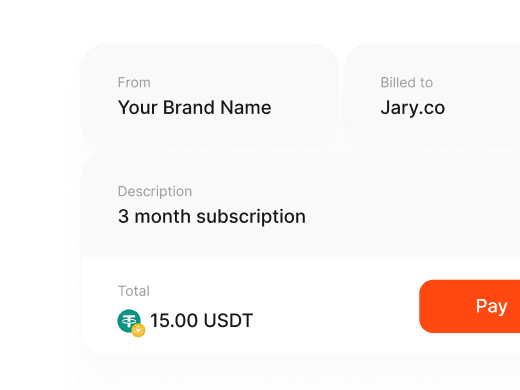
Let a processor handle it
If you don't want to run an Energy desk, a processor like 0xProcessing manages the staking and renting for you and batches your payouts, so the Energy maths is theirs, not yours.
The catch nobody flags
Energy regenerates. A delegation gives you a pool of roughly 65,000 units per transfer, and that pool refills over a 24-hour cycle. Rent enough capacity for your peak hour, not for every individual send. Staked TRX works the same way: around 5,000 TRX generates one transfer's worth of Energy per day, indefinitely, at no marginal cost. Budget by concurrent load, not by transaction count.
A simple checklist:
- Only receiving payments? Don't worry about Energy at all. It's the sender's problem.
- Do you pay out sometimes? Rent Energy on Demand, per transfer.
- Do you pay out at volume every day? You can either set a base amount or let a processor batch and power your payouts.
- Don't assume a rental is refilled. Match the energy to the number of sends each time.
GasFree: paying the fee in USDT
Tron's GasFree protocol lets a sender move TRC-20 USDT with zero TRX in the wallet. The fee is deducted from the USDT being sent, typically around 1 USDT per transfer, plus a one-time activation of roughly 1 USDT when the GasFree address is first used. TronLink ships a dedicated GasFree wallet; NOW Wallet, Klever, and Guarda have their own implementations. We covered the mechanism in more detail when Tron launched the feature.
For a merchant, this matters on the customer side. A player holding only USDT can pay you without first buying TRX, removing a step that costs conversions. For your own outgoing payouts at volume, Energy is still cheaper per transfer – GasFree's flat 1 USDT beats an unprepared burn but loses to staked or rented Energy.
Ways to accept Tron payments
Five setups, and which one fits depends on how much you're building.
Hosted payment gateway
The provider sends the invoice, tracks the chain, confirms the transfer, pays you, and, most importantly for Tron, handles the Energy on any payouts. AML screening and fiat settlement are included. If you don't want to think about energy or how long the nodes are up, this is the answer.
CMS plugin
Do you use Shopify, WooCommerce, or something similar? Plugins from various processors connect USDT-TRC20 and TRX to your current checkout. Add a key, pick your assets, and you're done in an hour.
Direct API
A REST call starts the payment request, and a webhook confirms it. You have full control over the checkout process from start to finish, which is exactly what a headless or custom store needs.
Self-hosted node
Run your own Tron node and connect it to a wallet you control. You won't have to pay extra to cover processor costs. Everything else, like uptime, energy provisioning, conversion, reconciliation, and Anti-Money Laundering (AML), is your team's responsibility. It's possible if you have engineers, but it's difficult if you don't.
POS terminal
Physical location? A point-of-sale app generates a QR code for each sale. The customer scans a QR code, pays in USDT or TRX, and you confirm the transaction right away.
Want to accept USDT on Tron without running an Energy desk? 0xProcessing is a Tron payment gateway that powers your payouts with managed Energy, screens incoming transfers in real time, and settles to crypto or fiat.
Get startedSetting it up, step by step
Most of the week goes to verification rather than writing code.
Choose a provider that takes USDT-TRC20 and TRX, manages Energy for outbound payments, and settles to the currency you need.
Clear KYB and provide company documents and ownership details; the processor then runs AML and screens incoming funds.
Set your settlement: keep incoming funds as USDT, convert to another asset, or off-ramp to your bank.
Wire it up through a plugin or the API.
Then run one small live payment end-to-end before you open the doors.
What Tron actually gives a business
Incoming payments cost you nothing
Worth repeating because it's the headline. The customer powers their own transfer; you just receive. On a chain where sends can cost a couple of dollars, that asymmetry is a genuine advantage for a receiving business.
Speed that holds under load
Three-second blocks, and unlike fee-auction chains, Tron doesn't get dramatically slower or pricier when everyone shows up at once. A card takes days to settle by comparison.
Finality
On-chain transfers don't reverse. No chargeback arrives three months later claiming the goods never came. For digital products and high-risk sellers, that removed cost is often the whole reason to bother.
It's where the dollars already are
Tron settled $7.9 trillion in USDT transfers in 2025 and holds roughly half of the world's Tether. Your customers who hold on-chain dollars very likely hold them here, so taking USDT-TRC20 removes a step at checkout rather than adding one.
Who leans on Tron, and why

Remittances and cross-border pay
The core use. Sending dollars across borders on Tron clears in seconds for cents, which is why it dominates in Latin America, Africa, and Southeast Asia where wire fees are brutal.
High-volume e-commerce
Stores pushing many small international orders lean on Tron for cheap, fast dollar settlement where cards decline foreign buyers or gouge them on FX.
iGaming and high-risk
Fast deposits, fast withdrawals, no chargebacks, an audience already holding USDT. This is also the vertical where the Energy-on-payouts question bites hardest, since withdrawal volume is high.
Contractor and affiliate payouts
Paying people in USDT on Tron is faster and cheaper than international bank transfers, especially for people in countries with few banks. Just budget the energy.
The institutional plumbing is maturing too. In January 2026, MetaMask added native Tron support. In July 2026, S&P included Tron in its new Pantera Digital Asset Index. Around the same time, services began letting Tron users push TRC-20 straight to bank accounts. The rails are maturing around the existing usage.
The risk worth taking seriously: freezes and concentration
Most guides skip this. They shouldn't.
Two things about Tron should shape how you handle it. First, USDT can be frozen. Tether has a blacklist function in the contract and uses it, and because most USDT is on the Tron network, most freezes happen there. On 23 April 2026, Tether froze over $344 million across two addresses, acting on information from US authorities and in coordination with the Secret Service and law enforcement. Tether's own statement does not name the network; the Tron attribution comes from press reporting.
Secondly, Tron is concentrated. Justin Sun controls around 60 billion TRX, roughly 63% of the circulating supply, and 27 Super Representatives produce each block. That's efficient, and it's a governance risk you should consider, not ignore.
What does this mean for you as a shop owner? If a customer pays you in USDT and it's later found that the money came from a blocked account or was reported, the tokens can be frozen in your balance. This protection comes from a processor that screens before settlement. 0xProcessing checks every incoming transfer against blacklist and sanctions data before it credits your balance, and converts incoming USDT to your chosen asset quickly rather than leaving large balances exposed. In the world's most-watched stablecoin rail, screening is more than a box-ticking exercise. It keeps tainted tokens off your balance.
Compliance on Tron: MiCA, licensing, and screening
Accepting USDT on Tron is legal across the US, EU, UK, and most major markets. The regulatory weight sits with your processor, not with you for receiving payment, so check the processor's licensing first.
Why MiCA matters for EU merchants
MiCA is now in full force across the bloc, and it regulates the crypto-asset service providers who process payments rather than restricting which coins you accept. For an EU-facing business, the practical question is whether your processor is authorized as a CASP (crypto-asset service provider), since that authorization passports across the EU under a single licence. USDT sits in a specific position under MiCA. Tether never pursued authorization, so USDT is a non-authorized EMT, and a MiCA-licensed CASP cannot offer it to EU clients. A processor's licence does not make USDT compliant. What it does is give you a regulated counterparty and a clean settlement path: accept the USDT your customer wants to pay with, convert it to an authorized stablecoin like USDC or EURC on arrival, and your balance sits in a permitted asset. Receiving USDT from a customer's own wallet is not itself prohibited. Our guide to MiCA for merchants covers the CASP perimeter, the stablecoin rules and how to verify a provider's authorization.
Screening is not optional on this chain
Tron carries most of the world's USDT and therefore most of its freezes, so real-time AML/KYT on incoming payments isn't a nice-to-have. 0xProcessing screens every incoming transfer against blacklist and sanctions data, verifies the business rather than the customer (KYB, not customer KYC at checkout), and keeps the transaction logging that clean books and tax reporting depend on. On the world's most-watched stablecoin rail, that screening keeps flagged tokens off your balance.
What to confirm before signing
- Which licences the processor holds, and in which jurisdictions.
- Real-time AML/KYT screening on incoming payments, not periodic review.
- KYB verification on the business, so customers aren't put through checks at checkout.
Your own obligations come down to tax reporting and record-keeping, which vary by country, so confirm the specifics with an advisor where you operate.
TRC-20 vs ERC-20: the same dollar, a different bill
USDT exists on both Tron and Ethereum. What differs is the cost and character of moving it.
|
USDT on Tron (TRC-20) |
USDT on Ethereum (ERC-20) | |
|
Confirmation |
~3 seconds |
~12 seconds |
|
Send cost, Energy prepared |
$0 in TRX |
Still pays gas |
|
Send cost, unprepared |
~$2 funded, ~$4.30 fresh address |
$0.15–3.40, moves with gas demand |
|
Fee model |
Energy + bandwidth |
Gas auction |
|
Where the volume is |
Retail, remittances, P2P |
Institutional, DeFi, exchanges |
|
Share of USDT |
~47% of all USDT |
Smaller, though deep institutionally |
The practical takeaway: for retail and cross-border payments, TRC-20 wins on predictability and on where your customers already hold dollars, not on raw fee. Ethereum gas moves with demand and can undercut Tron in quiet periods, then multiply during congestion. Tron's burn stays flat.
Conclusion
Strip it down, and Tron is the world's busiest dollar rail. It handles around half of all USDT and clears trillions in transfers every year. The economics are simple. You don't have to pay to receive a payment, but sending one costs you something. If you get the energy strategy right, you can keep the network's cost low. This is true whether you rent it, pay it out, stake it at a certain volume, or hand it to a processor.
The other half is about being sensible about risk. Tron has most of the world's USDT, and therefore most of its freezes, and its supply is in very few hands. Neither is a reason to walk away from the network. The best thing to do is to check any incoming payments and change them into the right currency as soon as they arrive. If you do that, use TRX and USDT-TRC20 together, and you'll connect to the dollar network most of your customers already use.
Ready to accept Tron payments the right way? 0xProcessing powers your payouts, screens every incoming transfer in real time, and settles to crypto or fiat across TRX, USDT-TRC20, and 105+ other assets.
Get started
FAQ
How can I use USDT on Tron for my business?
Choose a processor that supports USDT-TRC20 (0xProcessing is one), clear KYB, set your settlement method, connect via a plugin or the API, and test with one small payment. Most businesses are up and running within a week.
Are Tron payments free?
Receiving is basically free, as the sender pays for the network. A basic TRX transfer costs very little. Sending USDT costs about 65,000 Energy per transfer. Free if you've staked or rented it. Without Energy, Tron burns the equivalent in TRX – roughly two dollars, doubling to four and changing when the recipient has never held USDT.
What is Energy on Tron?
The resource that pays for smart contracts to be carried out. Transferring USDT uses around 65,000 of it. If you have enough Energy staked or rented, your outbound transfers will cost nothing. If not, the network will use up TRX to cover it. It affects sends, not receipts.
How does gas-free USDT work?
Two routes. Tron's GasFree protocol deducts the fee in USDT, so a wallet with zero TRX can send – roughly 1 USDT per transfer plus a one-time activation. Or arrange Energy in advance by staking TRX, renting from a JustLend-based market, or letting a processor manage it. Energy is cheaper at volume; GasFree is simpler for one-off sends.
Should I accept TRX or USDT-TRC20?
Both, but expect most of the trading to be in USDT, since that's the currency that people hold and send. Take TRX as a no-cost extra through a gateway, and convert both to your settlement asset on arrival unless you specifically want the price exposure.
Can USDT on Tron be frozen?
Yes. Tether can blacklist an address and freeze its tokens, and most of these freezes happen on Tron. On 23 April 2026, Tether froze over $344 million across two addresses, acting on information from US authorities. Press reporting identified the network as Tron; Tether's own statement does not name it. You can avoid holding tokens that have been flagged by checking incoming payments for money laundering in real time.
Why is USDT on Tron cheaper than on Ethereum?
It depends on preparation, not on the network. A Tron account with staked or rented Energy sends for zero TRX. An unprepared one burns $2.00–4.30, which can exceed Ethereum at low gas. What Tron gives you is a flat cost that doesn't move with network load, plus the deepest USDT liquidity of any chain — roughly half of all supply.
 Crypto acceptance, Crypto gateway, Merchant strategies, Cross-border payments, How to, Tether (USDT) payments
Lead Writer
Lucas Anderson